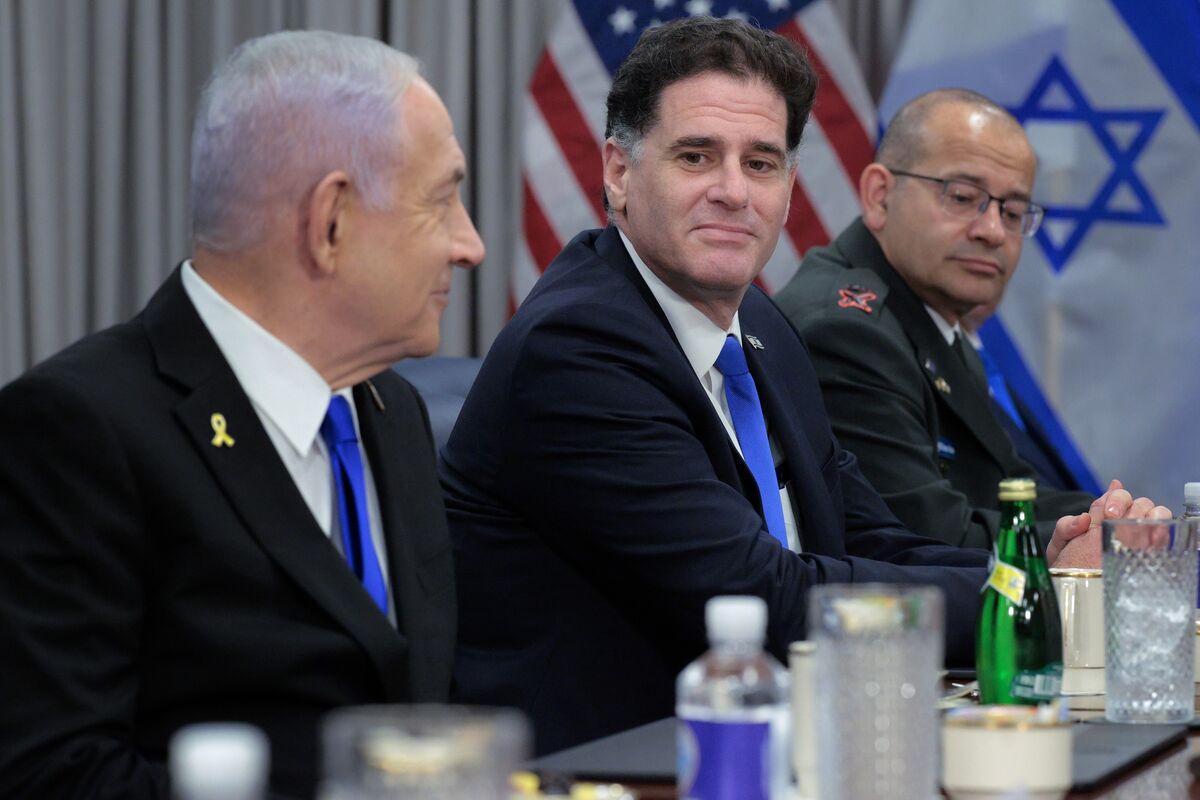
Israeli PM Benjamin Netanyahu has tasked close aide Ron Dermer with monitoring US-Iran negotiations to ensure Israeli red lines are upheld, specifically aiming to dismantle Iran’s nuclear program and secure the retrieval and elimination of roughly 440 kilograms of highly enriched uranium. Near-term market impact is limited, but the move raises regional geopolitical risk that could pressure oil prices and defense-related equities if talks break down.
Israel exercising tighter oversight on a US-led diplomatic track materially raises the floor on negotiation complexity and duration — expect negotiations to stretch into months rather than weeks as verification clauses and uranium-removal logistics are litigated. That elongation increases the baseline geopolitical risk premium across regional assets (0–6 month window) and preserves policy options that keep sanctions, export controls, and contingency military postures on the table.
The near-term winners are industrial: prime defense contractors and specialized munitions/avionics suppliers typically see order acceleration and inventory replenishment after similar regional crises; empirically, after past Middle East escalations these suppliers realized ~8–15% incremental revenue over 6–12 months from replenishment and export sales. Secondary winners include reinsurance and marine-insurance brokers while second-order supply effects will bid up certain commodities (aluminum, copper, specialized chemicals used in propellants) by low-double-digits over a 3–9 month tightening window if procurement ramps.
Macro flows to watch are capital movement out of regional equities and higher war-risk premia in shipping lanes (Red Sea/Strait of Hormuz exposure). Container freight rates and insurance surcharges can jump 10–30% within weeks of visible escalation, directly hitting consumer goods and just-in-time supply chains. Catalysts that would reverse this premium are either (a) a verifiable, rapid material removal/transfer of sensitive materials with independent inspectors within 60–120 days, or (b) a sudden military escalation that paradoxically forces near-term settlement — both have low-to-moderate probability but asymmetric market impact.
AI-powered research, real-time alerts, and portfolio analytics for institutional investors.
Overall Sentiment
neutral
Sentiment Score
0.00
