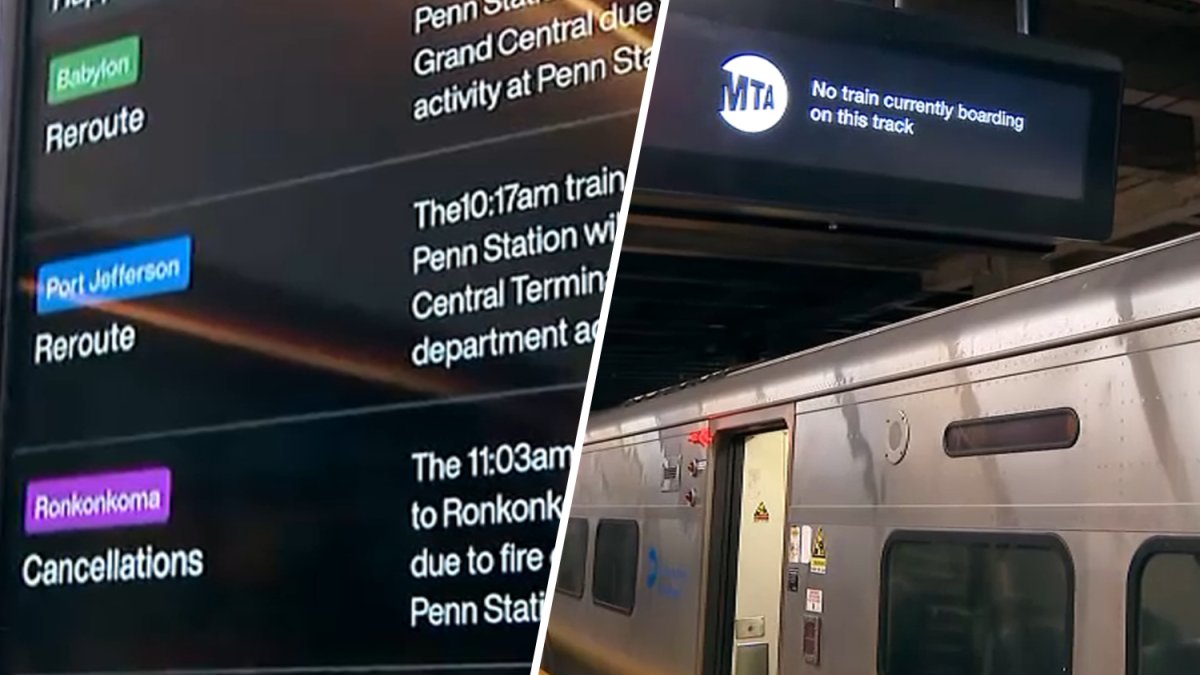
A track fire at New York Penn Station disrupted rail operations, forcing many LIRR trains to be canceled or diverted to Grand Central and suspending eastbound service for hours. Amtrak said an electrical fire in the East River Tunnel caused significant damage, while the MTA said service remained suspended as of 8 p.m. with possible delays and cancellations into the morning commute. NJ Transit and Amtrak continued operating with delays and diversions, but the incident created broad transportation disruption across the New York rail network.
The immediate market read is not the fire itself but the fragility it exposes in East River access: a single infrastructure incident can cascade into network-wide service degradation, which is structurally negative for any operator dependent on Penn Station throughput. The direct winner is PATH as a congestion substitute, but the gain is tactical and likely concentrated in the next 1-5 sessions rather than a durable rerating. More interesting is the second-order effect on rider behavior: repeated disruptions at Penn can incrementally shift discretionary commuters toward NJ-side alternatives, especially for riders with flexible work schedules, but that is a slow-burn share shift, not a one-day reroute. For PATH, the setup is asymmetric only if this event increases public and political urgency around cross-Hudson redundancy or accelerates commuter habit formation. The stock is not a pure Penn Station proxy, so the trade is mainly a sentiment and volume-duration play, not a fundamentals revaluation. Near-term upside is capped because the incident also hurts regional mobility overall, which can suppress aggregate commute volume and limit the net capture of riders who otherwise stay home, carpool, or work remotely. The bigger medium-term catalyst is capital allocation into rail hardening and tunnel resilience. If media coverage sustains and there are follow-on service disruptions in the next few days, the probability rises of accelerated MTA/Amtrak spending plans, which is constructive for infrastructure contractors rather than transit operators. The contrarian angle is that the market may be overestimating the persistence of any PATH benefit while underpricing the political response: a single high-visibility failure often unlocks maintenance budgets faster than expected, but procurement and permitting mean the earnings impact on beneficiaries is usually delayed 12-24 months. Risk to the bullish PATH read is straightforward: service normalizes quickly, commuters revert, and the event becomes noise. The bearish tail risk for the broader transit complex is a second incident before confidence resets, which would shift this from a transient disruption into a narrative around aging infrastructure and operational unreliability. That would be a negative for transit-dependent urban mobility names and could indirectly support contractors with tunnel, signaling, and electrification exposure.
AI-powered research, real-time alerts, and portfolio analytics for institutional investors.
Request DemoOverall Sentiment
mildly negative
Sentiment Score
-0.35
Ticker Sentiment
