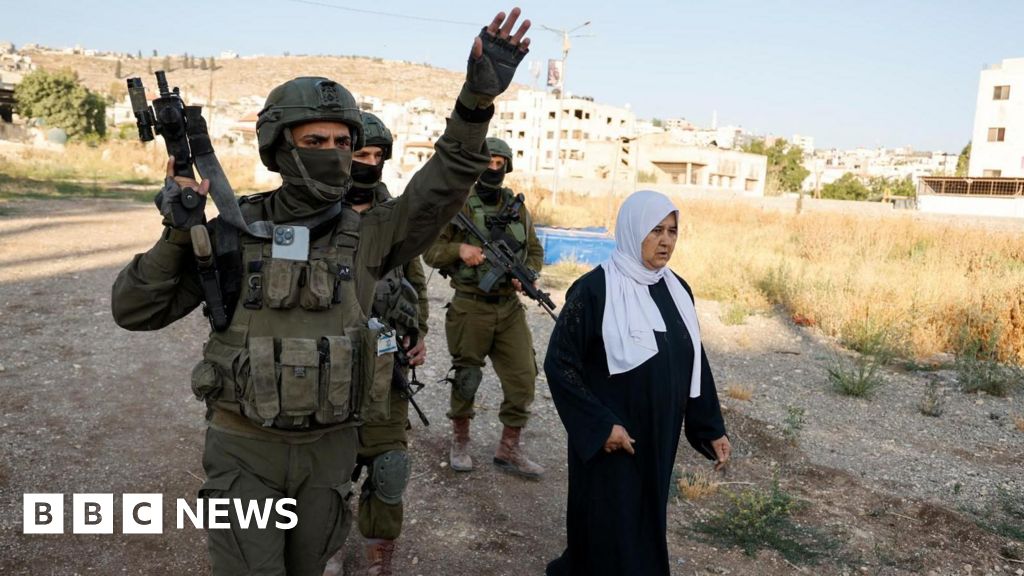
The UN human rights office issued a 42-page report concluding that Israeli laws, policies and practices in the occupied West Bank and East Jerusalem constitute systemic discrimination resembling apartheid, citing dual legal systems, large-scale land confiscation, military courts and intensified settlement expansion. The report notes roughly 160 settlements housing about 700,000 Israeli settlers alongside an estimated 3.3 million Palestinians, flags approval last month of construction for 19 new settlements, and says conditions have drastically deteriorated since December 2022 and especially after 7 October 2023. Israel rejected the findings as politically driven; the allegations raise downside geopolitical and policy risk in the region that could amplify risk premia for investors with Middle East exposure.
Market structure: Immediate winners are defense and security suppliers (US large caps LMT, RTX, GD; Israeli defense ESLT) and safe-haven commodities (gold GLD, oil XLE) as risk premia and demand for hardware/services rise; losers are politically exposed Israeli equities (iShares MSCI Israel EIS), regional tourism/airlines and ESG-sensitive funds where divestment flows can be concentrated. Competitive dynamics favor large, vertically integrated defense primes that can price longer-term contracts; Israeli tech and small-cap exporters face funding and FX pressure, reducing their pricing power versus global peers.
Risk assessment: Tail scenarios include a wider regional war (low-probability, high-impact) that could lift Brent +20–40% in 1–3 months and push Israeli 10y yields +100–300bps; a medium risk is accelerated sovereign/sovereign-adjacent divestment causing EIS to gap -10–25% within 30–90 days. Short-term (days-weeks) expect volatility spikes and fund flows; medium-term (3–12 months) pricing will reflect contract wins/losses and sanctions momentum; long-term (years) legal/regulatory actions could re-route institutional capital from Israeli exposures.
Trade implications: Tactical plays include immediate hedges (short EIS puts/long EIS puts 3-month 5–10% OTM) and directional overweight to defense via 6–12 month call spreads on LMT/RTX (2–4% portfolio each) and commodity convexity via short-dated Brent call spreads if Brent > $85. Rotate 3–5% from EM ex-China equity into 2–3% GLD and 2–3% XLE; size Israeli-specific shorts conservatively (1–2% net) and scale up on additional UN/sovereign divestment announcements.
Contrarian angles: Consensus may overstate sanction risk—US fiscal/defense support lowers probability of broad trade/finance embargo, making a selective buy-on-dip in high-quality Israeli software names (NICE: NICE, WIX) sensible if they drop >15% with stop-loss at 10%. Historical patterns (prior Gaza escalations) show market dislocations recover in 3–12 months, so prioritize limited-duration option structures and pair trades (long US defense / short Israel ETF) to harvest re-rating while capping downside.
AI-powered research, real-time alerts, and portfolio analytics for institutional investors.
Request DemoOverall Sentiment
strongly negative
Sentiment Score
-0.60
