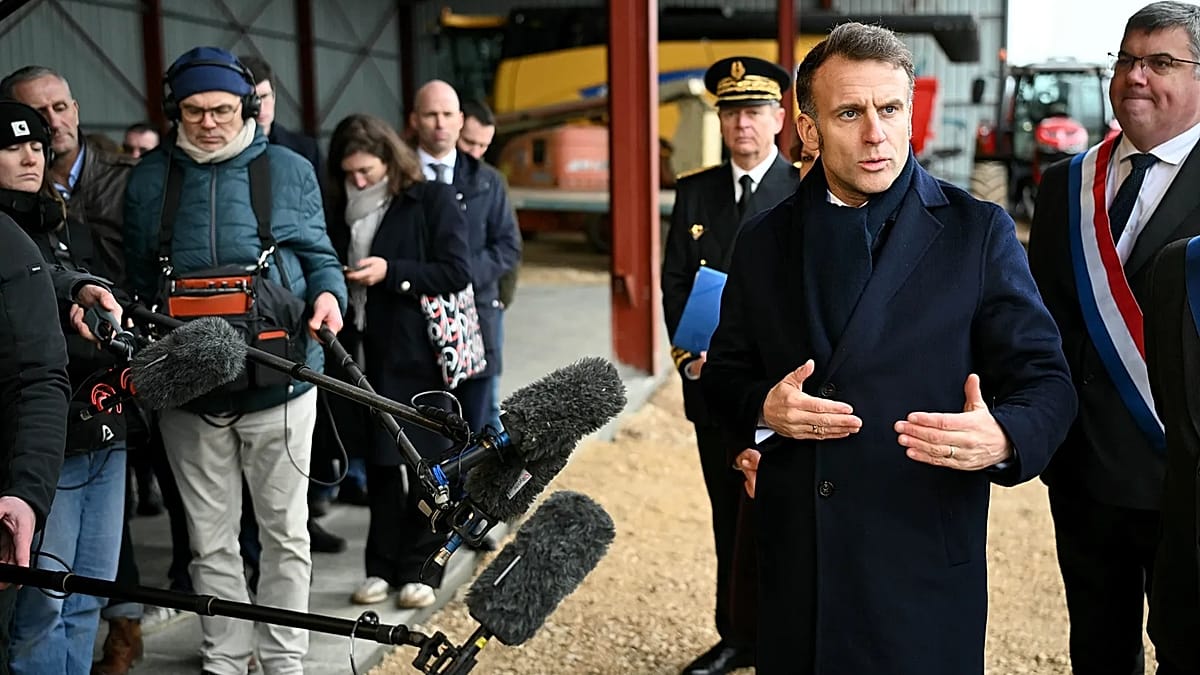
French President Emmanuel Macron signalled readiness to restart dialogue with Vladimir Putin, saying contacts are ongoing at a 'technical level' and coordinated with Ukrainian President Zelenskyy, while condemning recent Russian strikes on Ukraine's power grid amid freezing temperatures. The remarks reopen debate in Europe—contrasting Meloni's call for engagement with Germany's Friedrich Merz's opposition—and follow a July Macron–Putin phone call; the situation raises renewed geopolitical and energy-infrastructure risk for markets given continued Russian attacks and uncertainty over meaningful peace negotiations.
Market structure: Renewed diplomacy talk + continued strikes increases two-way volatility: near-term winners are defense & cybersecurity contractors (pricing power for urgent orders; expect 5–20% bid premia in 1–3 months) and integrated oil/gas majors that can arbitrage spikes in European gas/power (Shell SHEL.L, BP.L). Losers are European grid operators/utilities and municipal credit linked to power revenue (EDF.PA, ENEL.MI) due to repairs, capex and political risk; prompt TTF gas and power spreads will spike on outages, tightening supply by ~5–15% in winterstressed weeks.
Risk assessment: Tail risks include a large-scale escalation (Russia reopens broad strikes or nuclear incident) that would shock energy, credit and FX markets (EUR down 3–7%, TTF up 30–60% within days). Time horizons: immediate (days) = volatility spikes and safe‑haven flows; short (weeks–months) = negotiation headlines drive 10–30% swings in defense and energy stocks; long (quarters–years) = structural defense spending and energy security reshoring matters. Hidden dependencies: US political shifts, EU sanctions coordination, winter weather and storage levels can quickly flip direction.
Trade implications: Prefer tactical long-defense (Rheinmetall RHM.DE, BAE.L) 1–3% positions with 6–12 month horizon financed via short exposure to regulated European utilities (EDF.PA, ENEL.MI) 20% notional smaller size; hedge portfolio tail risk with VIX call spreads (1–3 month) sized 1–2% notional or 2% allocation to TLT for duration hedge. If diplomatic progress materializes (public EU/Russia envoys within 30–90 days and sustained drop in strikes), rotate out of defense into integrated energy (SHEL.L, BP.L) as commodities fall 10–20%.
Contrarian angles: Consensus expects perpetual defense upside; that underestimates the possibility of a rapid derisking rally if Macron/European envoys secure tangible talks — defense names can decline 15–30% on a peace-optimism shock (historical parallel: post‑Gulf/Cold War drawdowns). Conversely, markets may underprice recurring infrastructure attack risk; asymmetric strategies (paid puts or call spreads) capture skew. Monitor concrete triggers (number of strikes/month, EU envoy appointment, US presidency signals) rather than rhetoric.
AI-powered research, real-time alerts, and portfolio analytics for institutional investors.
Request DemoOverall Sentiment
moderately negative
Sentiment Score
-0.30
