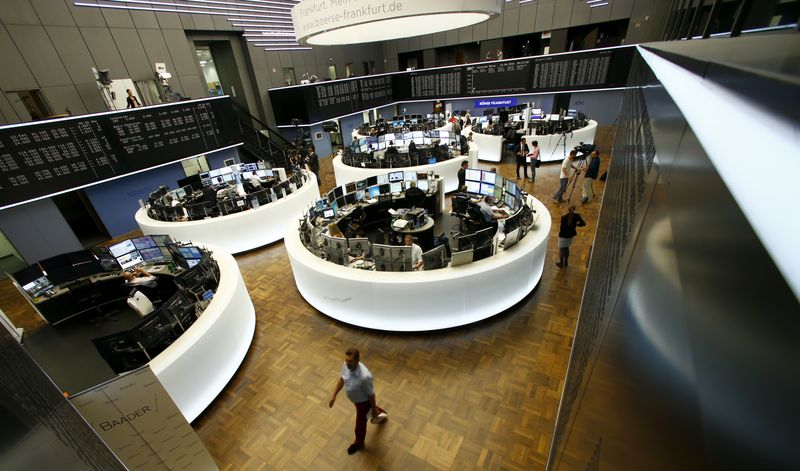
European equities opened higher, with the Stoxx 600 up 0.3%, as hopes for a U.S.-Iran peace deal eased risk concerns. Brent crude fell 1.5% to $110.47 a barrel, though it remains far above the roughly $70 pre-conflict level, keeping inflation and energy-shock worries elevated. The article also notes that AI enthusiasm continues to support markets ahead of Nvidia's results later this week.
The bigger read-through is not the lawsuit outcome itself, but the reaffirmation that AI infrastructure spend remains a capital-allocation arms race rather than a purely legal or product cycle. That means the market’s near-term setup is still dominated by one company’s capex guide and supply chain commentary, with semis, advanced packaging, networking, and power infrastructure all trading as a single crowded factor. The first-order beneficiary is NVDA, but the second-order winners are the picks-and-shovels names that monetize every incremental GPU deployment without the same single-event earnings risk.
The main risk is that the trade has become reflexive: if NVDA reports merely in-line numbers or guides conservatively, the unwind could hit the entire AI basket even if underlying demand remains strong. Given the article’s uncertainty and neutral macro tone, this is a classic “good sector, bad entry point” setup where earnings can still disappoint relative to elevated positioning. The market is underpricing how quickly expectations can compress if management frames demand as healthy but normalization in lead times or margin mix slows the pace of multiple expansion.
A more subtle contrarian angle is that legal and regulatory overhangs around frontier AI may actually help incumbents with scale and distribution, while hurting smaller AI software names that depend on looser capital markets and a more permissive narrative. If the AI cycle persists, scarcity value shifts from models to deployment capacity, reinforcing the advantage of hardware leaders and infrastructure enablers over application-layer names. That suggests the cleanest expression is not a blanket long AI basket, but a relative-value trade favoring cash-generative hardware and infrastructure over high-multiple software exposure.
AI-powered research, real-time alerts, and portfolio analytics for institutional investors.
Overall Sentiment
neutral
Sentiment Score
0.05
Ticker Sentiment
