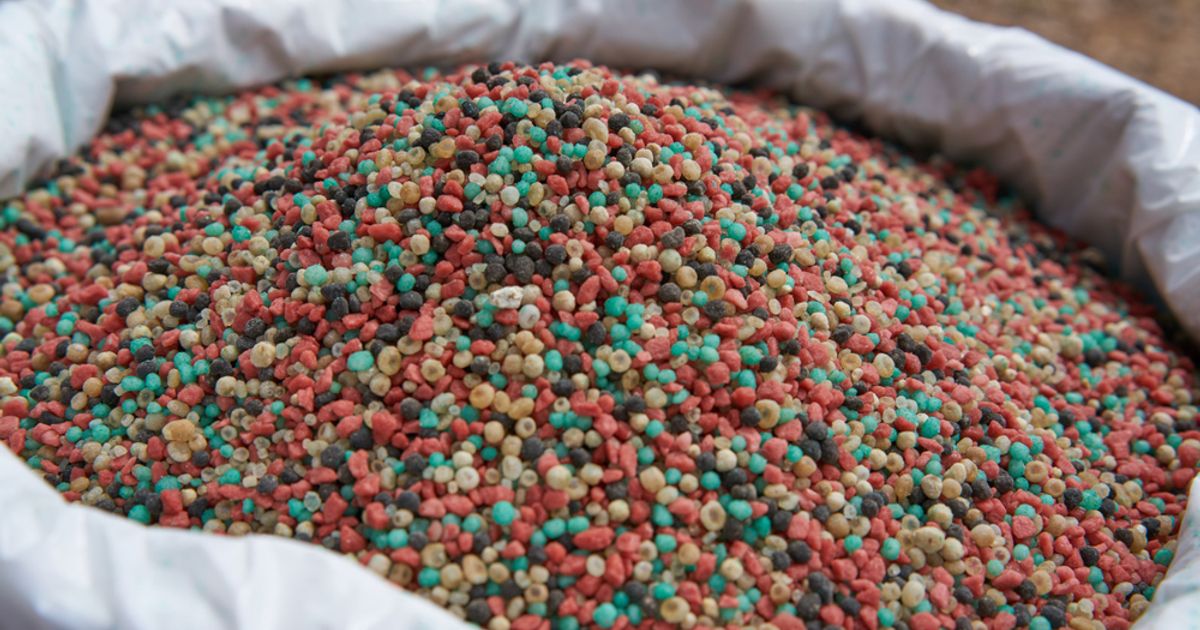
Millennial Potash ranked third on the 2026 TSX Venture 50 after a 950% share-price increase and 1,405% market-cap growth in 2025, driven by a major resource upgrade and project advancement at its Banio Potash Project in Gabon. Measured & Indicated resources rose 275% to 2.45 billion tonnes at 15.6% KCl and Inferred resources increased 210% to 3.56 billion tonnes at 15.6% KCl; the company has initiated a Definitive Feasibility Study backed by a US$3.0m commitment from the U.S. DFC. Prior PEA metrics include an after-tax NPV(10%) of US$1.07bn, a 32.6% IRR and US$61/tonne operating costs, and management is pursuing development, infrastructure work and strategic partnerships to position Banio as a low-cost Atlantic Basin potash supplier to the U.S., Brazil and Africa.
Market structure: Millennial’s resource jump and DFC backing make it a potential low‑cost Atlantic‑basin entrant, benefiting Atlantic shipping/logistics, offshore port contractors and fertilizer traders focusing on US/Brazil routes. Wealthier, lower‑cost producers (Nutrien NTR, Mosaic MOS) gain optionality via new offtake sources but face modest margin pressure if Banio advances to production in 4–7 years. Near term (0–24 months) supply impact on potash prices is negligible; longer term (3–7 years) incremental Atlantic supply could cap price spikes and shift seaborne pricing power away from Eurasian exporters.
Risk assessment: Key tail risks are DFS failure, capex escalation >30%, DFC political reversals, or permitting/social conflict in Gabon; any of these could vaporize market value quickly. Immediate market reaction (days–weeks) is sentiment driven; material technical/financial risk crystallizes in DFS and offtake/financing rounds over 3–12 months. Hidden dependencies include port/road build in Mayumba, shipping capacity, and processing yield from 15.6% KCl ore — conversion economics are uncertain until metallurgical testwork and reserve classification are complete.
Trade implications: For investors, this is a two‑bucket trade: speculative junior exposure to MLP for binary DFS/offtake gambles, and defensive exposure to large-cap fertilizer producers (NTR/MOS) to capture sector re‑rating if non‑Russian supply is priced in. Use size discipline (1–3% NAV spec position in MLP) and structured options on large caps (6–12 month call spreads on NTR) to limit downside. Monitor 3 catalysts in next 6 months: DFS timeline, DFC follow‑on funding, and any binding offtake/port concession.
Contrarian angles: The market likely underestimates conversion risk from resource to reserve and overestimates speed to market—950% share run up prices in a project still in DFS. Historical parallels (Brazilian phosphate juniors) show resource uplifts often stall pre‑capex; expect at least one major valuation re‑set if DFS extends beyond 12 months or capex >US$1bn. Defensive consequence: a sector rally could be reversed if Banio’s metallurgical or infrastructure costs prove higher than PEA assumptions (US$61/t opex target).
AI-powered research, real-time alerts, and portfolio analytics for institutional investors.
Request DemoOverall Sentiment
strongly positive
Sentiment Score
0.72
