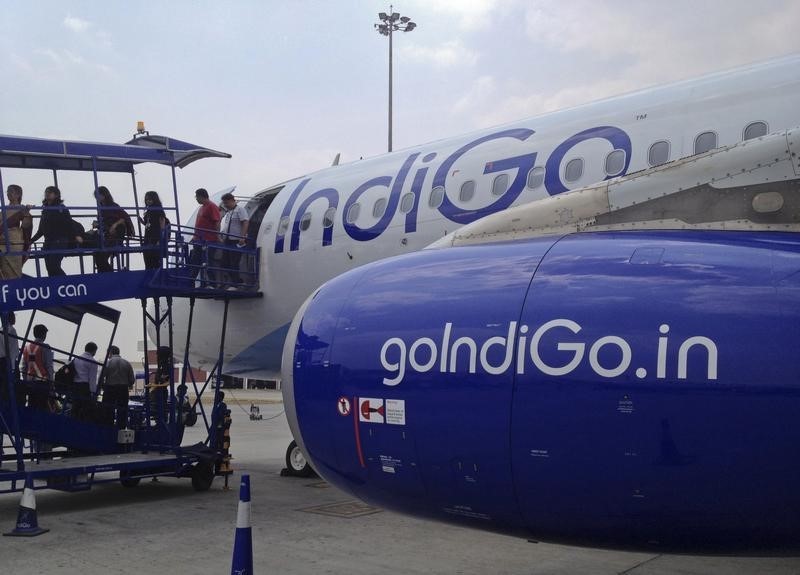
IndiGo's Board approved William Walsh as Chief Executive Officer, pending security clearance from the Ministry of Civil Aviation; he is expected to join no later than August 3, 2026 and will conclude his IATA tenure on July 31, 2026. Walsh, formerly CEO of British Airways (2005–2011), IAG (2011–2020) and Aer Lingus, was endorsed by IndiGo’s chairman and MD for his global perspective and operational leadership to support international growth.
This hires' biggest actionable lever is credibility around international growth and regulatory navigation, not day‑to‑day domestic ops. Expect a measurable tilt in management priorities: commercial partnerships, bilateral slot diplomacy, and finance-market signalling — changes that typically show up in yields and RASM within 6–18 months and in fleet/capex decisions over 24–60 months. Improved access to lessor relationships and international financing could shave 50–150bp off incremental financing costs for cross‑border leases/long‑lease deals, materially affecting IRR on any new widebody commitments.
Second‑order beneficiaries go beyond the airline itself. Lessors and OEMs (Airbus/Boeing) gain optional demand optionality if strategy moves toward long‑haul; airport slot holders and international distribution partners (GDS, codeshare partners) stand to capture outsized revenue share as higher‑yield international mix rises. Conversely, small domestic LCCs with weak balance sheets (e.g., SpiceJet) face increased pressure on profitable trunk and regional feed routes, accelerating consolidation risk over 12–36 months and widening fare dispersion on international feeder routes.
Key risks and catalysts are binary and time‑staged. The security/clearance process and promoter governance constraints are 1–6 month binary gates that could materially change sentiment if delayed or diluted; operational execution (fleet, pilots, interline agreements) is a 6–24 month execution risk. Macro travel shocks (fuel spike, recession) would reverse any re‑rating within 3–9 months; conversely, a visible two‑quarter improvement in international yields or a material widebody LOI would be a 6–18 month positive catalyst.
AI-powered research, real-time alerts, and portfolio analytics for institutional investors.
Overall Sentiment
neutral
Sentiment Score
0.05
