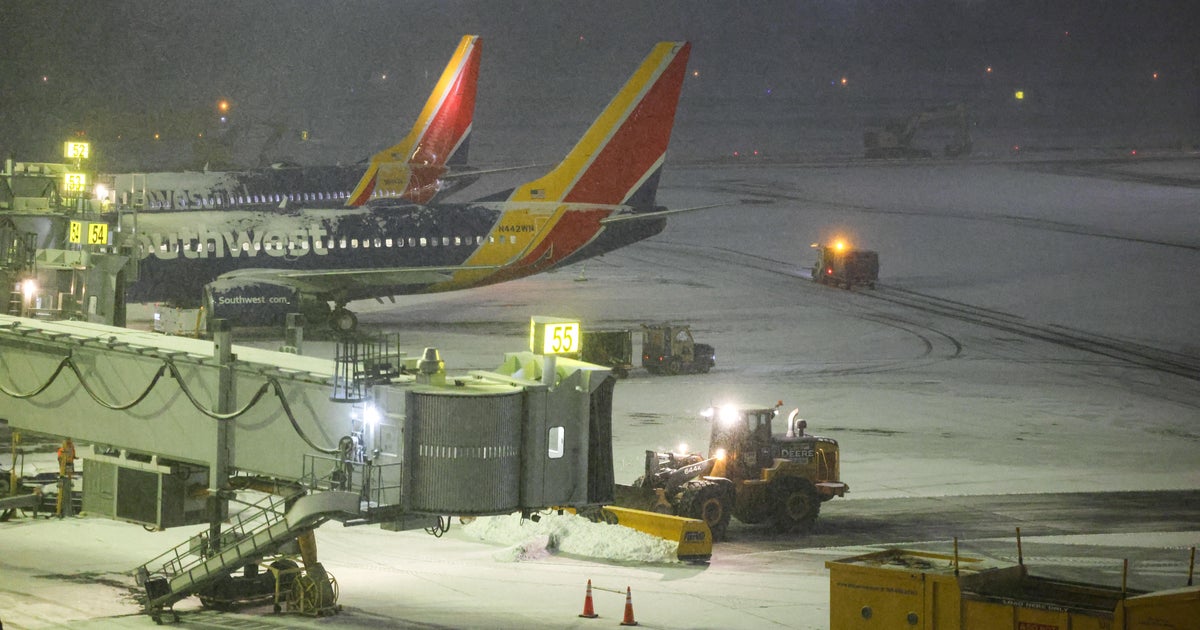
A widespread winter storm forced U.S. airlines to cancel more than 11,000 flights on Sunday—the most in a single day since the start of the COVID pandemic—and left over 3,500 additional cancellations already recorded for Monday as heavy snow, sleet and freezing rain swept from the Southern Rockies to New England. Major hubs including Reagan National and LaGuardia closed or suspended operations, Dallas-Fort Worth reduced schedules, and carriers (American, United, Delta) were among the most affected while issuing travel waivers; the disruptions imply near-term revenue, rebooking and operational costs for airlines and significant regional travel disruption.
Market structure: The immediate winners are ground-service providers, airport de-icing/maintenance contractors and short-lived gas/heating suppliers; losers are network carriers (AAL, UAL, DAL) and airport retail in the next 1–2 weeks as >11,000 cancellations compress traffic and ancillary revenue. Hub carriers suffer outsized cascading delays because of hub-and-spoke dependencies (expect >10% of affected flights to cause multi-leg knock-on disruption over 3–5 days). Pricing power: carriers may raise fares on rebookings and last-minute travel, partially offsetting revenue loss but only after a short revenue trough.
Risk assessment: Tail risks include multi-day national shutdowns (1–3% probability) that force liquidity draws or extra debt issuance for carriers with weak balance sheets; regulatory tail risk includes accelerated consumer protection rules within 30–90 days that could raise comp costs by 5–10%. Hidden dependencies: airport ops, regional partners and crew scheduling create second-order P&L hits lasting weeks. Catalysts that could amplify or reverse impacts: additional storms within 7–14 days, fuel price moves, or FAA capacity directives.
Trade implications: Expect a 20–60% surge in implied vol for airline options near-term; airport REIT and airline credit spreads should widen 10–30 bps intraday. Direct tactical plays should be short-term (1–8 week) and size-conserved: hedge or short the most operationally impacted legacy carriers while buying short-duration exposure to heating/Natural Gas (storm-driven demand). Avoid long-duration airline longs until operational normalization (~2–4 weeks).
Contrarian angle: The market often over-penalizes airlines after single-event disruptions; historical winter-storm parallels show mean reversion in 2–6 weeks with full demand recovery by one quarter. Mispricing opportunity: buying high-quality airline equity or tight-credit names if they sell off >15% without balance-sheet impairment. Unintended consequence: aggressive capacity cuts by carriers to control costs could tighten fares into spring, benefiting well-capitalized low-cost carriers (LUV) longer-term.
AI-powered research, real-time alerts, and portfolio analytics for institutional investors.
Request DemoOverall Sentiment
moderately negative
Sentiment Score
-0.35
