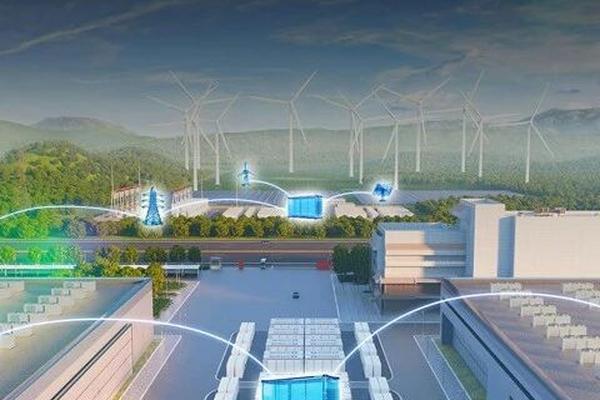
Rapid growth in AI data centers is creating acute power constraints that are accelerating demand for long-duration energy storage as core infrastructure. Hichen Energy Storage unveiled a native 8-hour system (∞Power8 6.9MW/55.2MWh), an 8-hour 1300Ah cell, and a lithium–sodium integrated solution marketed to smooth 70% millisecond load swings and cut backup costs versus diesel by >20%; industry data cited include 15.11GW/62.59GWh of ≥4-hour global procurements in 2024, 56% of domestic bids at ≥4 hours (Jan–Sep), a projected 150TWh potential demand and >1 trillion yuan cumulative output opportunity, and a target LCOS of 0.1 yuan within five years. Major tech players (Microsoft, NVIDIA, Huawei) are embedding long-duration storage into AIDC standards, making lithium-ion 8-hour solutions a strategic competitive battleground for energy-storage and grid-integration investments.
Market structure: Hyperscalers and AIDC integrators (NVDA beneficiaries, MSFT as purchaser/tenant) plus specialist energy‑storage OEMs and integrators (e.g., Fluence, Tesla Megapack, ESS Tech, CATL/albemarle for supply) are primary winners as 8‑hour lithium and hybrid sodium‑lithium systems become project default. Losers include merchant peaker/backup diesel economics (NRG, genset OEM revenue pools) and any grid operators with constrained capex — pricing power shifts to turnkey storage system providers and large‑capacity cell makers as 8‑hour systems scale; expect higher project ASPs near term (6–18 months) and falling LCOS over 2–5 years.
Risk assessment: Tail risks include major battery fire/regulatory retrenchment, Chinese export controls on cell tech, and a raw‑material shock (Li/Co/Cu) that could spike costs >30% in 6–12 months; permit/grid interconnection delays create execution risk for multi‑MWh projects (0–24 months). Hidden dependencies: utility tariff design, capacity market rules and hyperscaler on‑site PPA terms determine economics — an adverse capacity‑market ruling could remove merchant revenue pools and reprice projects. Catalysts: Nvidia/OCP standards, hyperscaler capex announcements and subsidy rounds (IRA/China equivalents) can accelerate adoption within 3–12 months.
Trade implications: Favor equity exposure to storage integrators and large‑capacity cell suppliers via FLNC (Fluence), GWH (ESS), TSLA Megapack exposure, and ALB (lithium chemicals) with 12–36 month horizons; use NVDA exposure (2–4% portfolio) for AI demand coupling over 6–12 months. Options: buy NVDA 3–6 month call spreads to capture upside around data‑center capex news; buy 12–24 month LEAP calls on FLNC/GWH to play technology adoption with defined premium. Cross‑asset: long lithium and copper; short select merchant generator names (NRG) as a hedge against capacity erosion.
Contrarian angles: Market underestimates hybrid sodium‑lithium stacks and service/controls providers who capture recurring revenue — these firms can sustain margins as cells commoditize; conversely, miners may be overbought if recycling and cell‑capacity growth outpace raw extraction. Historical parallel: telecom backup diesel -> battery backup (accelerated after regulation) suggests rapid revenue reallocation once standards and hyperscalers mandate energy‑storage; unintended consequence: rapid scale can compress integrator margins after 24–36 months. Watch triggers: 20% YoY LCOS decline or ≥1GW of 8‑hour RFP awards in a quarter as a buy super‑cycle signal.
AI-powered research, real-time alerts, and portfolio analytics for institutional investors.
Request DemoOverall Sentiment
moderately positive
Sentiment Score
0.42
Ticker Sentiment
