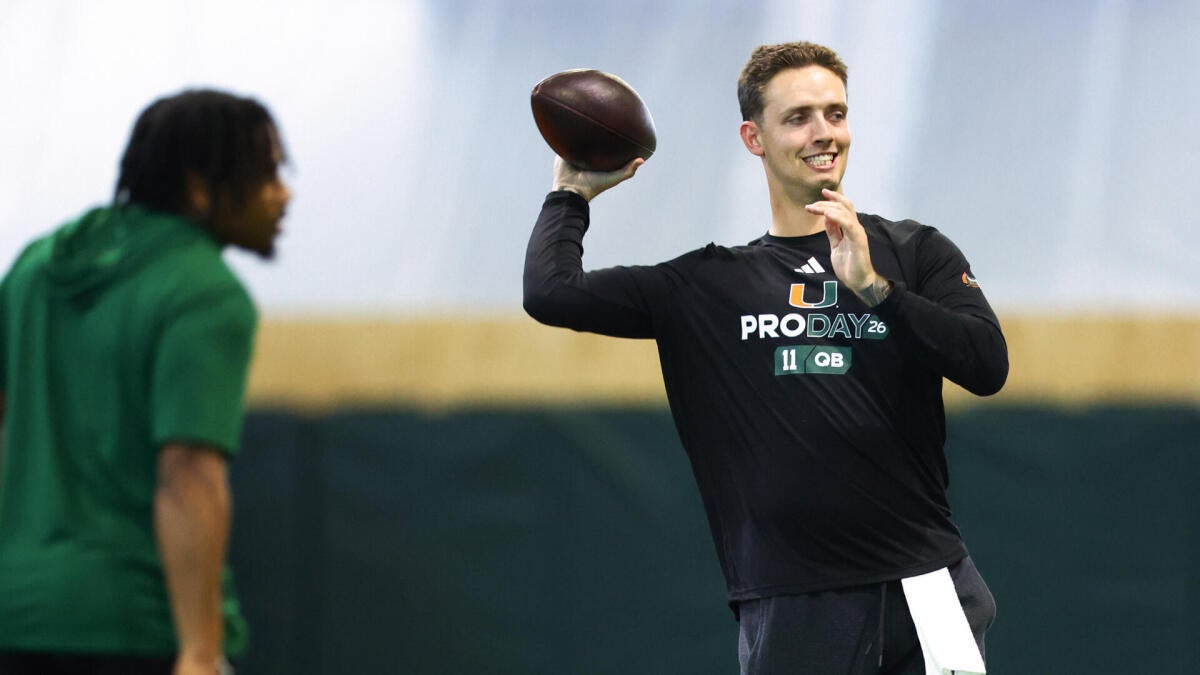
The article centers on draft-night rumors, including the Cowboys' openness to moving up from No. 12 if top defenders come off the board early, while the Jets are linked to Texas Tech edge rusher David Bailey at No. 2. It also notes growing speculation that quarterback Carson Beck could sneak into the late first round or early second despite being ranked No. 202 in CBS Sports' prospect rankings. The piece is mostly rumor-driven and unlikely to materially move broader markets.
This is less a single-event NFL draft story than a liquidity and information-price discovery event: the market is being told that premium defensive talent may disappear quickly, which increases the value of upward optionality for teams sitting in the teens. For a team like Dallas, the key second-order effect is not just roster repair but the cost of urgency — moving up from the middle of the board tends to force overpayment when multiple clubs are chasing the same thin tier. That typically creates a short-lived premium for the team selling out of the target range and a worse expected value for the buyer unless the gap between the late-teens and top-10 players is materially larger than consensus.
The Jets rumor around a specific second-overall target matters because it compresses uncertainty for the next few picks and can trigger a cascading “run” on the same archetype. In draft markets, once one team telegraphs position-specific conviction, competitors often pivot not because their board changed, but because they fear being boxed out; that creates an auction dynamic where the marginal pick price rises fastest in the 2-8 range. The largest beneficiary is the team that owns multiple picks in the range where the slide begins, since it can convert scarcity into leverage rather than chase it.
The quarterback angle is the most important hidden catalyst. If a passer with mixed public valuation enters the first-round conversation, the downstream effect is on every team that was hoping to sit back and address other needs on Day 2; one QB going earlier than expected can push a secondary tier of defenders and offensive linemen down the board, effectively improving the expected value of late-first picks. The contrarian take is that the draft may be overestimating how much these rumors should move until actual pick selection; most of the edge accrues to teams with multiple scenarios, not to teams trying to front-run a single headline.
Over the next 24-72 hours, the main risk is a rapid reversal if the early picks do not match the rumor stack, which would unwind any perceived scarcity premium and penalize teams that traded up too aggressively. Over the next 3-6 months, the more durable signal is whether the draft class truly lacks top-end defensive depth; if so, teams that stayed put and accumulated value should outperform on a roster-construction basis, while clubs that paid up will need immediate starter-quality impact to justify the capital spent.
AI-powered research, real-time alerts, and portfolio analytics for institutional investors.
Request TrialOverall Sentiment
neutral
Sentiment Score
0.05
