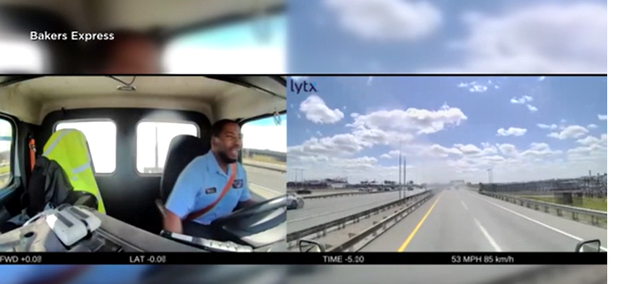
United Airlines flight UA169 was traveling 160 mph when it struck a light pole and a truck near the NJ Turnpike before landing safely at Newark Liberty International Airport. Investigators are reviewing whether gusty winds, aircraft position, air traffic control, or flight operations contributed, and United has removed the crew from service during its investigation. No major injuries were reported, but the incident raises operational and safety concerns for the carrier and Newark approach procedures.
This is less a single-incident headline than a potential cluster-risk event for airline operating reliability at a constrained hub. The immediate equity impact on UAL is likely contained unless investigators find a systemic maintenance, crew-procedural, or airport-configuration failure, but the market should assign a higher probability to a short-lived overhang in bookings, especially on premium transatlantic traffic where safety perception matters more than fare sensitivity. The larger second-order effect is on Newark utilization: if the incident forces additional scrutiny of runway assignments and low-visibility wind procedures, operational throughput could tighten just enough to create more delays, missed connections, and irregular operations costs across the entire network. For BA, the issue is not direct legal liability but sentiment contamination: every incident involving a widebody in constrained approach environments reinforces the bear case that older aircraft types and legacy safety optics carry a reputational discount versus newer fleets. If the aircraft inspection uncovers a component or configuration issue, suppliers and MRO names tied to 767 support may see a temporary bid, but the broader read-through is negative for airlines that rely on a small number of high-density international aircraft to maximize hub economics. Weather-linked disruptions also tend to benefit airport infrastructure and ATC-adjacent vendors only if the response translates into capex, which is a months-to-years catalyst rather than a near-term trade. The contrarian view is that the market may overstate long-tail damage to UAL if the outcome is ultimately framed as a one-off low-altitude strike under gusty crosswind conditions. In that base case, the stock likely mean-reverts once the investigative fog clears, because investors tend to discount isolated operational incidents unless they map to a repeatable failure mode. The real downside scenario is not the direct repair bill; it is an FAA/airport procedural response that reduces runway flexibility at Newark and raises delay costs into the summer travel season, which would pressure unit revenue and margin more than the headline itself. Catalyst timing matters: over the next 3-10 trading sessions the tape is driven by speculation and media amplification; over 1-3 months the real swing factor is whether the NTSB finds human factors versus systemic process failure. If the conclusion is benign, the setup favors a relief rally in UAL; if not, expect a persistent multiple discount relative to DAL/LUV as investors reprice operational risk. For BA, any incremental downside is likely smaller and more indirect unless the investigation reveals a maintenance or parts-related issue that touches the manufacturer ecosystem.
AI-powered research, real-time alerts, and portfolio analytics for institutional investors.
Request DemoOverall Sentiment
mildly negative
Sentiment Score
-0.20
Ticker Sentiment
