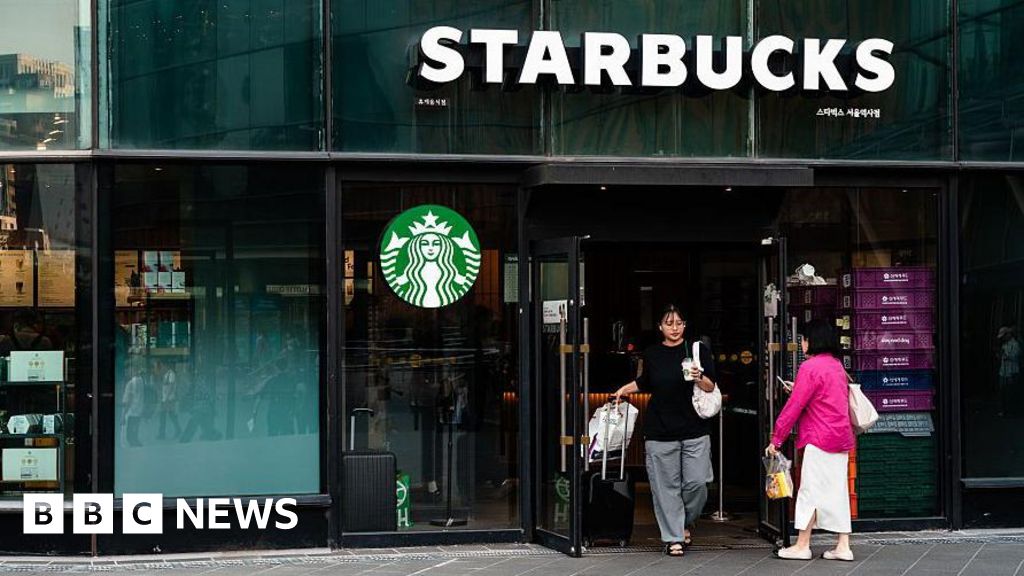
Starbucks Korea fired CEO Sohn Jeong-hyun after a "Tank Day" tumbler promotion triggered backlash for perceived references to the 1980 Gwangju Uprising crackdown. The company rolled back the campaign within hours and apologised, while South Korea's president publicly condemned the marketing as insulting to democracy victims. The incident is primarily a reputational and governance issue for Starbucks Korea and parent Shinsegae rather than a broad market event.
This is not an earnings event; it is a governance and brand-control failure that mainly hits the Korea JV, not the U.S. parent’s operating cash flow. The immediate damage is reputational in a market where consumer boycotts can translate into a measurable traffic drop for several weeks, but the larger issue is tighter sponsor oversight: local management now has to be more conservative on marketing, which likely lowers promotional creativity and short-term comp performance across the chain.
For SBUX, the direct P&L exposure is limited, but the second-order risk is that Korea becomes a proof point for how quickly localized brand missteps can propagate across Asia social media and trigger broader scrutiny of ESG/values alignment. That matters because Starbucks sells premium beverage experiences; any perception of cultural insensitivity weakens pricing power more than unit volume. The real medium-term loser is the franchise/JV structure itself, as the operator will now face slower approval cycles, lower campaign ROI, and higher compliance overhead.
The market is likely to over-penalize the ticker on headline risk and underweight the fact that Starbucks Corp. no longer controls the market’s local operator. If shares sell off on sympathy, that creates an opportunity because the event is neither a demand shock in the U.S. nor a supply-chain issue. The cleaner trade is on volatility and narrative churn: this can stay in the news for days, but the fundamental read-through fades over 1-2 months unless consumer boycotts materially dent same-store sales in Korea.
Contrarian view: the scandal may actually improve governance discipline at the JV and reduce future headline risk, which is mildly positive for long-run brand durability. The key question is whether management overcorrects and becomes too risk-averse on localized marketing, leaving the brand less relevant versus domestic café competitors. That would be a slow-burn share loss story, not an immediate catastrophe.
AI-powered research, real-time alerts, and portfolio analytics for institutional investors.
Request DemoOverall Sentiment
strongly negative
Sentiment Score
-0.55
Ticker Sentiment
