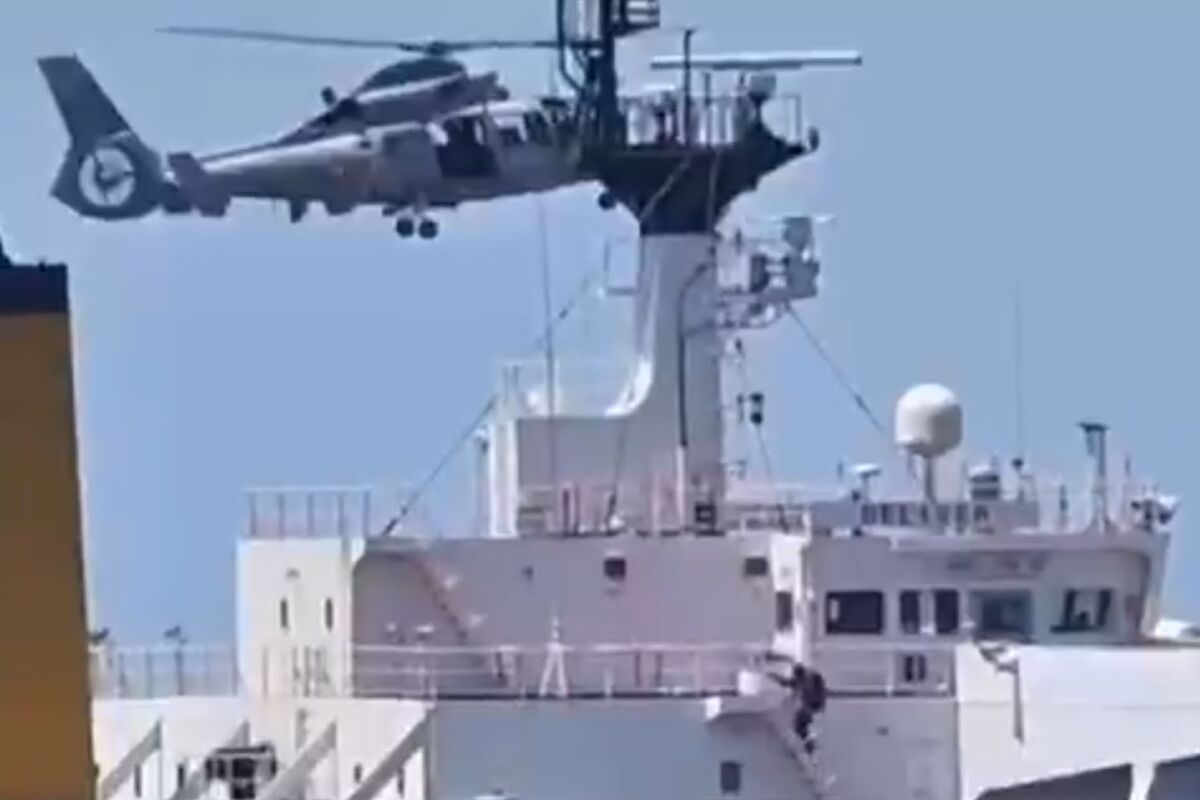
France’s navy boarded the Deliver tanker off Sicily, with President Macron saying the vessel was in breach of maritime law and part of Russia’s shadow fleet used to export sanctioned crude. The move underscores Europe’s tougher enforcement of sanctions on Russian oil flows and could add operational friction for tankers moving sanctioned barrels through the Mediterranean. The immediate market impact is likely limited, but the action adds another layer of uncertainty for energy shipping and compliance risks.
This is less about one tanker and more about the market signaling shift from passive sanction leakage to active interdiction. The second-order effect is a rising probability that shadow-fleet logistics become slower, more expensive, and more failure-prone: higher war-risk premiums, more AIS spoofing costs, more ship detentions, and more reliance on older hulls willing to take the trade. That tends to tighten effective seaborne supply even without a formal production cut, which is mildly supportive for crude differentials and freight rates over the next several weeks. The biggest beneficiaries are not the obvious majors, but owners and operators of compliant tonnage and firms tied to enforcement, surveillance, and port-state control. Expect incremental demand for marine insurance, satellite tracking, vessel vetting, and naval/Coast Guard procurement; this is a multi-month theme rather than a one-day trade. The losers are sanctioned crude arbitrage networks, smaller independent traders, and refineries or importers that depend on discounted Russian barrels, because the discount can compress if transport risk rises faster than the sanction discount widens. Catalyst risk cuts both ways: one or two high-profile seizures can accelerate enforcement and keep freight elevated, but a diplomatic de-escalation or legal setback could quickly re-open routes. Near term, the market may underprice the possibility that more boardings force shadow-fleet operators to route farther, increasing voyage times and soaking up tanker capacity. Over 3-12 months, the more important issue is whether Europe turns this from symbolic enforcement into a sustained campaign that materially constrains Russian export volumes. The contrarian view is that the headline is emotionally bullish for sanctions hawks but economically modest unless it scales. If enforcement stays episodic, the shadow fleet adapts and the trade simply reroutes, leaving crude supply mostly intact while boosting volatility rather than trend price. In that case, the better expression is not outright long oil, but long the infrastructure of enforcement and compliant shipping versus vulnerable gray-market logistics.
AI-powered research, real-time alerts, and portfolio analytics for institutional investors.
Request DemoOverall Sentiment
mildly negative
Sentiment Score
-0.25
