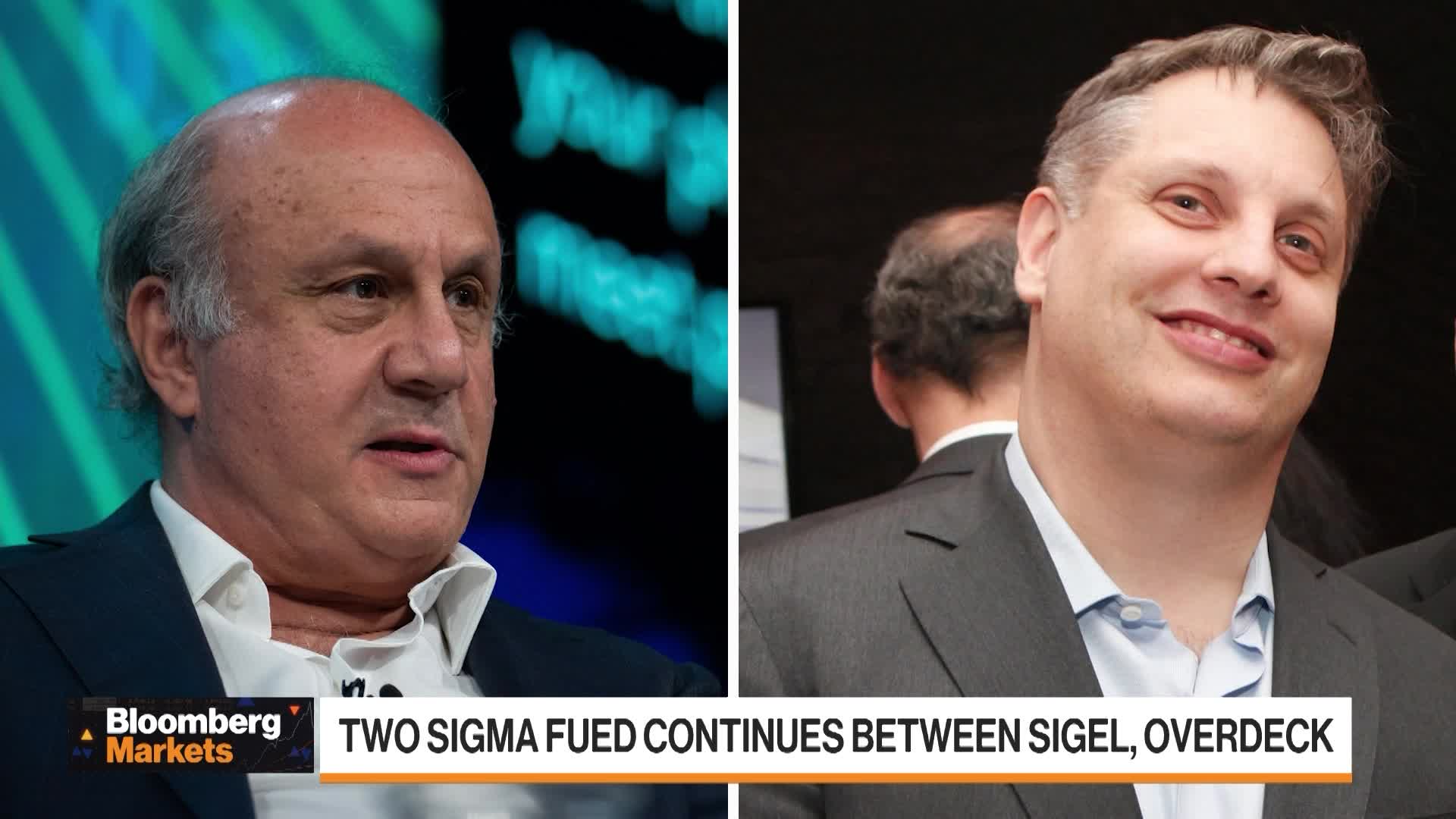
A large quant firm with roughly 1,700 employees has navigated a long-running feud between founders David Siegel and John Overdeck, with both briefly stepping down, subsequent leadership changes, and Overdeck returning to a more active role. The firm's largest fund is up about 13% year-to-date, it reports no materially negative down years during the turmoil, and it has launched three new products (a multi-strategy fund, an equity market-neutral product, and a tax-aware strategy), raising over $1 billion while AUM has increased from $60 billion to a record $70 billion, suggesting investor demand remains robust despite governance noise.
Market structure: Rising flows into a large, stable quant firm (AUM ~ $70bn, +$1bn raised, flagship +13% YTD) disproportionately benefit infrastructure and execution providers — exchanges (CME, NDAQ, ICE), market‑making (VIRT) and cloud/data vendors (MSFT, GOOGL, AWS suppliers). Traditional active long‑only managers (e.g., TROW, AMG) and small boutique PMs with founder risk are structurally exposed as fee and AUM share migrate to systematic products; expect gradual fee compression for discretionary managers over 12–36 months.
Risk assessment: Key tail risks are a model blow‑up or systemic deleveraging (histor precedent: LTCM‑style liquidity spiral) producing short‑term correlated redemptions >10% AUM or a quarterly drawdown >15%, which would propagate to prime brokers and execution venues. Immediate (days) risks: leadership churn and PR shocks; short term (weeks–months): new fund flows and performance; long term (quarters–years): permanent market share shifts and potential regulatory scrutiny on systematic strategies. Hidden dependencies include concentration of engineering talent, cloud/colocation capacity and vendor lock‑in that can amplify operational outages.
Trade implications: Prefer direct exposure to structural beneficiaries: overweight NDAQ/CME/ICE (size 2–3% each) and VIRT (1–2%) to capture higher trade/take rates and spreads compression resilience; add 1–2% core longs in MSFT/GOOGL for recurring cloud revenue tied to quant infra. Pair trade: long NDAQ (2%) / short TROW (2%) to play fee share rotation over 6–12 months. Options: buy 3‑month call spreads on NDAQ (e.g., +5–10% strikes) to limit cost and purchase 3‑month VIX call options (OTM 1.5–2× current) as insurance against quant crowding unwind. Entry: deploy within 2–6 weeks; exit/trim if NDAQ/CME appreciate >15% or if firm AUM falls >10%.
Contrarian angles: Consensus underestimates governance and crowding risk — headline stability masks correlated positioning risk: many quants increase cross‑asset beta, raising systemic volatility during stress. The market may be underpricing exchange carry (recurring fee income) while overrating founder‑led boutiques; historical parallels (1998 LTCM, 2007 quant drawdowns) warn that stable performance can reverse quickly once liquidity dries. Unintended consequence: more capital into similar systematic strategies can reduce future Sharpe, so maintain capped position sizes and volatility hedges rather than levered exposure.
AI-powered research, real-time alerts, and portfolio analytics for institutional investors.
Request DemoOverall Sentiment
mildly positive
Sentiment Score
0.30
