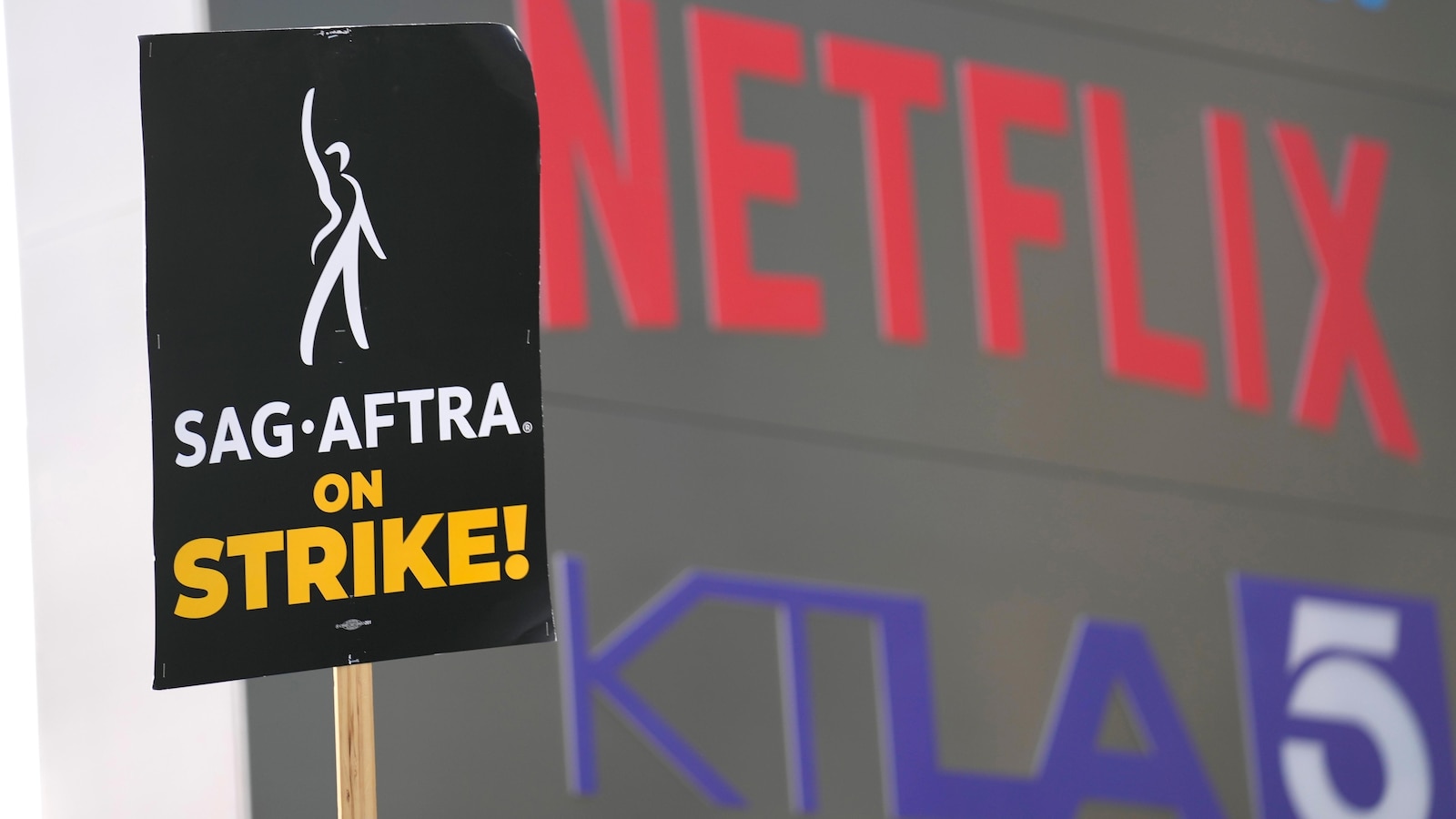
A four-year tentative agreement was reached between the Writers Guild of America West and the Alliance of Motion Picture and Television Producers; the deal is one year longer than the typical three-year contract and must be approved by the guild’s board and members. Terms were not disclosed but are expected to include improved health-care plans and stronger protections against artificial intelligence; the union says the deal protects the writers’ health plan and addresses free work. The agreement reduces near-term strike risk for screenwriters ahead of actor and director contract expirations in late June, though an ongoing WGAW staff strike (100+ staff since February) could complicate ratification or implementation.
This tentative writers’ deal materially reduces near-term tail risk for studios and streamers by clearing the biggest immediate labor overhang on scripted development, so expect a measured re-acceleration of production schedules over the next 3–9 months rather than a sudden surge. The key second-order effect is on unit economics: stronger health coverage and tighter AI protections are likely to raise marginal scripted development costs (writers, rewrites, longer turnaround) — our working estimate is a 3–7% increase in pre-production/script line items, which translates to roughly a 1–3% EBITDA headwind for content-heavy streamers over 12–24 months if fully passed through to studios.
That cost increase intersects with quality/mix dynamics. If studios respond by cutting low-margin “churn” scripted volume and concentrating spend on fewer, higher-quality projects, expect fewer new low-end shows (benefiting premium IP owners and franchise holders) and less inventory for FAST/ad-supported windows; this accelerates consolidation among buyers of premium scripted content (favoring deep-pocketed streamers and international producers) over the next 12–36 months. Conversely, the unresolved staff-union strike and the upcoming SAG-AFTRA/DGA talks are binary catalysts — failure to replicate concessions could reintroduce strike risk within 0–6 months and negate the current stability.
For strategy, the market should price two offsets: (1) upside from normalized output and lower churn-driven subscriber attrition, and (2) margin compression from higher labor/AI constraints. Short-term sentiment will be positive, but medium-term winners are those with diversified revenue (theme parks, live events, international licensing) or low leverage; leveraged studios with heavy near-term content spending are most exposed if cost inflation persists or actors push for comparable gains.
AI-powered research, real-time alerts, and portfolio analytics for institutional investors.
Request DemoOverall Sentiment
mildly positive
Sentiment Score
0.25
