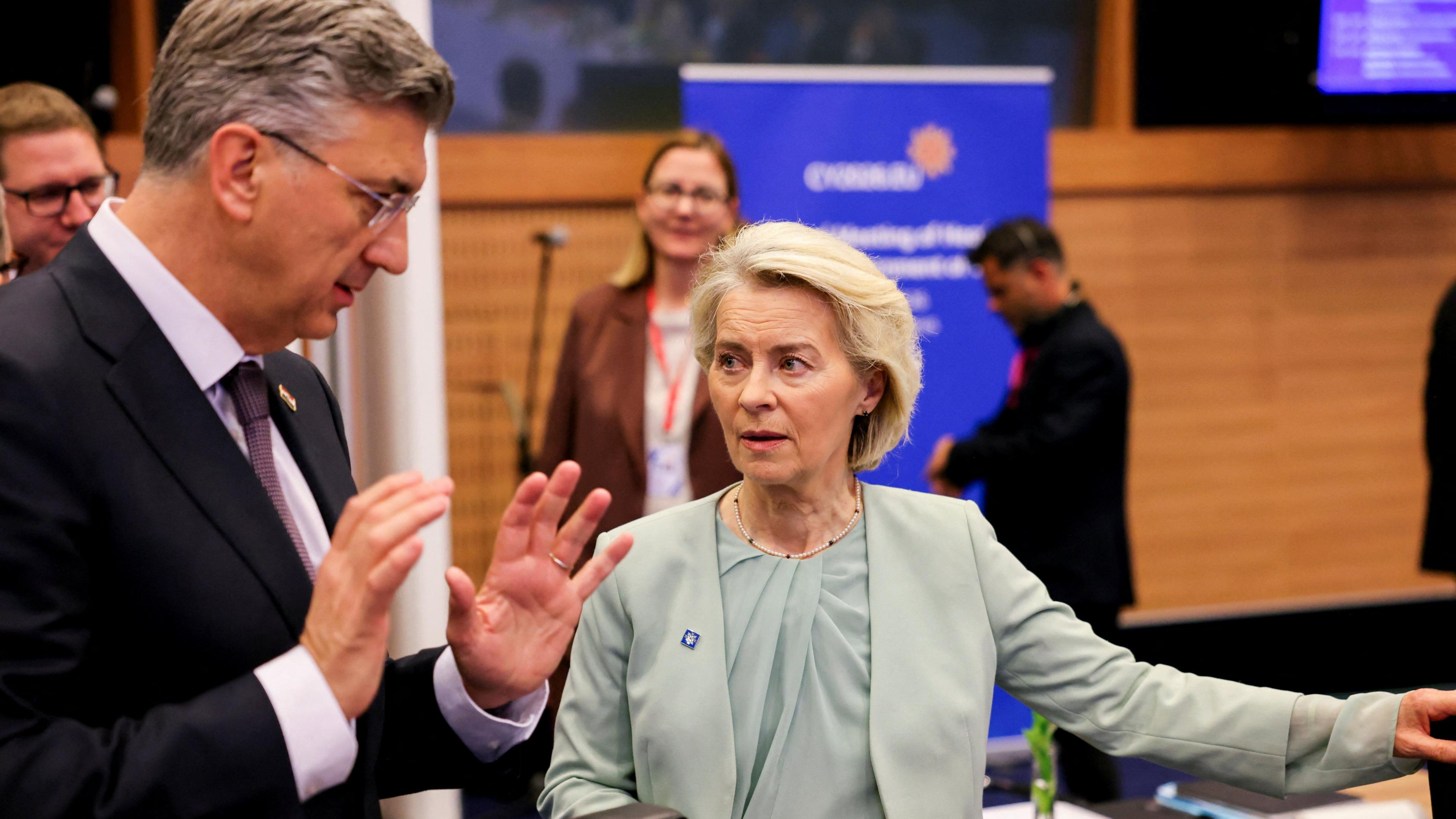
Trump said the US is "studying and reviewing" whether to reduce its more than 36,000 troops stationed in Germany, reopening a recurring NATO deployment risk. The remarks followed a public spat with Chancellor Friedrich Merz over Iran and broader transatlantic strategy, adding friction to US-Germany relations. While the move is not yet actionable, any troop reduction would be significant for European defense posture and could pressure NATO cohesion.
The market implication is less about immediate force posture and more about the credibility of the US security guarantee in Europe. Even if no troops move, repeated threats raise the option value of “strategic autonomy” spending across the continent, which should support multi-year demand for European air defense, munitions, secure comms, base construction, and military logistics. The second-order winner is not necessarily German primes alone; it is any supplier exposed to accelerated inventory replenishment and hardened infrastructure, because allies will likely diversify procurement away from single-country dependence. The near-term risk is a headline-driven repricing of European defense multiples if investors extrapolate political noise into actual force reductions. That risk is most acute over days to weeks, but the underlying budget response unfolds over 6-24 months: Germany and other NATO members can respond by buying more, yet they cannot instantly replace US enablers such as ISR, airlift, missile defense, and nuclear deterrence. If anything materially changes, it would likely be via a Congressional block or a White House walk-back, making the downside for allied defense equities asymmetric to the upside. The contrarian view is that troop cuts are a negotiating tool, not a base case, and the real signal is that Europe’s spending path is now structurally higher regardless of rhetoric. That means the knee-jerk short Europe/NATO trade may be overdone; the better expression is relative value within defense, where valuations of US primes may be capped by domestic political risk while European and missile-defense names continue to benefit from procurement urgency. Energy and industrial exposure in Europe also becomes more vulnerable if alliance friction prolongs security-premium pricing for shipping, insurance, and infrastructure protection.
AI-powered research, real-time alerts, and portfolio analytics for institutional investors.
Request DemoOverall Sentiment
mildly negative
Sentiment Score
-0.15
