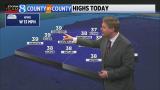
A Friday winter system brought snow, slick roads and high winds to West Michigan, with a cold front Saturday producing a light wintry mix and expected accumulations around a half-inch or less and possible slick spots; light lake-effect snow may follow Sunday with little additional accumulation. Nationally, travel impacts are expected to be limited this weekend aside from light Midwestern snow and increasing west-coast rain that may transition to snow in Idaho on Sunday, while a warm-up through Christmas will push precipitation toward rain—reducing widespread disruption—though a colder, snowier pattern may return the weekend after Christmas.
Market structure: This mild-but-variable holiday pattern favors travel demand continuity rather than disruption — incremental winners are airlines (improved on‑time performance by an estimated 2–5 percentage points vs typical holiday baselines) and online travel/hotel booking platforms that capture last‑minute bookings. Losers are localized winter-dependent businesses (ski resorts, regional de‑icing contractors) and short‑duration winter-fuel demand (natural gas/heating oil) where volumes may fall 3–8% over the holiday week. Pricing power shifts toward high-frequency capacity providers (airlines, OTAs) for a ~1–2 week window around Christmas, while infrastructure players see neutral impact.
Risk assessment: Tail risks include a late cold snap after Dec 27 that swings demand back to heating fuels and forces airline cancellations — this would flip gas exposure within 7–10 days. Immediate horizon (days): operational flight/rail delays; short term (weeks): revenue recognition for hotels/airlines; long term (quarters): negligible structural change. Hidden dependencies: TSA throughput, airport de-icing equipment logistics, and localized mountain resort closures in Idaho/rocky areas can cause asymmetric regional earnings hits. Catalysts: short‑term weather model shifts (GFS/ECMWF divergence), TSA travel numbers, and heliospheric solar activity affecting comms.
Trade implications: Favor tactical, size‑limited exposures: short-dated bullish airline/hotel names and a tactical short in front‑month natural gas. Use options to cap downside (buys of call spreads/put spreads) and aim to harvest window trading gains within 7–21 days. Rotate out of winter‑reliant leisure names (ski resorts MTN) into urban hospitality (MAR, H) and OTAs (BKNG, EXPE) for the holiday demand pickup. Entry: initiate within 24–72 hours; exits: by Jan 15, 2026 or on weather model reversal >48 hours.
AI-powered research, real-time alerts, and portfolio analytics for institutional investors.
Request DemoOverall Sentiment
neutral
Sentiment Score
0.00
Contrarian angle: Consensus underweights the asymmetric hit to ski resort earnings and overweights a generalized travel pain narrative; the market could be underpricing a near‑term revenue uplift for airlines/OTAs by ~2–4% in the holiday week. Historical parallels (mild 2016/2019 holiday anomalies) show airlines booked a single‑week margin boost and lower delay‑related costs; similar short windows produced 3–7% stock moves. Unintended consequence: piling into airlines without hedging gas/fuel exposure risks rapid reversal if the colder pattern returns after Dec 27.
