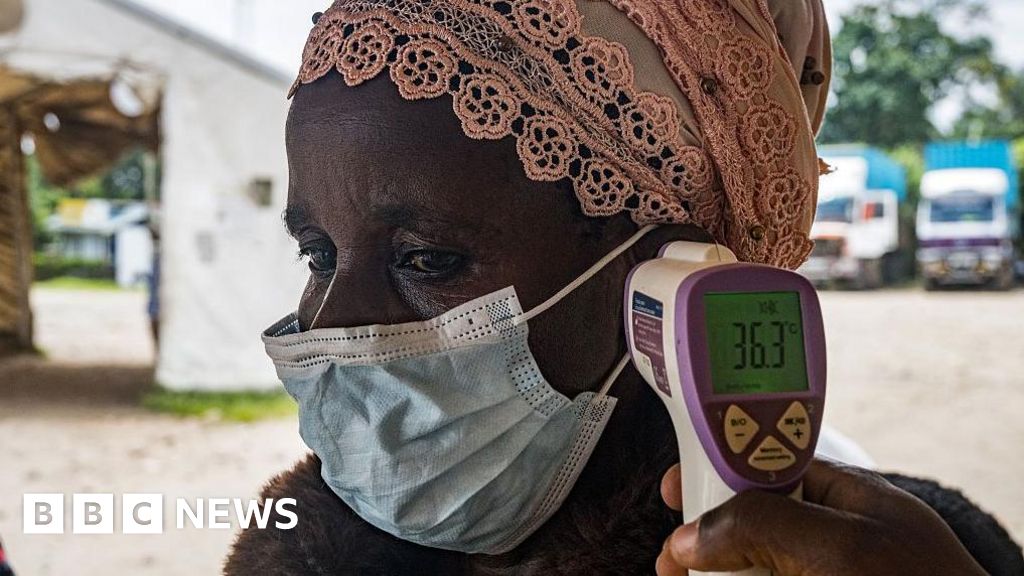
DR Congo is facing its 17th Ebola outbreak, with 513 suspected cases and 136 suspected deaths reported as the Bundibugyo strain spreads across Ituri and into North Kivu. The WHO has declared a public health emergency of international concern, while officials say the outbreak was likely circulating undetected and that major urban centers like Bunia, Butembo and Goma lack fully operational treatment centers. The crisis is worsened by conflict, displacement and weak community reporting, increasing the risk of further regional spread.
The market impact is not on “Ebola” in the abstract; it is on operating capacity in a weak-infrastructure, conflict-heavy corridor where any public-health shock immediately becomes a logistics shock. The first-order beneficiary is not a listed vaccine platform today, but organizations and contractors that sell perimeter control, diagnostics, cold-chain, and field medical logistics into fragile states; the second-order loser set is broader: local transport, informal retail, small mining operations, and any business dependent on high-touch movement between Bunia/Goma/Butembo and border crossings. The key issue is that disease containment is being attempted after transmission likely diffused into multiple nodes, which increases the odds of repeated localized shutdowns rather than a single clean “outbreak trade.” For public markets, the cleaner expression is through East Africa risk premia and border-friction optionality. Uganda is the first spillover sign, so airlines, regional hospitality, and cross-border consumer names face a near-term demand hit if screening tightens or if travel advisories expand; the bigger medium-term risk is that higher inspection intensity slows trade flows through already-brittle corridors, raising working-capital needs and disrupting fuel, food, and mining supply chains. That matters more than headline case counts because it can persist for months even if clinical containment improves. The contrarian point is that the initial market reaction may overstate global contagion risk and understate the local economic drag. This is a region where the marginal effect of fear often exceeds the medical effect: behavior changes, labor absenteeism, and checkpoint delays can suppress commerce before formal restrictions do. If treatment centers and testing capacity ramp quickly, the mortality curve can improve faster than sentiment, but the operational drag on border traffic and mining still lingers because trust restoration takes longer than outbreak control. The most attractive positioning is to buy protection on East Africa-sensitive cyclicals rather than chase a broad “pandemic hedge.” The event should also increase scrutiny on firms with Africa exposure but thin disclosure around country concentration, especially logistics, payments, and telecom towers with enterprise customers in eastern DRC and Uganda.
AI-powered research, real-time alerts, and portfolio analytics for institutional investors.
Request DemoOverall Sentiment
extremely negative
Sentiment Score
-0.85
