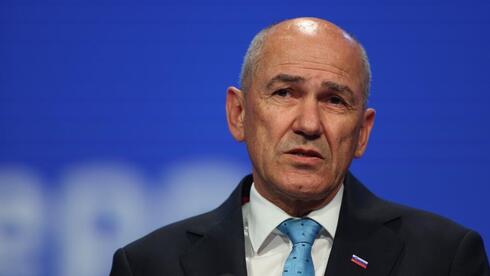
Janez Janša says he has secured a coalition that could return him to Slovenia’s premiership for a fourth term, giving his center-right bloc a fragile 48-seat majority if outside support holds. The shift could materially soften Slovenia’s hardline stance toward Israel, reversing policies including a weapons ban, settlement import restrictions, and bans on Israeli officials. Political risk remains elevated because the coalition depends on loosely aligned partners and outside support, with opponents warning the arrangement could quickly unravel.
The market implication is not the small-country politics headline; it is the potential removal of a persistent European policy outlier on Israel and associated export-control pressure. A Janša-led cabinet would likely mean fewer symbolic sanctions, less alignment with activist EU blocs, and a lower probability that Slovenia becomes a template for broader European legal or trade restrictions. The second-order effect is that Israel-facing European counterparty risk improves at the margin, especially for sectors exposed to public procurement, logistics, defense-adjacent services, and cross-border financing where even modest regulatory hostility can deter activity. The key timing issue is that this is a fragile parliamentary construct, so the first tradable window is days to weeks, while policy normalization—if it happens—would take months. The main risk is not a clean reversal to the prior line, but government instability forcing policy paralysis: that outcome would reduce headline risk without materially improving operating conditions. Another tail risk is coalition breakdown triggering fresh elections, which would re-empower the previous governing axis and likely restore the anti-Israel posture quickly. Contrarianly, the move may be underpriced because investors tend to discount small-state foreign-policy shifts as non-economic. But in this case, the signaling value matters: one EU capital shifting from hardline criticism to a pro-Israel stance can change the marginal tone in Brussels, especially if paired with other right-leaning governments. That creates a low-cost option value for Israeli sovereign, defense, and cyber names, while also reducing the probability of incremental sanctions that often hit supply chains before they hit earnings. The main thing to watch is whether Janša governs as a true policy pivot or merely as a rhetorical pivot constrained by coalition fragility and EU institutions. If he moderates to preserve domestic legitimacy, the market impact fades; if he leans into institutional confrontation, volatility rises but the medium-term re-rating for Israel-linked assets becomes more durable.
AI-powered research, real-time alerts, and portfolio analytics for institutional investors.
Request DemoOverall Sentiment
neutral
Sentiment Score
-0.10
