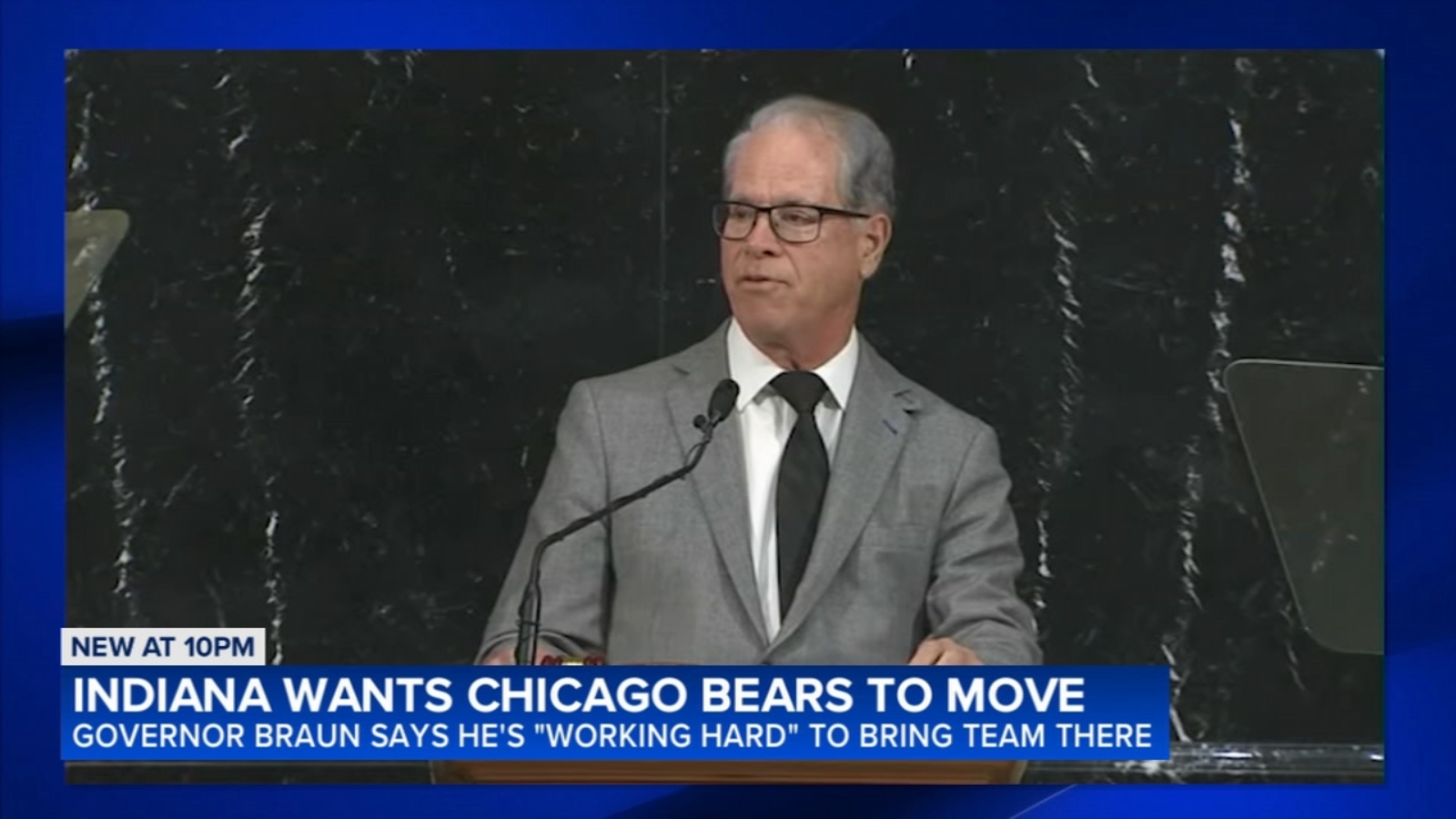
Indiana Governor Mike Braun publicly campaigned to relocate the Chicago Bears' proposed new stadium to Indiana during his State of the State address as the team surveys season-ticket holders and NFL commissioner Roger Goodell has visited proposed sites in Indiana and Arlington Heights. Illinois Governor J.B. Pritzker said any public funding talks continue but would be conditioned on addressing local infrastructure needs and the Bears retiring hundreds of millions of dollars of remaining Soldier Field renovation debt, a constraint that limits fiscal exposure and shapes negotiation dynamics for local governments and investors.
Market structure: A Bears move to Indiana is a local demand shock (stadium capex likely $0.8–1.8B) that directly benefits aggregates/construction materials (Vulcan VMC, Martin Marietta MLM), heavy civil/engineering contractors (Jacobs J, AECOM ACM) and NW Indiana commercial real estate and hospitality. Losers include Arlington Heights/Chicago-adjacent service providers, Illinois-heavy municipal bond holders and any concession/venue operators tied to Soldier Field; pricing power will favor local suppliers for 12–36 months during bidding and site work, likely lifting regional aggregate volumes 5–15% vs baseline in year 1–2.
Risk assessment: Primary tail risks are: Bears decide to stay in Illinois (probability ~50–65%), public subsidy rejection or litigation delaying construction >12–24 months, and cost overruns >25% that shift burden to taxpayers and derail plans. Key hidden dependencies: state legislative approval windows (spring/fall sessions), Pritzker’s demand that Bears retire Soldier Field debt (threshold hundreds of millions) and NFL incentives; catalysts to watch are the team survey results (30–90 days), NFL site report (next 3 months) and any state budget votes (6–12 months).
Trade implications: Direct plays: tilt 1–3% toward MLM/VMC and 1–2% toward J/ACM with 6–12 month horizons to capture bid activity; overweight Indiana regional banks (First Merchants FRME, Old National ONB) by 1–2% for deposit/fee pickup from construction payrolls. Use options to control risk: buy 9–12 month call spreads on MLM or VMC (15–30% OTM) sized as 0.5–1% notional exposure. Municipal strategy: underweight Illinois munis and selectively buy short-duration Indiana muni issuance; if Illinois offers >$300M subsidy to keep team, reduce Indiana overweight.
Contrarian angles: Markets underprice local small-cap suppliers and short-cycle winners (aggregates, subcontractors) while over-allocating to marquee national contractors whose margins face competitive tendering; historical parallel: Raiders’ move to Las Vegas lifted regional contractors and hospitality 10–20% pre/post construction. Unintended consequences include higher Illinois muni yields and credit spreads if taxpayers resist new subsidies—monitor IL 10y muni/treasury spread widening beyond +100bp as a trade trigger.
AI-powered research, real-time alerts, and portfolio analytics for institutional investors.
Request DemoOverall Sentiment
neutral
Sentiment Score
0.05
