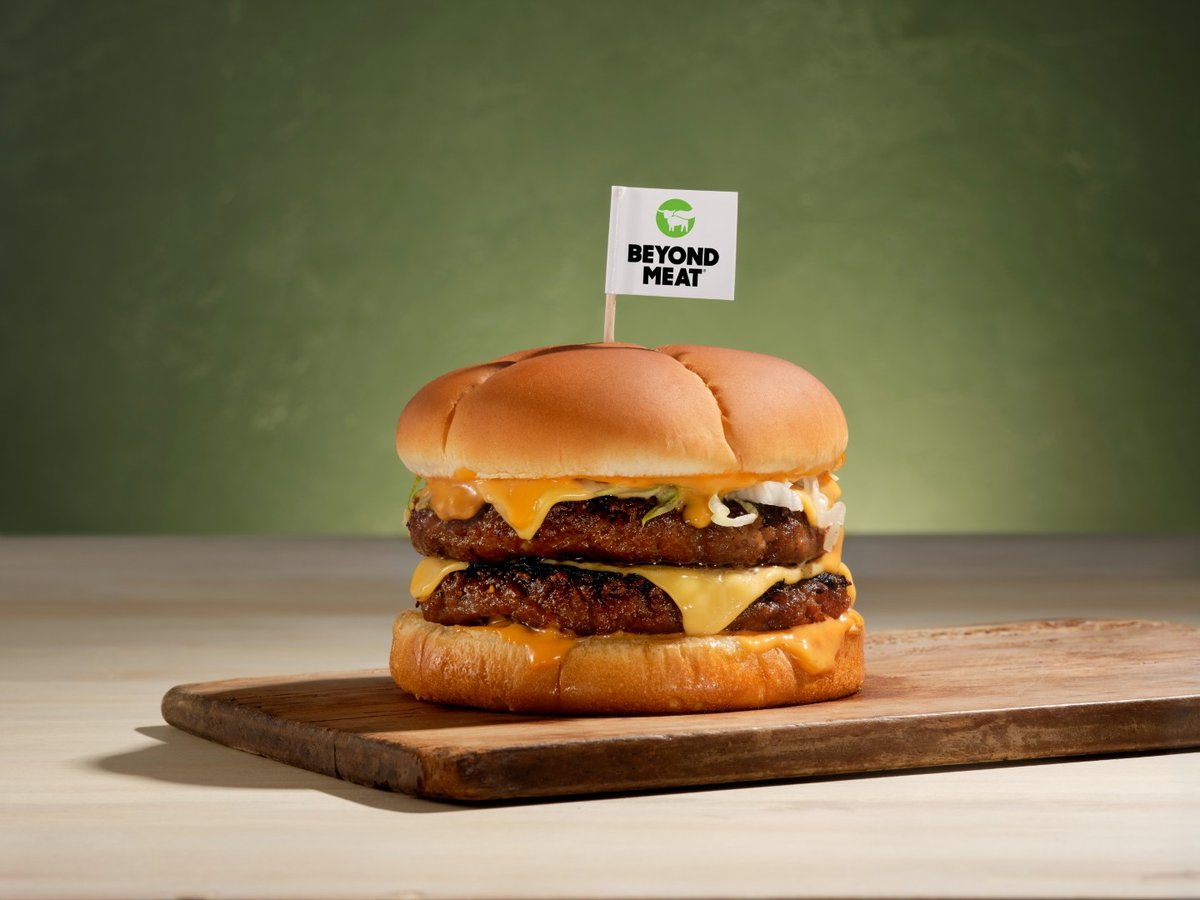
Beyond Meat has materially underperformed the market—shares have lost more than 99% over five years versus an 84% S&P 500 gain—with 3-year and 1-year declines of ~93% and 83% respectively. Q3 results showed revenue of $70.2M, a $110.7M net loss, a 13.3% YoY revenue decline and a 10.3% gross margin, and management guided Q4 revenue to only $60–$65M; US refrigerated plant-based burger retail sales fell ~26% YoY, competitive saturation and lack of pricing power have pressured volumes and prices, and an October convertible-debt exchange materially diluted shares, leaving the company without a credible turnaround in the view of investors.
Market structure is bifurcating: incumbent protein and CPG players (e.g., TSN, K, CPB) gain pricing leverage and shelf-share as capital-constrained pure-plays struggle to fund promotions and distribution; expect private-label and theft of premium SKUs to compress ASPs across refrigerated categories over the next 2-12 months. Competitive dynamics will favor scale and manufacturing flexibility—companies able to lower COGS by 500–1,000 bps or shift to co-manufacturing will win volumes back; niche brands without scale face chronic discounting.
Primary tail risks include liquidity shock or covenant acceleration from recent convertible exchanges, a bankruptcy filing within 6–12 months if run-rate cash burn does not materially decline, and a regulatory labeling change that could either restrict or re-open market access; commodity price swings (pea protein, oils) remain a secondary but notable operational risk. Hidden dependencies include retailer slotting economics, co-manufacturer capacity constraints, and promotional cadence—these can amplify inventory destocking within 1–3 quarters.
Actionable trade implications: short-biased exposure to BYND sized to borrow-availability with risk-limited option structures; pair trades long legacy protein processors (TSN, K) vs short BYND to capture share reversion over 3–12 months; rotate cash from alt-protein thematic funds into staples and branded CPGs with stable margins. Position timing: enter initial shorts ahead of the next quarterly update and scale on confirmatory misses >10% vs consensus, trim on rallies >30% or takeover chatter.
Contrarian angles: consensus prizes secular demand loss but underweights optionality—IP, international licensing, or asset sales could rerate equity if executed within 12 months; conversely, aggressive short positioning risks a squeeze given low float and retail interest. Historical parallels (high-hype consumer IPOs that reorganized under private owners) suggest either prolonged value destruction or a binary M&A outcome; calibrate position sizing for a binary payoff.
AI-powered research, real-time alerts, and portfolio analytics for institutional investors.
Request DemoOverall Sentiment
extremely negative
Sentiment Score
-0.85
Ticker Sentiment
