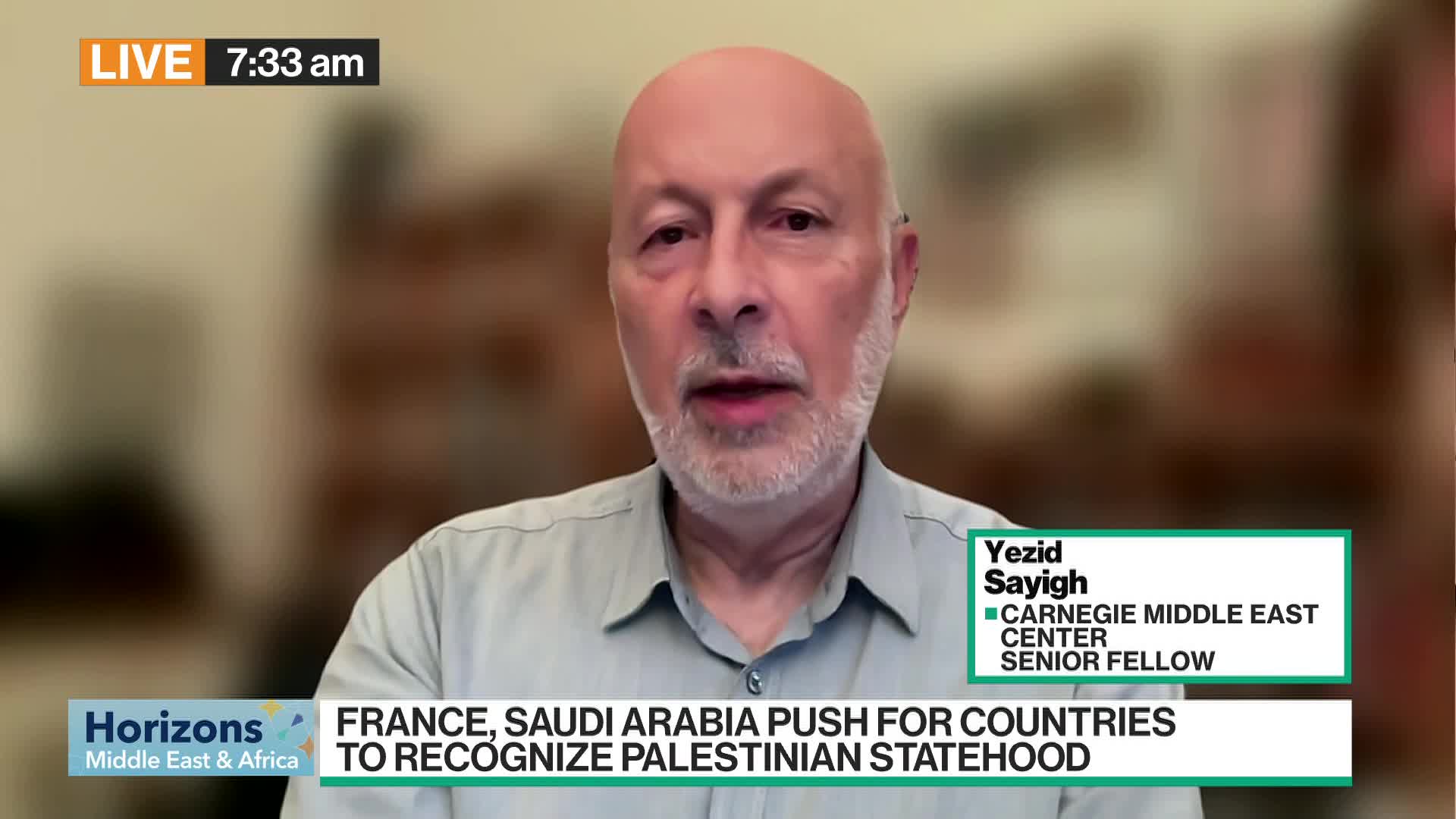
France, along with the UK, Canada, Australia, and Portugal, has formally recognized Palestinian statehood at the United Nations, a move intended to galvanize support for a two-state solution for Middle East peace. However, Yezid Sayigh, a Senior Fellow at the Carnegie Middle East Center, suggests this effort is largely symbolic, contending that the practical window for a two-state solution closed approximately 25 years ago.
A coalition of Western nations, including France, the UK, and Canada, has formally recognized Palestinian statehood at a United Nations meeting to build momentum for a two-state solution. However, this diplomatic initiative is being framed as largely symbolic by regional experts. According to Yezid Sayigh, a Senior Fellow at the Carnegie Middle East Center, the practical window for implementing a two-state solution effectively closed 25 years ago. This expert assessment injects a pessimistic tone into the development, suggesting a significant disconnect between international political gestures and the tangible prospects for peace. The situation is characterized by a mixed sentiment score of -0.1, reflecting the conflict between the positive diplomatic action and the grim underlying reality. The low market impact score of 0.3 indicates that while this event contributes to the ongoing geopolitical narrative, it is not perceived as a near-term catalyst for significant market repricing, but rather as a continuation of long-term regional instability.
AI-powered research, real-time alerts, and portfolio analytics for institutional investors.
Request DemoOverall Sentiment
mixed
Sentiment Score
-0.10
