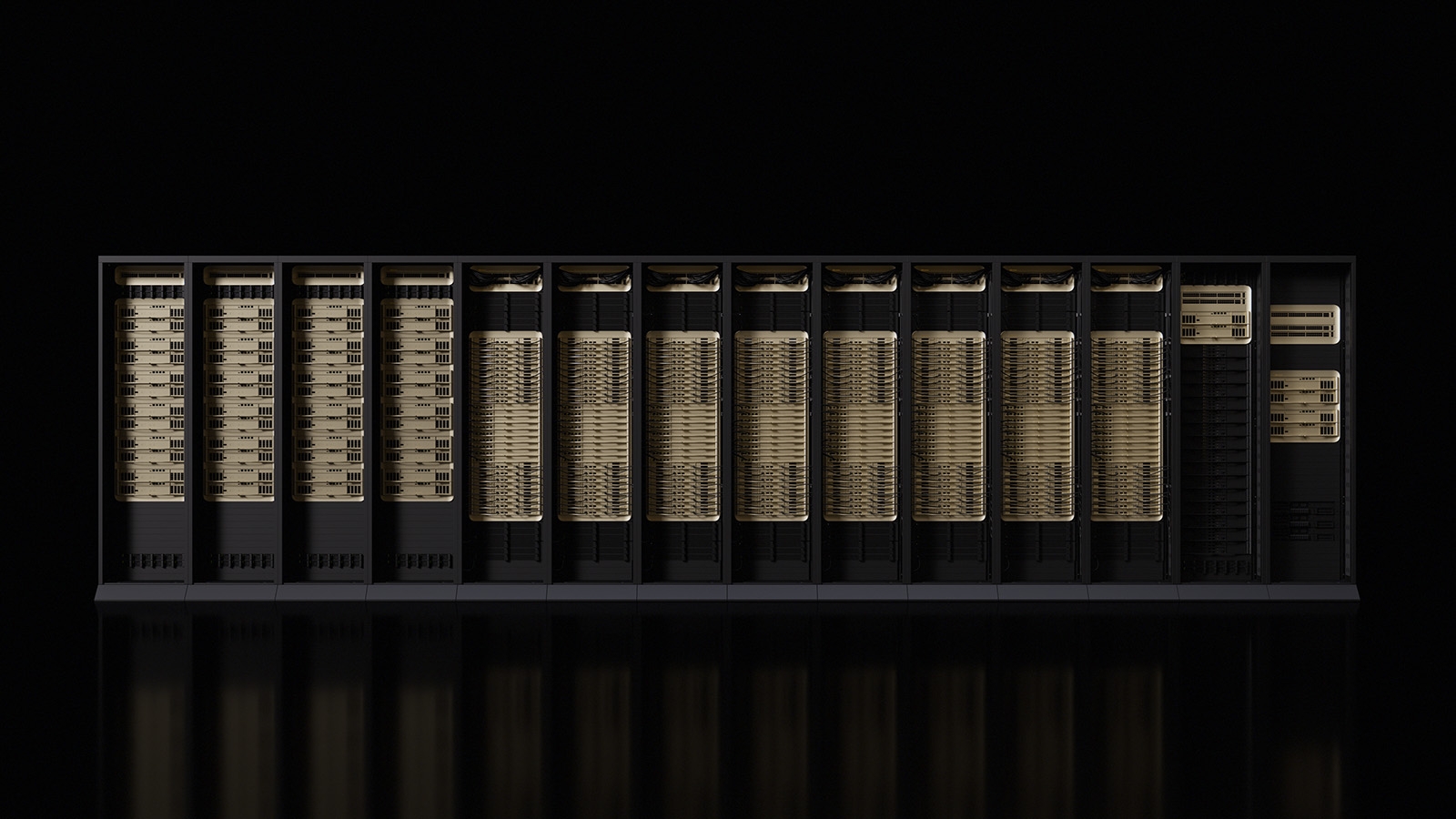
NVIDIA unveiled the Rubin platform — a six‑chip, rack‑scale AI system (Vera CPUs, Rubin GPUs, NVLink 6, ConnectX‑9, BlueField‑4 DPU, Spectrum‑6 switch) claiming up to 10x lower inference token cost and 4x fewer GPUs for MoE training versus Blackwell, 50 PF NVFP4 per Rubin GPU, 3.6 TB/s NVLink per GPU and a 72‑GPU/36‑CPU NVL72 rack with 260 TB/s aggregate NVLink. The stack adds AI‑native storage (BlueField‑4/ASTRA), third‑gen confidential computing, Spectrum‑X photonics networking (claims of 5x power efficiency, 10x reliability/5x longer uptime) and broad cloud and OEM support (AWS, Google Cloud, Microsoft, OCI, CoreWeave et al.), with Rubin systems slated for partner availability in H2 2026. The announcement materially strengthens NVIDIA's competitive position in datacenter AI infrastructure and could accelerate cloud capex and OEM server refresh cycles, benefiting NVIDIA and early integrators while warranting scrutiny of adoption timelines and competitive responses.
Market structure: Rubin materially increases NVIDIA’s platform dominance (NVDA) and gives cloud partners (MSFT, GOOGL, AWS via partnerships) outsized bargaining power to monetize advanced reasoning and MoE workloads. Expect pricing power for Rubin-class hardware and ecosystem services for 18–36 months while supply ramps; training/inference unit economics improve (up to 10x token cost drop claimed), which should expand total addressable spend on AI even if per-job GPU counts fall.
Risk assessment: Tail risks include export controls/antitrust scrutiny or manufacturing yield shortfalls that could delay H2 2026 revenue — treat these as 10–25% probability events with >20% downside to NVDA EPS in worst case. Near-term (days/weeks) sentiment is bullish; medium-term (3–12 months) depends on order flow and partner deployment proofs; long-term (2–5 years) depends on datacenter power/network constraints and software adoption of BlueField/ASTRA.
Trade implications: Favor concentrated exposure to NVDA (platform, NVL72/HGX Rubin economics) and early cloud integrators/core infra partners (CRWV, MSFT, ORCL) while trimming exposure to incumbents with weak AI stacks (IBM, NTAP, NTNX). Use directional equity sized 1–3% positions with options to time H2 2026 commercialization; implement pair trades (long NVDA, short NTAP) to isolate platform risk.
Contrarian angles: Market is pricing near-immediate monetization; adoption realistically staged — revenue likely concentrated in H2 2026+ so near-term multiples may be stretched. Second-order: greater per-token efficiency could paradoxically reduce GPU unit demand per training job, pressuring unit volumes despite higher ASPs. Historical parallel: A100/BF launch cycle — multi-quarter ramp, not instantaneous replacement.
AI-powered research, real-time alerts, and portfolio analytics for institutional investors.
Request DemoOverall Sentiment
strongly positive
Sentiment Score
0.70
Ticker Sentiment
