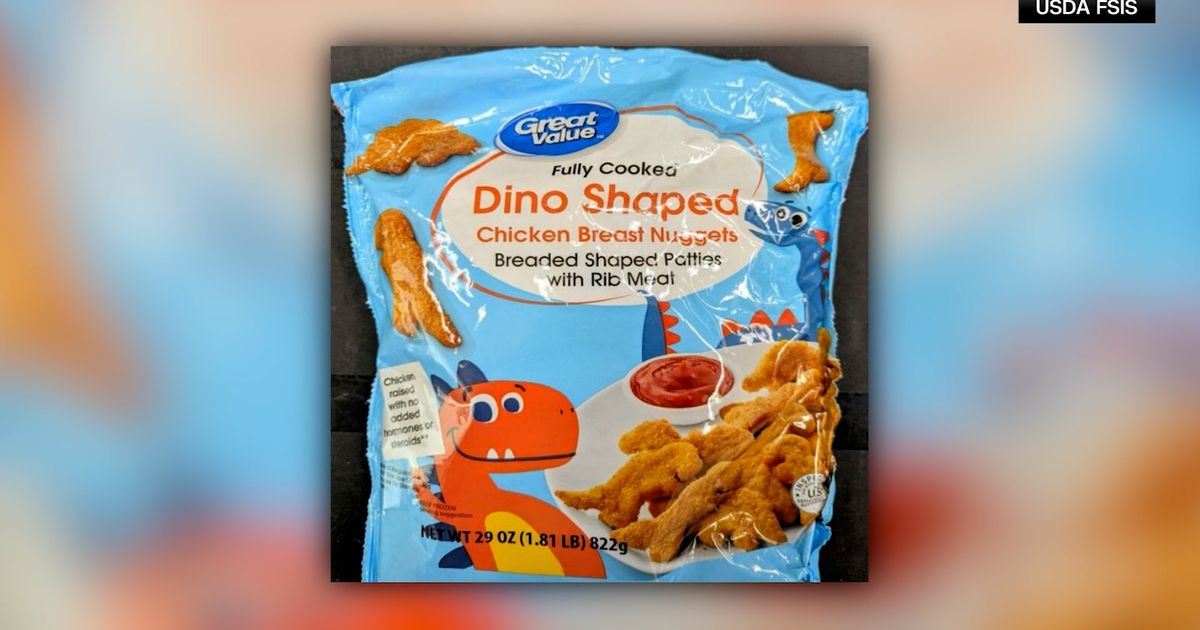
USDA FSIS issued a public health alert after frozen Great Value Dino Shaped Chicken Breast Nuggets (29-oz, produced Feb. 10, 2026; best if used by Feb. 10, 2027; lot code 0416DPO1215; establishment P44164) tested up to five times the FDA benchmark for lead. No recall was requested because the product is reported as no longer available for purchase; consumers are urged to check freezers and discard or return the items. Impact is primarily reputational and consumer-safety related for Walmart/Great Value rather than market-moving, but monitor for potential recall, regulatory action, or litigation.
Near-term reputational damage to a supermarket giant will be concentrated and time-limited but measurable: expect localized traffic and frozen-grocery comps to underperform for 2–8 weeks while consumers triage household freezers and brands run promotions to regain trust. Quantitatively, model a 20–80 bps hit to monthly U.S. food comps in affected demo stores (low single-digit percent revenue impact on the frozen/snack category for the month), with recovery shaped by return/redemption policies and promotional cadence.
The bigger, non-linear risk is supply-chain reallocation and shelf-share churn over 3–12 months. National grocers with differentiated private-label quality controls or membership moats (lower churn on food scares) can poach share; meanwhile co-packers and smaller private-label suppliers face contract re-bids and margin compression as buyers demand extra testing and indemnities, implying 50–200 bps incremental SG&A/testing costs for large retailers and elevated working capital tied to inventory scrubs.
Regulatory and litigation catalysts create a persistent tail over 6–24 months: heightened state sampling can cascade into stricter compliance expectations and insurance premium repricing for food producers and retailers, raising normalized costs of goods sold and potentially lowering retail EBITDA margins by mid-single-digit basis points. Key signals to watch are FSIS sampling releases, class-action filings, and management commentary on private-label controls — any of which would compress multiple expansion for exposed retailers and re-rate category suppliers.
AI-powered research, real-time alerts, and portfolio analytics for institutional investors.
Request DemoOverall Sentiment
mildly negative
Sentiment Score
-0.25
Ticker Sentiment
