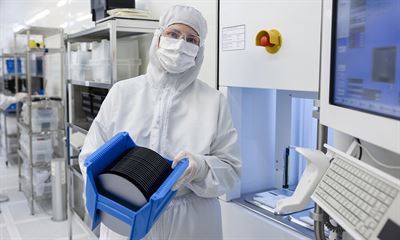
The EU has awarded EUR 25 million to the SUPREME consortium, matched by national funding to total approximately EUR 50 million, to industrialise superconducting quantum technologies over a 3.5-year first phase beginning in early 2026. The 23‑partner, eight‑member‑state project (coordinated by VTT and funded equally by the EU Chips Joint Undertaking and national agencies) aims to reach TRL6/MRL6, validate fabrication processes (angle-evaporated and etched junctions, 3D integration, hybrid processes) and demonstrate a 3D‑integrated 200‑qubit module, while offering Process Design Kits and pilot runs to SMEs and industry — a strategic step for European technology sovereignty with potential long‑term commercial beneficiaries among consortium industrial partners.
Market structure: The EUR50m SUPREME program (EUR25m EU + EUR25m national) is catalytic but modest; it materially de-risks European superconducting stack development and tilts comparative advantage toward consortium members and European fabs/equipment suppliers. Primary winners: Infineon (consortium member, IFX.DE) and European semiconductor-equipment/processing suppliers (e.g., AIXA.DE, ASML.AS) that will benefit from pilot runs and shared wafer economics; losers are non‑European pure‑play quantum IP vendors who face a stronger European supply chain and potential loss of EU market share. Expect a multi‑year shift (2026–2029) of capital expenditure from prototyping to small series manufacturing, improving pricing power for specialized process services but compressing margins for commoditized contract fabs.
Risk assessment: Tail risks include technical failure to reach TRL6/MRL6 by ~mid‑2029 (200‑qubit demo), IP disputes among 23 partners, or new EU export rules fragmenting global supply chains; each could wipe out expected revenue streams and re-rate valuations by 20–50% for early-stage suppliers. Short‑term (0–3 months) market impact near zero; medium (3–18 months) supports R&D/consortium suppliers’ order books; long‑term (18–48 months) could drive durable revenue if pilot services convert to commercial runs. Hidden dependencies: talent & cryogenics supply, shared wafer scheduling, and reciprocal national funding renewals — monitor national budgets and Chips J.U. calls every 3–6 months.
Trade implications: Tactical overweight European semiconductor equipment and process-capable chipmakers + selective private-market allocations to quantum hardware; prefer companies with access to SUPREME PDKs or pilot lines. Use concentrated, sized exposure (1–3% per position) with volatility-managed options for leverage ahead of clear milestones: milestone windows are 2027 (pilot run cadence) and mid‑2029 (200‑qubit demo). Cross‑asset: negligible sovereign bond impact but modest EUR support on a multi‑year growth narrative; commodity impacts limited to helium and specialty materials where demand may rise 5–15% by 2029.
Contrarian angles: Consensus overweights “quantum software” narratives; the market underweights industrialisation risk/reward — hardware industrialisation yields real revenue from wafer runs and PDK licensing that can materialize within 36 months, not decades. The market may underprice the value of shared pilot runs (cost per developer down >50%) which favors small/mid cap European process players; conversely, overinvestment and fragmentation could create long tail of losers and force consolidation, creating 30–50% upside in consolidators but pre‑consolidation distress for niche specialists.
AI-powered research, real-time alerts, and portfolio analytics for institutional investors.
Request DemoOverall Sentiment
moderately positive
Sentiment Score
0.45
