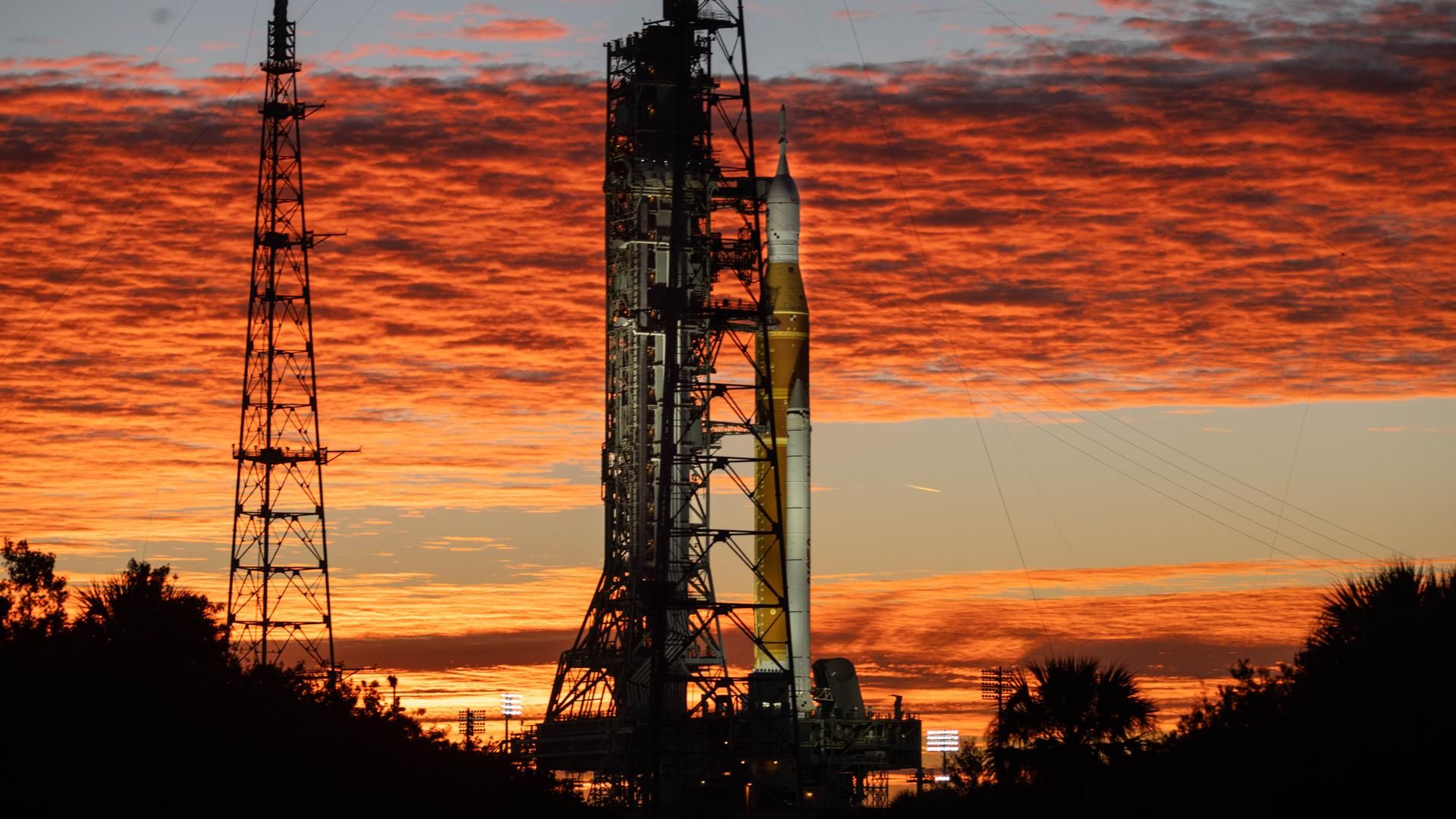
Artemis 2 is targeting an April 1 crewed launch for a four-astronaut, 10-day lunar flyby; the SLS/Orion stack rolled to Launch Complex 39B on March 20 after a 4-mile (6.4 km) crawler transfer. The program resolved a liquid-hydrogen leak in February but later found an interrupted helium flow that required rollback to the VAB for repairs, so April 1 remains tentative with daily opportunities through April 6 and an additional window starting April 30. NASA has said it will likely not perform another wet dress rehearsal and is prioritizing caution given the crewed nature of the mission.
This program functions as a high-visibility catalyst for a narrow set of aerospace primes and a wider supplier ecosystem; a clean success is likely to accelerate discretionary program wins and de-risk follow-on spending decisions over the next 3–12 months, while a failure would trigger outsized political and insurance scrutiny that can compress multiples and defer awards for 6–24 months. The market tends to conflate program headlines with durable revenue — the sensible framing is milestone-driven cashflows for Tier-1 contractors versus lumpier, binary payments for specialty suppliers, which creates asymmetric opportunities across capital structures.
Operational anomalies during launch prep expose recurring weaknesses in cryogenics, valve/control systems and quick-turn test infrastructure; firms selling high-reliability cryogenic hardware and ground-support equipment stand to see contract acceleration and aftermarket service demand over quarters, not years. Conversely, companies whose equity valuations already price in a smooth program cadence are vulnerable to multi-quarter revenue deferrals and margin pressure if cadence slips or scope grows.
Macro and political tail risks are non-trivial: a high-profile setback would invite tighter oversight, re-scoped milestone payments, and higher insurance premiums that amplify working-capital stress for smaller subcontractors within 3–9 months. Offsetting that, a nominal success will likely be “bought and faded” by algos in the first 48–72 hours — durable alpha will come from calibration of multi-month funding flows and selective supplier re-rating rather than headline-driven prime re-ratings.
Execution is therefore best expressed through asymmetric, time-boxed positions that isolate program exposure and limit binary downside. Focus on 3–12 month option structures and small-cap supplier exposures tied to cryogenic and ground-support hardware, while using pair trades to neutralize broad aerospace beta and capture idiosyncratic re-pricing.
AI-powered research, real-time alerts, and portfolio analytics for institutional investors.
Request DemoOverall Sentiment
neutral
Sentiment Score
0.05
