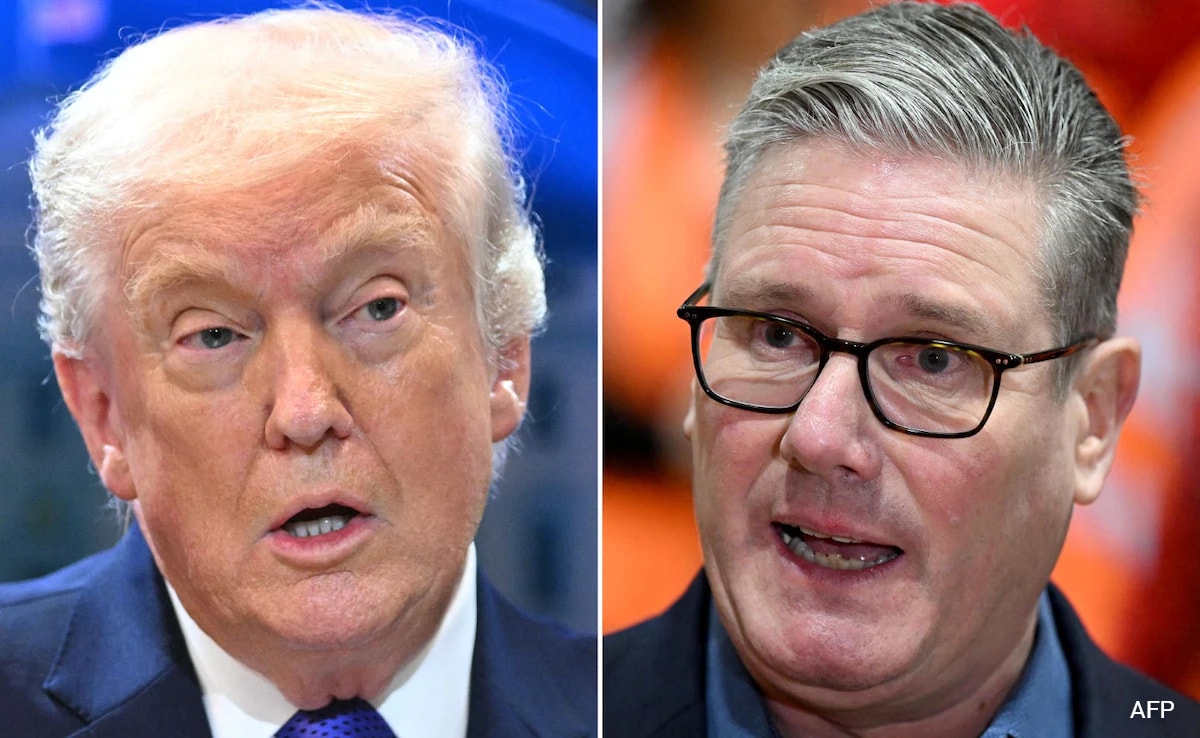
US President Donald Trump publicly criticized UK PM Keir Starmer for not committing British aircraft carriers to the US‑Israeli conflict with Iran and mocked French President Emmanuel Macron, also branding NATO a 'paper tiger'; the White House briefly posted then deleted the speech video. The episode is rhetorical rather than policy‑defining, but elevated geopolitical and alliance tensions could modestly raise risk premia for defense names and European assets.
The immediate market effect will be headline-driven volatility (hours–days) that amplifies existing doubts about transatlantic operational cohesion, but the economically significant impulse is multi-quarter: procurement timelines and maintenance backlogs will be repriced if allies accelerate sovereign programs or if the US pivots to unilateral capacity fills. Ship availability is a capital-intensive, lumpy problem — adding one carrier or accelerating overhaul work translates into multi-year revenue streams for shipyards and marine-systems suppliers, and a measurable bump to MRO and engine-servicing segments over 12–36 months.
Second-order winners are the specialized industrial base pieces that feed carrier/escort readiness (marine turbines, radar, munitions, naval electronics) rather than broad industrial names; capacity constraints in these niches (single-source turbines, advanced radar arrays) can create 6–18 month bottlenecks that lift pricing power. Conversely, if political fracturing forces more bilateral over multilateral buying, FX-sensitive European primes and exported systems face margin pressure from currency moves and shorter contract pipelines.
Key catalysts to watch with explicit timing: NATO communiqués and any allied force-commitment announcements (next 0–30 days), DoD/UK Defence Equipment Plan contract awards (30–180 days), and quarterly results where order books or backlog growth become visible (90–360 days). The largest tail risk is rapid de-escalation or a bipartisan diplomatic fix that re-centers alliance procurement — that would remove much of the upside for defense cyclical names within 1–3 months and favor mean-reversion trades instead of buy-and-hold exposure.
AI-powered research, real-time alerts, and portfolio analytics for institutional investors.
Request DemoOverall Sentiment
neutral
Sentiment Score
0.00
