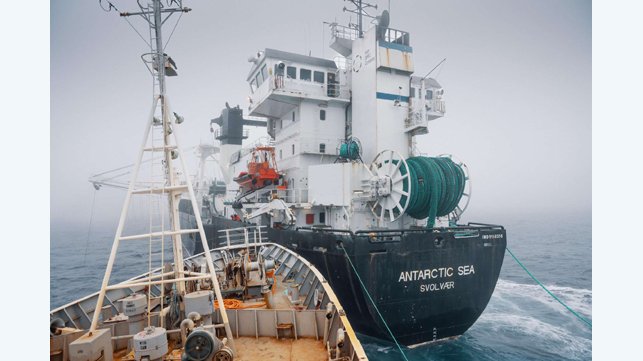
Activists aboard the Bandero carried out a direct intervention on March 31, attempting to disrupt krill trawling for over five hours, deploying a device to shred nets and reportedly striking the stern of Aker Qrill’s Antarctic Sea (132m, 9,600 GT, crew ~60). Aker Qrill called it a 'deliberate attack', said crew were shaken but unharmed and will pursue legal action; activists note last year’s krill catch reached 620,000 tons (first time) and warn Norway is advocating increases to as much as 1.2 million tonnes, raising supply and regulatory risk for krill-based ingredient markets.
This incident elevates operational and reputational risk for Antarctic fishing into an investable shock rather than a pure PR problem. A modest, localized stoppage or escalation (weeks–months) can produce outsized spot tightness for krill-derived inputs because harvesting requires specialized hulls, permits and seasonal windows; a directional 10–20% shortfall in near-term supply plausibly translates into a 30–80% spike in spot krill oil/meal prices before substitution effects kick in. Buyers with fixed formulation specs (salmon feed, nutraceutical capsules) face immediate margin compression or forced spot purchases at sharply higher cost.
Second-order winners are clear: commodity and ingredient suppliers able to substitute (vegetable oils, algal omega-3) or processors with scale to arbitrage input volatility; losers are concentrated fleet owners, small specialty suppliers, and end-users with narrow procurement pools. Litigation and higher security/capex demands create a multi-year drag: expect firms operating polar fleets to see insurance premiums and compliance/OPEX rise by a few percentage points of revenue, and capital cycles (vessel refits, ROVs, escort requirements) to push replacement/upgrade capex into the next 12–36 months.
Catalysts to watch: court rulings or insurance exclusions (days–months), CCAMLR or national quota adjustments (3–12 months), and rapid commercial uptake of algal/plant omega-3 solutions (6–24 months). The consensus trade — buying protection in fishing names or overreacting to a single incident — underprices substitution and policy pushback; if regulators move to clarify rights or industry funds security, price dislocations could reverse within a quarter.
AI-powered research, real-time alerts, and portfolio analytics for institutional investors.
Request DemoOverall Sentiment
mildly negative
Sentiment Score
-0.25
