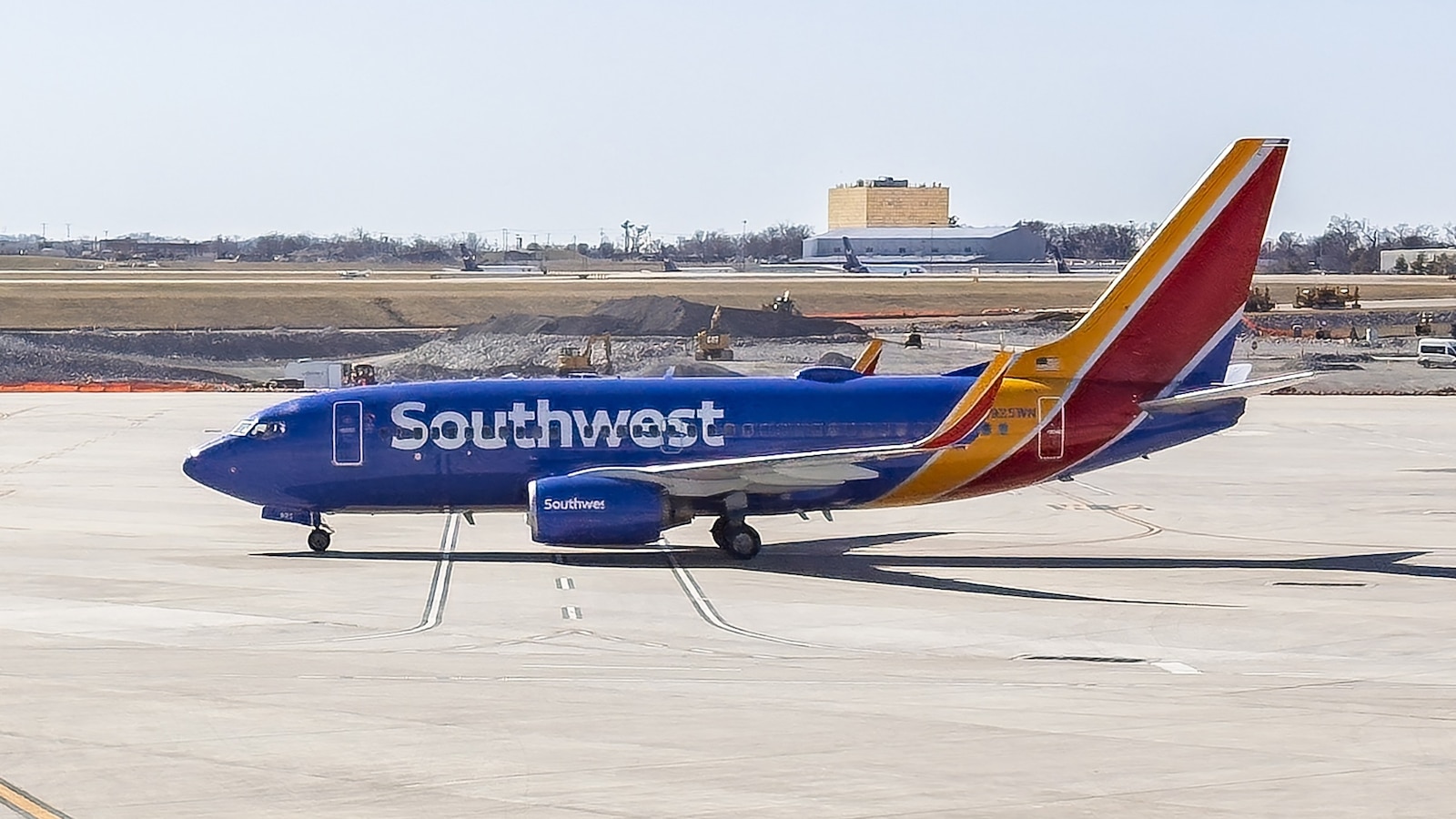
The FAA is investigating an extremely close call between two Southwest Airlines flights at Nashville International Airport, with vertical separation narrowing to just 500 feet at one point. Flight 507 executed a precautionary go-around and Flight 1152 continued its takeoff after onboard alerts and air traffic control instructions. The event raises safety scrutiny for Southwest, but the immediate market impact is likely limited.
This is not a one-off headline risk for LUV; it is a latent pricing and operating-cost issue in a year when the market is already hypersensitive to any evidence that low-cost carriers are being forced to trade efficiency for safety margin. Even if the event remains classified as procedural rather than mechanical, the second-order effect is that Southwest’s brand promise of operational simplicity gets challenged exactly where its network design is most vulnerable: constrained airports, parallel-runway operations, and weather disruptions. That combination raises the probability of added training, revised approach procedures, and tighter ATC coordination, all of which create small but persistent unit-cost pressure over the next 1-3 quarters. The near-term loser is LUV versus peers with more diversified hub structures or better schedule flexibility. The market usually overreacts to single incidents on day 1, but the more durable impact comes if the FAA uses this as a case study for broader scrutiny of runway separation and cockpit alert protocols; that would increase the odds of operational conservatism, which tends to show up as lower asset utilization and more irregular-ops expense. For competitors, the relative beneficiary is any airline perceived as having cleaner operational control and less exposure to airport-specific bottlenecks; the trade can express as a relative multiple re-rating rather than a pure sector short. The contrarian view is that this may be an underpriced governance/ops issue rather than a headline safety issue. If nothing else emerges, the stock can bounce quickly because investors will treat it as a transient event; if the FAA opens a wider review, the downside extends beyond sentiment into schedule reliability, insurance, and pilot-crew workflow friction. The key horizon is days for the initial sentiment shock, but months if the incident feeds a pattern of operational tightening or additional scrutiny of Southwest’s runway procedures. A tail risk worth watching is that repeated “close call” narratives compound and begin to affect corporate travel demand at the margin, especially among higher-yield business travelers who are less price-sensitive and more reputation-sensitive. That would not hit all carriers equally: it is a credibility tax on the brand, not a broad industry demand shock, which makes pair trades more attractive than outright sector shorts.
AI-powered research, real-time alerts, and portfolio analytics for institutional investors.
Request DemoOverall Sentiment
mildly negative
Sentiment Score
-0.15
Ticker Sentiment
