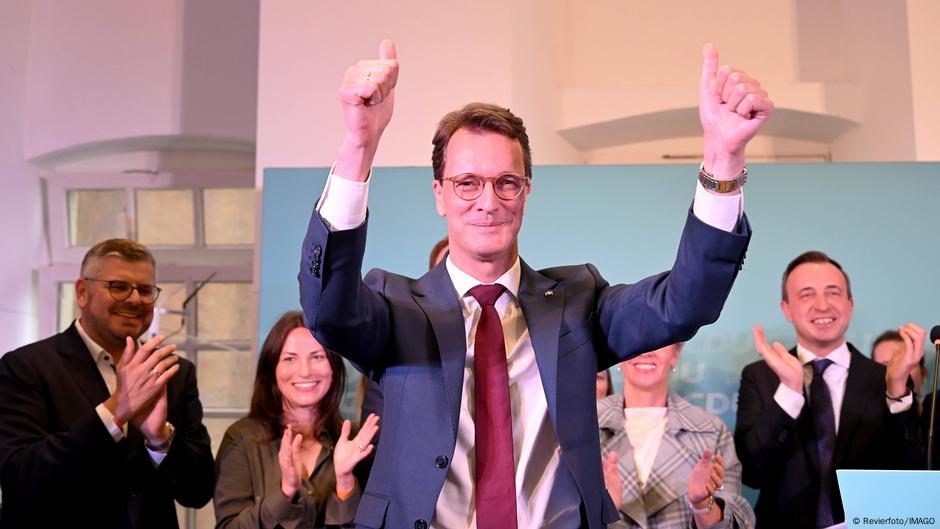
In North Rhine-Westphalia's municipal elections, Chancellor Merz's CDU secured approximately 34% of the vote, while the far-right AfD notably surged, tripling its share to about 16.5% from 5.1% in 2020. The center-left SPD and Greens experienced significant declines. This outcome, particularly the AfD's strong performance driven by voter concerns over issues like migration and integration, signals a shift in German political sentiment and is expected to increase pressure on the federal coalition government regarding these policy areas.
The municipal elections in North Rhine-Westphalia (NRW), Germany's most populous state, signal a significant shift in the political landscape with direct implications for the stability of the federal government. While Chancellor Friedrich Merz's center-right CDU emerged as the leading party with approximately 34% of the vote, this result represents stagnation compared to its historically weak 34.3% showing in 2020. The most notable outcome is the dramatic surge of the far-right Alternative for Germany (AfD), which more than tripled its vote share to 16.5% from 5.1% four years prior. This gain came at the expense of the mainstream parties, with the center-left SPD declining to 22.5% and the Green Party suffering a substantial drop from a record 20% to 11.7%. The election is being interpreted as a litmus test for the national mood, and the AfD's success, attributed to voter concerns over immigration, integration, and welfare, is expected to intensify pressure on the ruling federal coalition in Berlin to address these issues. The cautious sentiment signal and moderate market impact score reflect the rising political uncertainty and the potential for policy disputes between the CDU and SPD, which could affect legislative progress and Germany's overall economic direction.
AI-powered research, real-time alerts, and portfolio analytics for institutional investors.
Request DemoOverall Sentiment
mildly negative
Sentiment Score
-0.30
