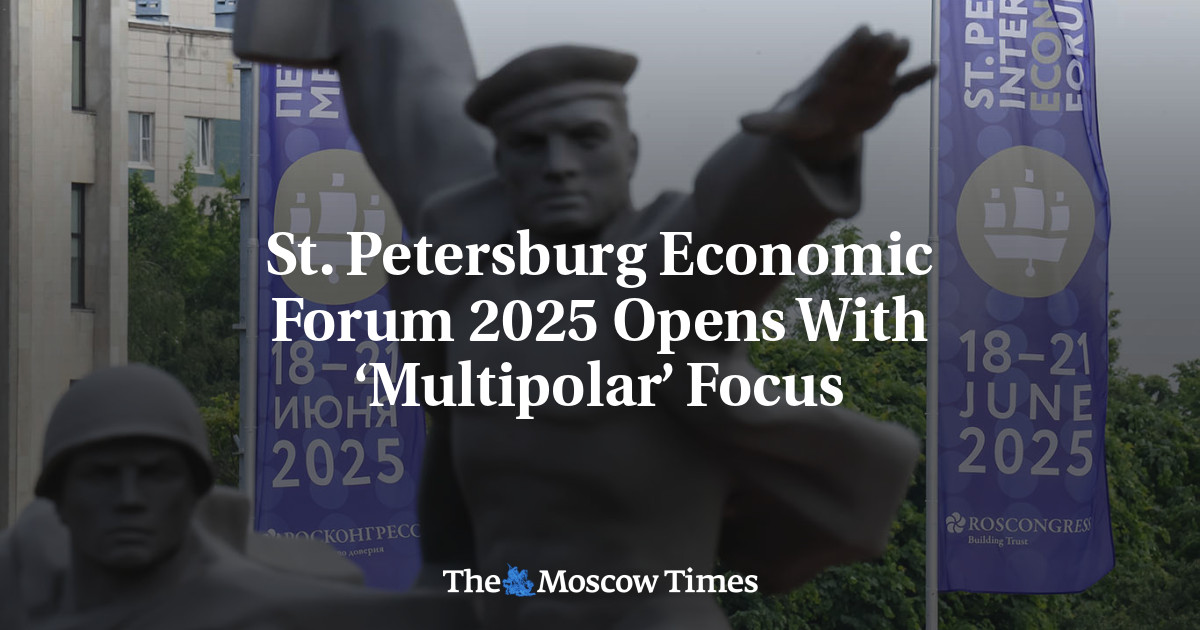
The St. Petersburg International Economic Forum (SPIEF) commenced, emphasizing a "multipolar" world amid reduced Western participation following Russia's invasion of Ukraine. Approximately 20,000 attendees from 140 countries are expected, including some U.S. business representatives, with discussions planned on ongoing U.S.-Russia commercial ties. President Putin is scheduled to deliver a keynote alongside leaders from Indonesia, China, Bahrain, and South Africa, focusing on technology, digital transformation, and socio-economic issues, while the event also features participation from BRICS, SCO, and G20 representatives.
The St. Petersburg International Economic Forum (SPIEF) 2025 is proceeding with a clear agenda to promote a "multipolar" world order, reflecting Russia's strategic pivot amidst sustained Western isolation following the 2022 invasion of Ukraine. While the Kremlin reports an expected 20,000 guests from 140 countries, including unnamed U.S. business representatives for a panel on ongoing commercial ties, the event's diminished status from its former "Russian Davos" reputation is evident due to the marked absence of prominent Western leaders and investors. The forum's participant list, featuring officials from China, Vietnam, Iraq, Saudi Arabia, several African nations, and Taliban representatives, alongside President Putin's keynote with leaders from Indonesia, China, Bahrain, and South Africa, underscores this shift in focus towards non-Western partnerships. The Indonesian President's decision to attend SPIEF over the G7 summit further highlights this realignment. Discussions are centered on themes such as technology, digital transformation, demographics, and socio-economic issues, with dedicated sessions by BRICS, SCO, and G20 representatives, indicating an effort to build alternative economic and political blocs. The moderately negative sentiment (score -0.6) and pessimistic tone associated with the event, combined with a moderate market impact score (0.5), suggest that while SPIEF signifies ongoing geopolitical recalibrations and Russia's efforts to counter sanctions, it is perceived more as a consolidation of existing trends rather than a new market-disrupting catalyst. Local disruptions, such as mobile internet outages and significant price increases for services, alongside the prominent inclusion of Russian political elites' children, paint a picture of a tightly controlled event. The critical situation of The Moscow Times, designated as an "undesirable" organization, also provides a stark reminder of the challenging operating and informational environment within Russia.
AI-powered research, real-time alerts, and portfolio analytics for institutional investors.
Request DemoOverall Sentiment
moderately negative
Sentiment Score
-0.60
