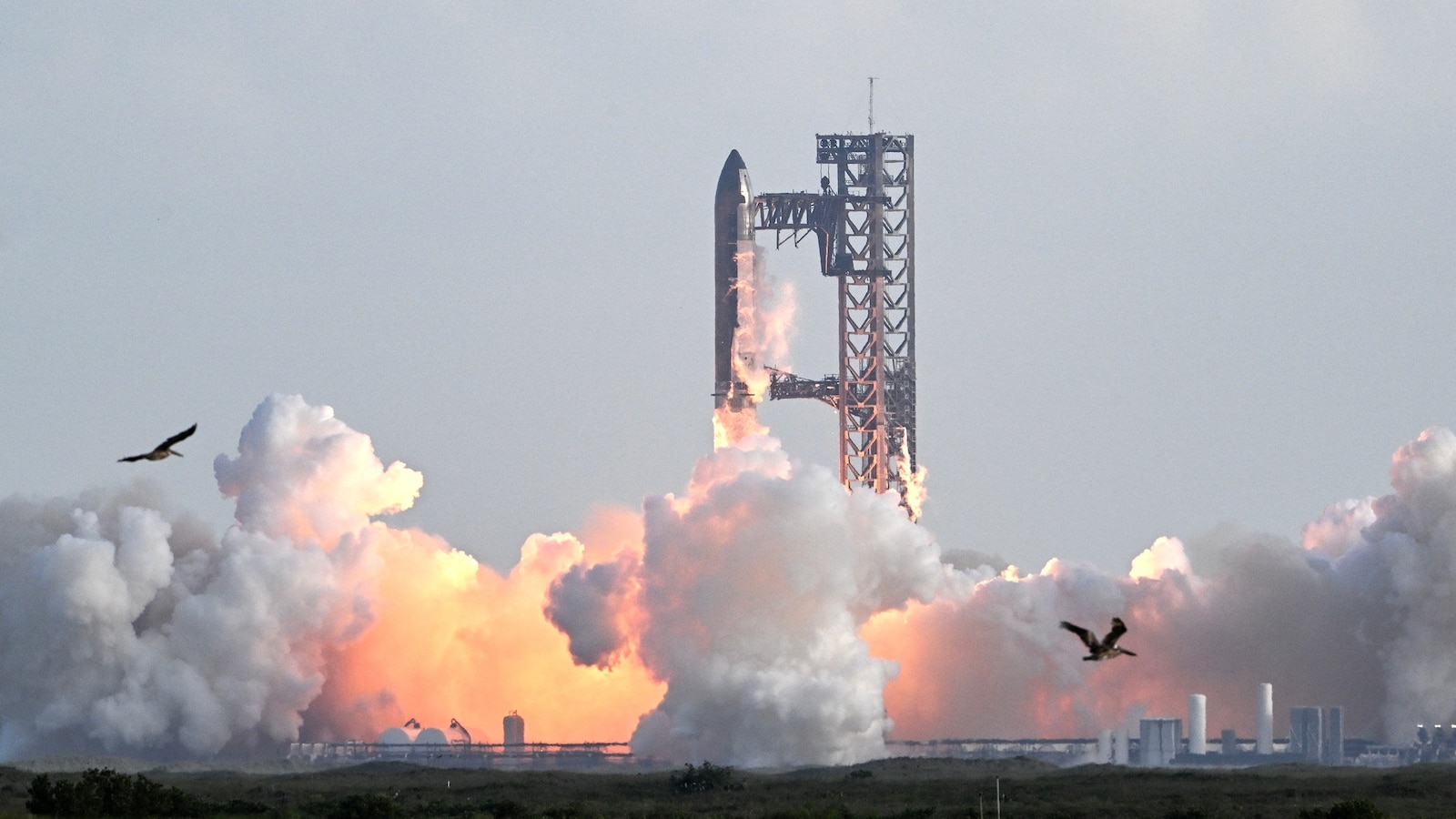
SpaceX is preparing for its 11th Starship flight test on Monday, October 13, from Starbase, aiming for a second consecutive successful mission after its August flight met all primary objectives. This test is crucial for demonstrating the reliability and reusability of the Starship and Super Heavy booster, which are foundational for SpaceX's ambitious Moon and Mars colonization plans and pivotal for U.S. leadership in the intensifying global space race against China. Experts emphasize that while the program is progressing through iterative development, consistent success is necessary to advance capabilities like upright landings and secure long-term strategic advantages in space.
SpaceX is preparing for its 11th Starship flight test on October 13th, aiming to replicate the success of its August mission, which achieved all primary objectives. This test is critical for validating the Starship and Super Heavy booster's reliability and reusability, essential for SpaceX's long-term goals of lunar and Martian colonization. The company's Falcon 9 program has already demonstrated significant reusability with 542 missions and 464 reflights.
Experts like Olivier de Weck from MIT emphasize the need for Starship to progress beyond splashdowns to upright landings and recovery, despite the upcoming flight mirroring the previous mission's ocean splashdown. Greg Autry of UCF notes SpaceX's iterative development model, acknowledging ambitious timelines but expressing confidence in Musk's eventual delivery of results. This approach, though often behind schedule, has historically proven effective for the company.
The Starship program is also viewed within the context of an intensifying global space race, particularly with China, as highlighted by Acting NASA Administrator Sean Duffy. Autry suggests this competition will spur U.S. innovation and funding, comparing it to the Age of Exploration. He underscores the significant economic benefits derived from space investments, citing advancements in computing, AI, and the internet as historical examples.
AI-powered research, real-time alerts, and portfolio analytics for institutional investors.
Overall Sentiment
strongly positive
Sentiment Score
0.70
Ticker Sentiment
