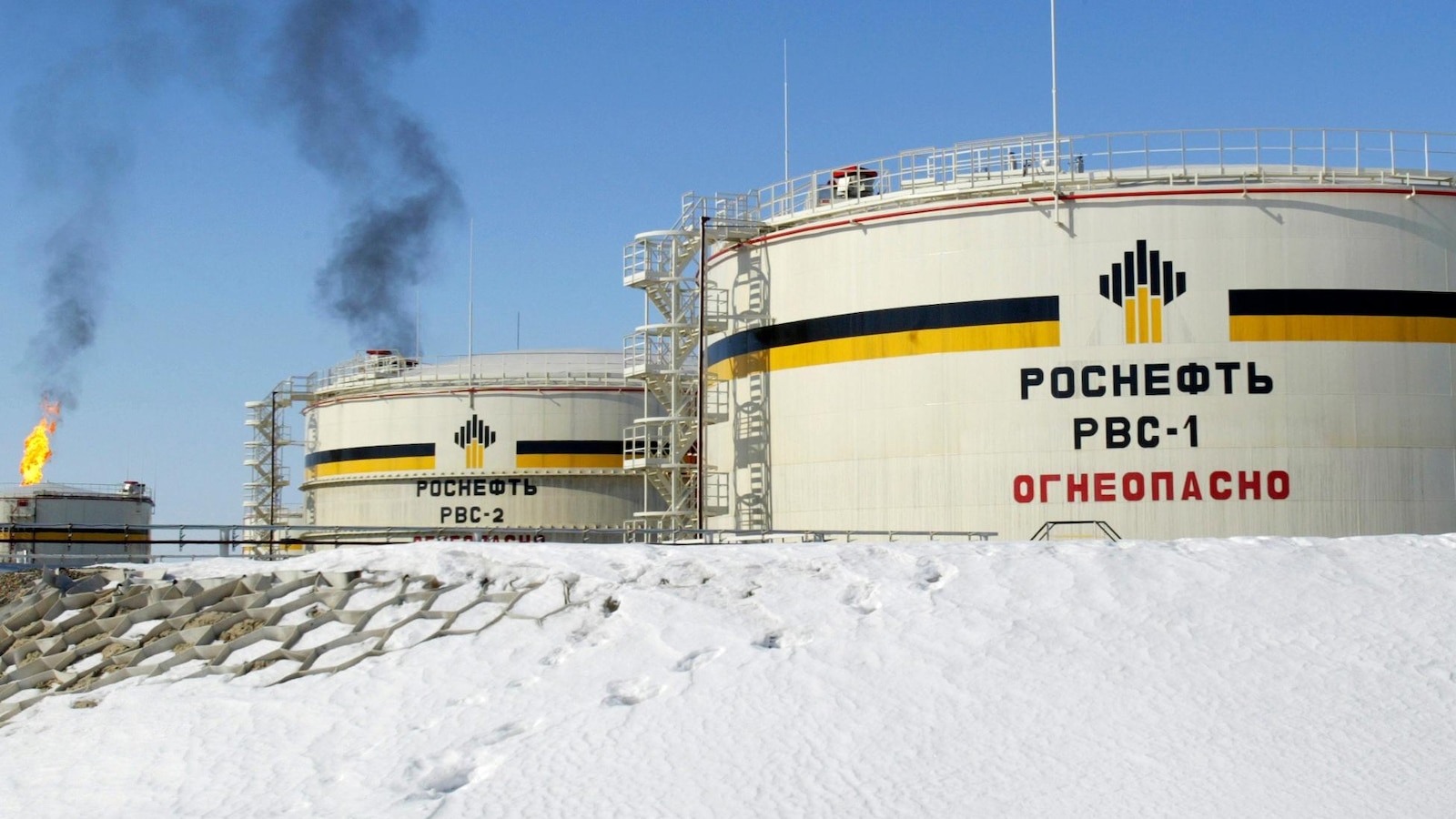
Russian state revenues from oil and gas plunged to 393 billion rubles ($5.1bn) in January from 587 billion ($7.6bn) in December and 1.12 trillion ($14.5bn) a year earlier, driven by new U.S. sanctions on Rosneft and Lukoil, an EU ban on refined fuels from Russian crude and pressure on buyers including India. The sanctions, expanded targeting of shadow tankers and higher risk premia forced Urals crude to trade roughly $25/bbl below benchmarks (Urals < $38 vs Brent ~$62.50 in December), left ~125m barrels parked at sea, pushed VLCC rates to ~$125k/day and cut export-tax receipts that fund the Kremlin. In response Moscow has raised VAT to 22%, increased excise levies, borrowed more from domestic banks and is drawing on a wealth fund, while growth stalls (GDP +0.1% Q3; forecasts 0.6–0.9%) and inflation sits at 5.6% with policy rates at 16%, leaving fiscal pressures that could constrain war spending and economic activity.
Market structure: Sanctions and the EU refined-product ban create a bifurcated winner set — owners of VLCC/AFRA tonnage (Frontline, Euronav) and exporters/refiners able to replace lost Russian product flows (US refiners) — because freight rates (VLCC >$100k/day) and distillate cracks should stay elevated near-term. Losers are Russian fiscal assets (OFZs, RUB), sanctioned majors (Rosneft/Lukoil off-limits) and European refiners dependent on cheap Urals; the Urals–Brent spread widening to ~$25 signals durable margin shifts.
Risk assessment: Tail risks include an escalatory EU/U.S. full shipping seizure regime that could wipe out “shadow fleet” revenues or a sudden Indian disengagement that tightens global crude supply and drives Brent >$90 within 3–6 months. Near-term (days–weeks) volatility will be driven by vessel seizures and tariff moves; medium-term (3–9 months) by refiners’ crack dynamics and tanker rate mean reversion; long-term (12+ months) by structural shifts in trade routes and Russia’s fiscal response (higher taxes, domestic borrowing).
Trade implications: Direct plays: tactical long exposure to FRO/EURN via 3–6 month call spreads to capture elevated charter rates; long US refiners (VLO, PSX) to capture diesel/gasoil export upside; selective long LNG (LNG) for European gas reallocation. Hedge with short RUB (USD/RUB forwards or 3‑month put spreads) and size positions modestly (1–3% AUM) given policy risk.
Contrarian angles: The market underestimates sanction enforcement tail risk — tanker-equity upside could be short-lived if seizures accelerate, so options-limited exposure is preferred. Conversely, consensus may be too bearish on US refiners; historical precedents (2011–13 shipment disruptions) show refiner cracks can persist 3–9 months before mean reversion, creating a time-limited alpha window.
AI-powered research, real-time alerts, and portfolio analytics for institutional investors.
Request DemoOverall Sentiment
strongly negative
Sentiment Score
-0.60
