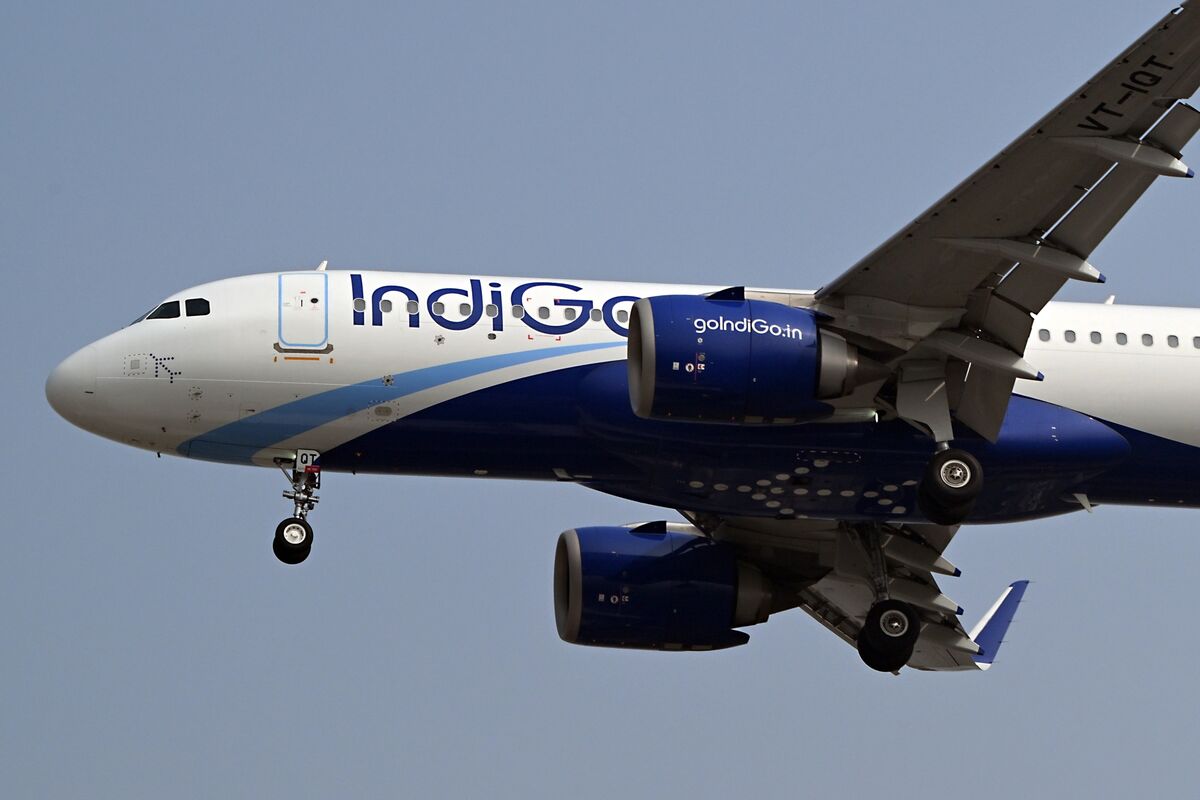
India's aviation regulator, the DGCA, has issued a show-cause notice to IndiGo CEO Pieter Elbers after cancellations affected almost half of the carrier's flights and left thousands of passengers stranded, citing 'large-scale operational failures' and prima facie non-compliance. The notice points to significant lapses in planning, oversight and resource management, escalating regulatory scrutiny that could lead to fines, operational restrictions or higher compliance costs. The development is likely to pressure InterGlobe Aviation's share price and investor confidence in the near term while prompting closer monitoring of airline operations and governance.
Market structure: This is a direct negative shock to InterGlobe Aviation (IndiGo), likely reducing near-term demand for its equity and credit while creating a short-lived demand opportunity for competitors that can absorb displaced passengers (e.g., SpiceJet (NSE: SPICEJET), Akasa). If DGCA imposes capacity caps or extra oversight, IndiGo’s effective supply could fall 3–8% in the next 1–3 months, tightening domestic seat supply and temporarily supporting yields for smaller carriers. Winners also include airports and ground-handling or lessor firms with spare capacity; losers are aircraft lessors and suppliers tied to IndiGo where counterparty risk rises.
Risk assessment: Tail scenarios include license curtailment or multi-week operational restrictions (low probability, high impact—30–50% revenue shock for weeks), large fines (mid-single-digit % of market cap), or CEO/management replacement leading to strategy drift. Expect immediate price action (days) with a potential 5–15% downside, quarter-level revenue and margin pressure (weeks/months), and possible 1–3 percentage-point market-share erosion over 12 months if service problems persist. Hidden dependencies: slot reallocation, maintenance contractor capacity and insurer claims exposure—watch counterparty announcements.
Trade implications: Tactical short on InterGlobe via equity or 3-month puts sized 2–3% portfolio with a 10% stop and 20–25% downside target; consider a relative pair (short INDIGO / long SPICEJET) sized 1–1.5% to capture route share reallocation. Rotate out of concentrated India domestic-airline exposure and allocate 2–4% into higher-quality travel infrastructure (e.g., Heathrow LSE:LHR or diversified global airline ETF IYT) to capture any sector-wide fare repricing while avoiding single-carrier idiosyncrasy.
Contrarian angles: Consensus may overstate permanent damage—historically airlines recover service levels in 1–2 quarters once regulators and management act (e.g., US carrier meltdowns), so a quick rebound of 20–35% is plausible if DGCA findings are mild and compensation is limited. Risk of overdone selling is real; therefore scale shorts with defined stops and use options to limit tail exposure, and watch for management clarity or DGCA rulings within 30–60 days as reversal catalysts.
AI-powered research, real-time alerts, and portfolio analytics for institutional investors.
Request DemoOverall Sentiment
strongly negative
Sentiment Score
-0.70
