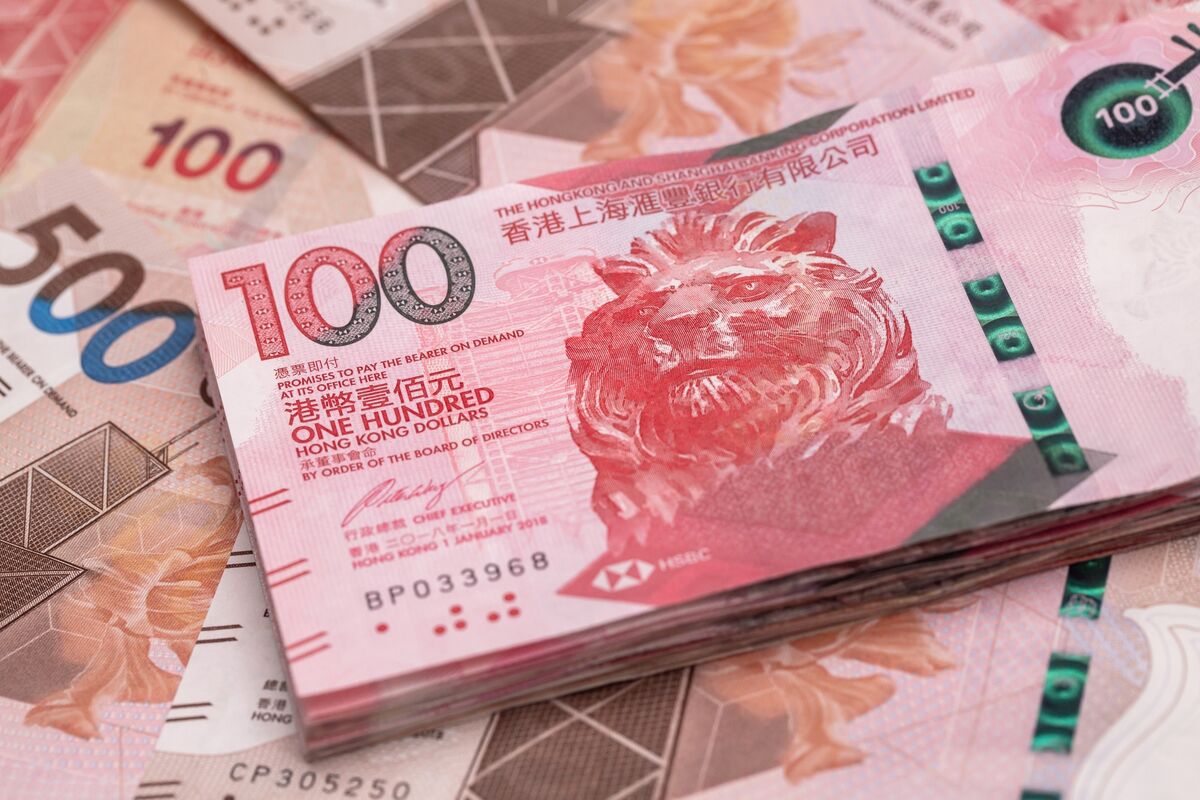
The Hong Kong dollar is nearing the weak end of its permitted trading band against the US dollar, reaching 7.8294, driven by declining local interest rates that are fueling carry trade activity. The currency has depreciated almost 1% in May, poised for its largest monthly decline since its peg to the US dollar was established in 1983, as traders borrow Hong Kong dollars to fund investments in higher-yielding assets.
The Hong Kong dollar (HKD) is depreciating towards the weak end of its permitted trading band against the US dollar, reaching a low of 7.8294, close to the 7.85 limit. This movement is primarily attributed to declining local interest rates, which have incentivized traders to increase borrowing in HKD to finance carry trades, seeking higher yields elsewhere. The currency's fall of nearly 1% in May positions it for potentially the largest single-month decline since the inception of its peg to the US dollar in 1983. This significant depreciation underscores the pressure exerted by interest rate differentials and speculative carry trade activities on the currency peg. The prevailing negative sentiment and bearish tone associated with this development, coupled with a moderate market impact score of 0.4, suggest growing concern over the stability of the HKD within its band.
AI-powered research, real-time alerts, and portfolio analytics for institutional investors.
Request DemoOverall Sentiment
Negative
Sentiment Score
-0.30
