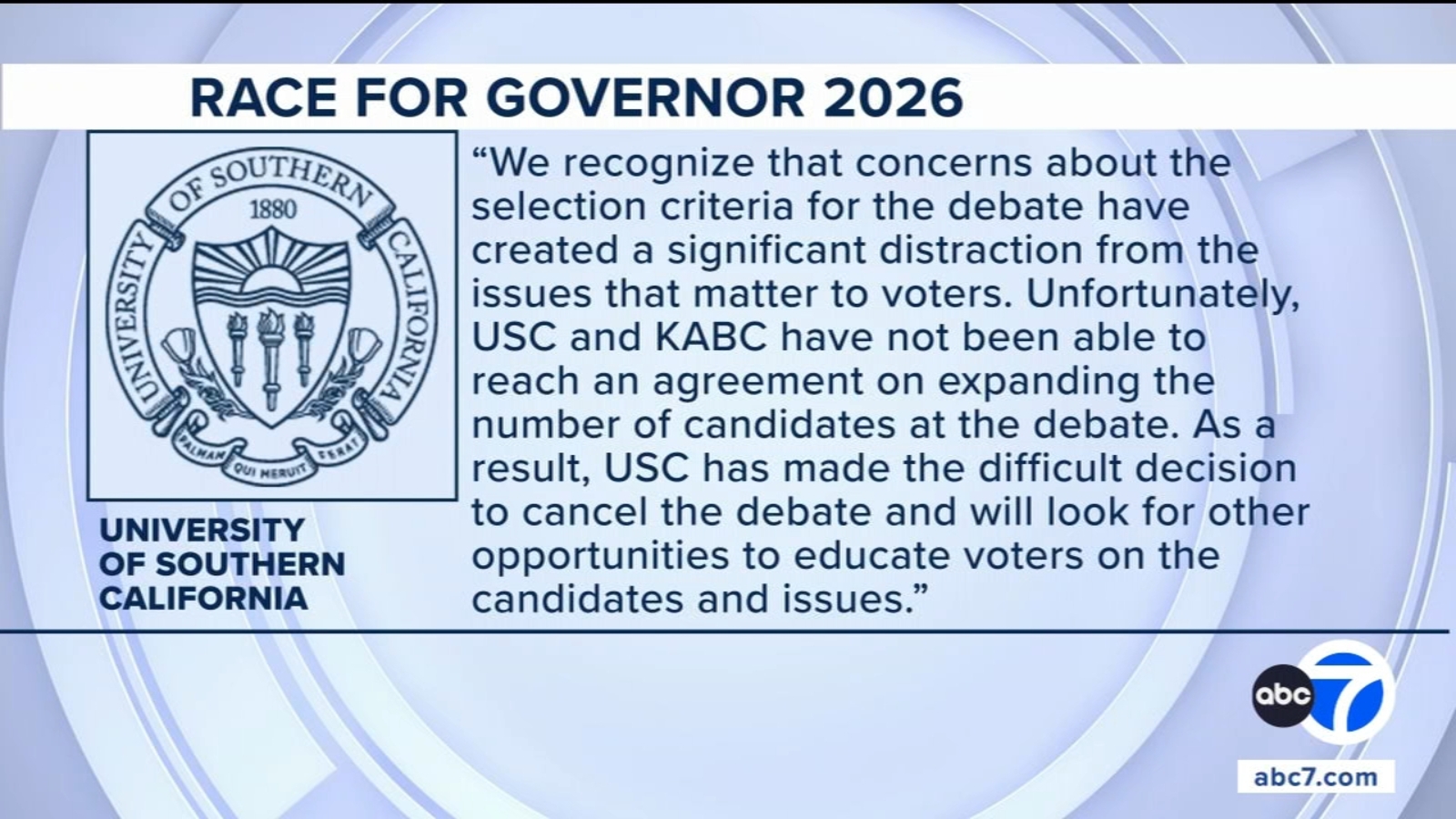
A gubernatorial debate featuring six candidates that was set to air on ABC7 Los Angeles and ABC stations in San Francisco and Fresno has been canceled after USC and KABC failed to agree on expanding the participant field. The six candidates had been chosen using widely accepted polling and fundraising criteria; USC cited concerns about selection criteria creating a distraction and said it will pursue other voter-education opportunities.
The disruption creates a near-term reallocation of political ad and attention from linear local TV toward programmatic and social channels; expect 4–8 week front-loading of buy activity into Google/Meta/Snap ad inventories as campaigns seek replacements for single-event reach. Local broadcasters and station groups with concentrated political ad exposure (single-digit percent of quarterly revenue) face an outsized quarterly revenue variance — a 1–3% hit to top-line for the most exposed outlets is plausible, while national media platforms pick up incremental CPMs.
Candidates excluded from high-visibility forums will pivot tactics: incremental digital fundraising and micro-targeted persuasion spend tends to be more volatile but higher ROI per dollar in the short run. Historical analogs show excluded or marginalized candidates can see 20–50% spikes in small-dollar donation velocity over 2–6 weeks, which boosts programmatic and payment-processor flow (benefiting adtech and online payments) but also raises short-term churn and CAC for campaigns.
Second-order governance effects matter: erosion of trusted, objective selection criteria increases probability (30–50% over 6–12 months) of either legal challenges or institutional redesigns that favor pay-to-play or monetized town halls — a structural shift that would reallocate recurring political spend away from traditional public broadcasters to private venues and digital platforms. The biggest market lever is timing: advertisers rebook within a 2–8 week window; if parties convert lost inventory to digital quickly, the long-term revenue impact on broadcasters is muted but margins for programmatic sellers improve materially.
Key risks that could reverse these dynamics include rapid reinstatement of multi-platform debates, a legal settlement forcing expanded participation, or a major streaming partner monetizing an alternative event, each capable of restoring linear CPMs within 30–90 days. Monitor campaign finance filings and short-term ad buy disclosures as primary leading indicators for where incremental dollars land.
AI-powered research, real-time alerts, and portfolio analytics for institutional investors.
Request DemoOverall Sentiment
neutral
Sentiment Score
0.00
