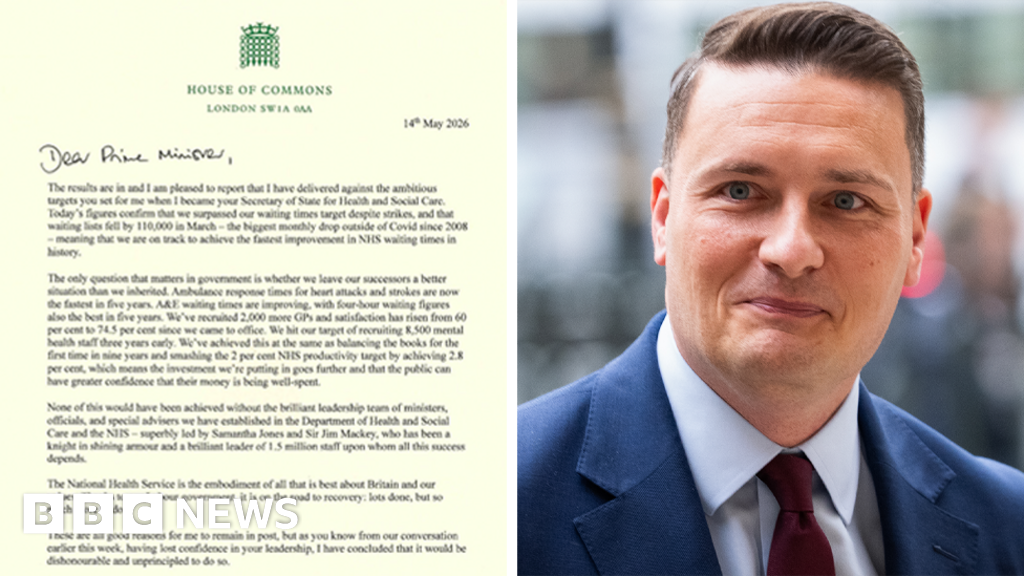
Wes Streeting has resigned as UK health secretary and used his resignation letter to sharply criticize Sir Keir Starmer's leadership, saying he has lost confidence in the prime minister. He stopped short of formally declaring a leadership challenge, but urged a broad contest to replace Starmer, with Andy Burnham, Angela Rayner and Ed Miliband named as possible contenders. The article signals rising instability inside Labour rather than an immediate policy or market shock.
This is not a policy shock so much as a governance shock, and markets usually reprice those through duration rather than beta. The immediate effect is to raise the probability distribution of a disorderly leadership transition, which tends to widen UK risk premia via higher policy uncertainty, weaker ministerial bandwidth, and a greater chance of fiscal slippage being tolerated for political reasons. That matters most for domestically oriented UK equities, where valuation support is already fragile and earnings visibility is tied to consumer confidence and public-sector execution. The second-order winner is volatility itself. Leadership contests tend to compress the government’s ability to pass anything ambitious, so the near-term setup is less about one agenda and more about decision paralysis: delayed spending decisions, slower procurement, and reduced appetite for controversial reforms. That is mildly supportive for large-cap multinationals with overseas revenue and for UK-listed defensives, while domestic banks, housebuilders, and small caps remain the most exposed to a repeated de-rating if headlines escalate over the next 2-8 weeks. The key tail risk is a forced contest that turns into a broader legitimacy event, not just a personnel issue. If the market starts to price an earlier election or a succession path that weakens policy continuity, sterling downside can become self-reinforcing through imported inflation expectations and higher gilt term premium. Conversely, if the challenge fizzles and the Cabinet quickly reasserts control, the move should mean-revert fast because the economic data do not yet justify a structural UK growth rerating either way. Consensus may be underestimating how quickly internal party conflict can become an asset-allocation issue for global investors: the first move is usually political headlines, but the second move is a higher discount rate on UK domestic cash flows. That argues for treating any bounce in UK-facing cyclicals as suspect until the leadership path is clearer, while using periods of headline exhaustion to add selectively to exporters and defensives rather than trying to call the political bottom.
AI-powered research, real-time alerts, and portfolio analytics for institutional investors.
Request DemoOverall Sentiment
neutral
Sentiment Score
-0.10
