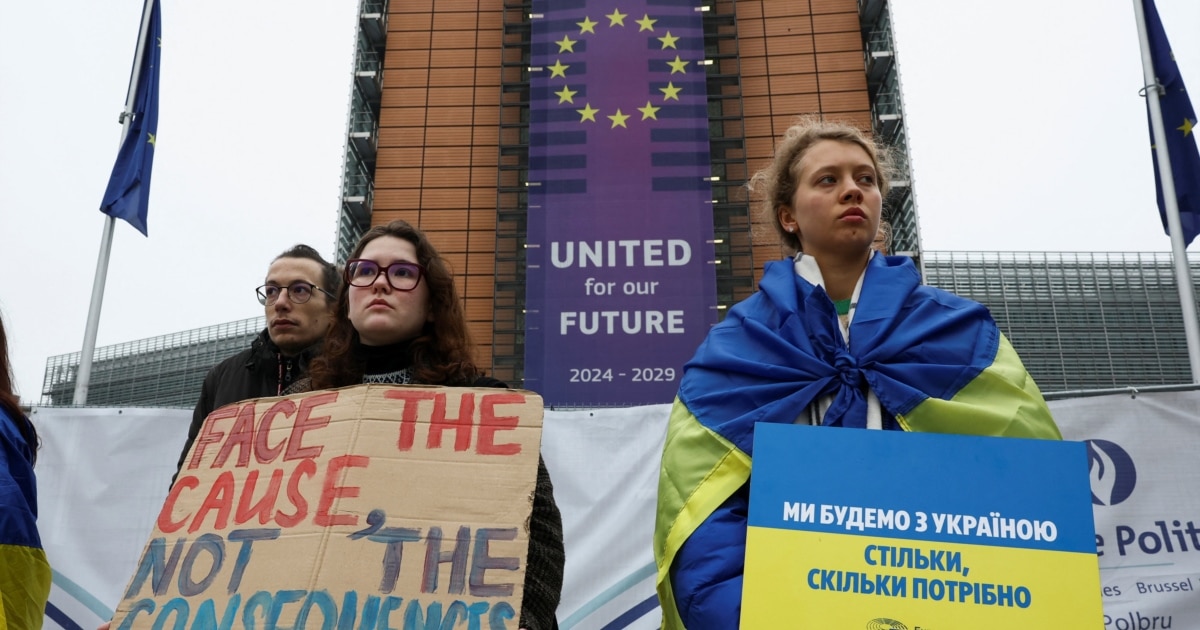
EU leaders are meeting in Brussels to consider a proposal to back a multibillion-euro loan for Ukraine using frozen Russian assets amid legal concerns from Belgium and pushback from other member states; failure to agree risks undermining EU cohesion and Ukraine's financing over the next two years. The summit coincides with intensified Russian strikes — including a massive drone attack that injured six in Cherkasy, widespread power outages affecting over 1 million people in southern cities, and a reported 4,500 attacks on Ukraine's energy infrastructure this year — while Putin renewed threats to seize additional territory. Outcomes will influence European political risk, energy security and potential sovereign/credit considerations for both Ukraine and EU exposures.
Market structure: Approving frozen-Russia-backed loans would materially tilt near-term flows into defense and reconstruction exposures and relieve immediate Ukraine sovereign/liquidity stress; failure would trigger an acute risk-off in European assets and a >1–3% shock to EUR/USD within days. Energy infrastructure strikes lift short-term wholesale power and gas prices in Europe (spot spikes of 10–40% possible on sustained outages) and increase capex for grid hardening and LNG imports, benefiting utilities with generation/LNG exposure and energy suppliers with spare shipping capacity.
Risk assessment: Tail risks include (a) a legal precedent from Belgium exposing EU member-state balance sheets (large contingent liabilities), (b) escalation to wider strikes or NATO-border incidents, and (c) seizure/counter-seizure of frozen assets—each could cause >10% moves in specific sovereign or commodity markets. Near-term (days) expect safe-haven flows; short-term (weeks–months) price in funding outcomes and winter energy shortages; long-term (quarters–years) implies higher baseline defense spending and re-shoring of strategic energy infrastructure.
Trade implications: Favor defense equities/ETF exposure (US names/tickers) and USD strength trades immediately; hedge commodity and European sovereign spread risk with options. Use volatility plays around the EU summit (0–7 days) and re-evaluate after the decision, rotating into utilities and LNG shipping names on confirmed multi-year funding and reconstruction commitments.
Contrarian angles: Consensus assumes prolonged European paralysis if loan fails; underappreciated is the political incentive to find compromise—60%+ chance of a watered-down deal within 2–4 weeks—so short-dated tail hedges (puts on periphery sovereigns, EUR) may be overpriced. Also, persistent power-price inflation could make selected European generators (RWE/E.ON) structurally more valuable than current depressed multiples imply.
AI-powered research, real-time alerts, and portfolio analytics for institutional investors.
Request DemoOverall Sentiment
strongly negative
Sentiment Score
-0.65
