

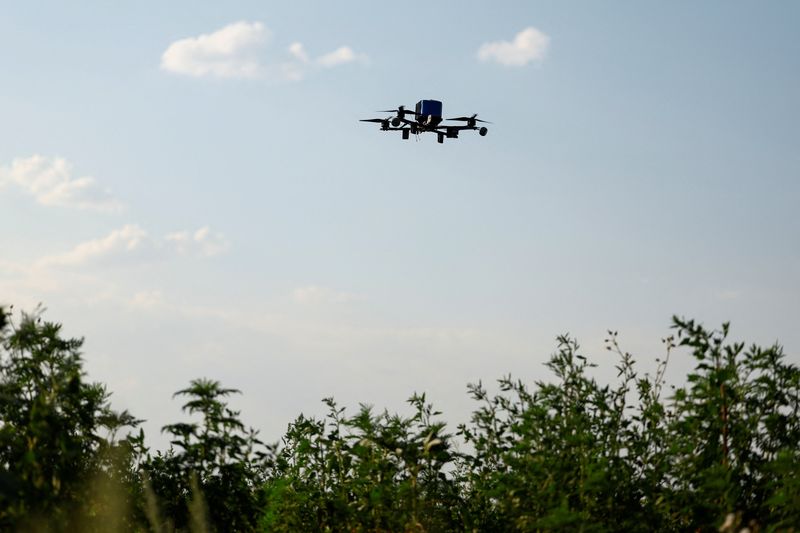
Matternet and SoftBank Robotics America announced a strategic partnership to accelerate autonomous drone delivery deployment across healthcare, retail, and enterprise logistics. The deal targets last-mile delivery bottlenecks such as labor shortages, traffic congestion, and rising costs, while SoftBank will support manufacturing, installation, and maintenance of ground infrastructure. The news is supportive for the drone-delivery ecosystem but is unlikely to move broader markets materially.
This is less a drone-technology headline than a distribution-capex signal: the value accrues to whoever can industrialize the pick-and-shovel layer around autonomous logistics. The market is still pricing drone delivery as a software/airframe story, but the more durable economics likely sit in infrastructure deployment, maintenance, fleet orchestration, and regulatory compliance—areas that favor scaled industrial partners over pure-play operators. That creates a second-order beneficiary set in sensors, edge compute, batteries, payload handling, and mission-critical network software, while traditional last-mile providers face gradual margin compression rather than immediate disruption.
The key catalyst is not adoption hype; it is conversion from pilot programs to contracted volume in regulated verticals such as healthcare, where service-level guarantees matter more than unit cost. If the model works there, it can expand into high-density enterprise campuses and suburban routes, but broad consumer adoption remains years away because airspace management and local permitting will be the bottlenecks. The near-term risk is that partnerships like this produce headline momentum without meaningful revenue inflection for 2-4 quarters, which usually leads to valuation leakage in the drone ecosystem.
The contrarian view is that the real winner may be the incumbents that can absorb or partner with these networks, not the disruptors. Autonomous delivery reduces variable labor, but it increases fixed integration cost and operational complexity, which means adoption is most attractive to customers with recurring, time-sensitive volumes—not broad e-commerce. That favors a barbell: long enabling infrastructure and platform names with real balance-sheet capacity, while fading speculative pure plays that depend on perfect regulatory execution and rapid commercialization.
For public-market expression, the article is mildly positive for automation enablers but neutral-to-negative for broader logistics incumbents over a multi-year horizon. The biggest swing factor is FAA/local regulatory throughput: if approvals accelerate, the market can rerate the ecosystem quickly; if they stall, the narrative stays confined to niche use cases and partner announcements.
AI-powered research, real-time alerts, and portfolio analytics for institutional investors.
Request TrialOverall Sentiment
mildly positive
Sentiment Score
0.35
Ticker Sentiment
