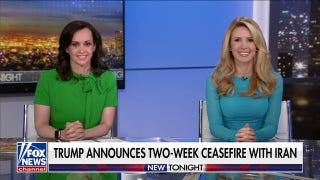
A two-week ceasefire was announced after President Trump threatened to destroy much of Iran's civilian infrastructure and set an 8 p.m. ET deadline, creating a significant geopolitical flashpoint. The episode has publicly fractured GOP support, prompted some Republicans to refuse additional funding absent congressional authorization, and triggered Democratic calls for impeachment or 25th Amendment action, increasing near-term political and legislative volatility. Expect elevated risk-off dynamics for energy and defense sectors and potential market-wide volatility until diplomatic and congressional clarity is restored; Congress is not scheduled to return until the week of April 13.
The political fissure inside the president’s party creates a sustained policy gray zone: military operations proceed without clear legislative authorization, which raises the probability of intermittent kinetic events but lowers the likelihood of an immediate, sustained all‑out war. Markets will likely price higher event-driven volatility (days–weeks) while assigning a lower probability to structural, multi‑year disruption — a two‑week de‑escalation window amplifies this dispersion rather than resolving it.
Strait of Hormuz rhetoric remains the primary risk lever for commodities and shipping: historically a 1–2 mbpd effective chokepoint shock moves Brent by mid‑single to low‑double digits within weeks; even failed strikes or credible threats lift tanker freight/insurance (LR2/AFRA indices) and prompt front‑month oil contango, benefiting storage and short‑dated call structures. Energy producers with short lead‑time shut‑ins (US shale) capture near‑term spread expansion but face demand sensitivity if prices spike above $90 for multiple months.
Defense primes benefit from both near‑term replenishment orders and long‑cycle procurement optionality, but upside is capped by potential congressional funding fights and political risk discounts into the election — that creates attractive asymmetric entries on dips. Safe‑haven assets (gold, USD) and shipping/insurance pockets will react fastest; corporate credit and EM assets trade as a function of perceived escalation probability more than headline volume.
Key catalysts: Congressional return week of April 13 (oversight hearings or funding votes) and forward oil moves over the next 2–6 weeks. Tail risks (full naval campaign, major infrastructure strikes) are low‑probability but high‑impact and will manifest in rapid repricing; de‑escalation or formal negotiated pause would compress risk premia within days and should be the primary reversal trigger.
AI-powered research, real-time alerts, and portfolio analytics for institutional investors.
Request DemoOverall Sentiment
strongly negative
Sentiment Score
-0.60
