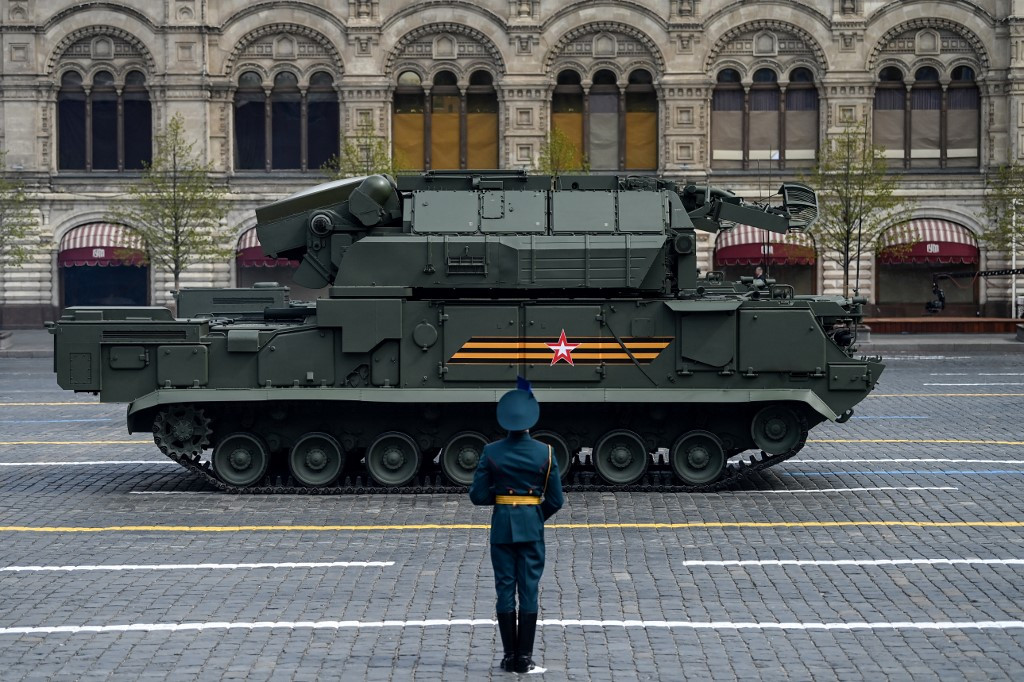
Ukrainian forces struck a launcher from a Russian S-400 Triumf system near Gvardiyske in occupied Crimea and conducted multiple strikes on Russian troop echelons, command posts and a Tor-M1 air-defense system. The S-400 is cited at roughly $1.0bn for a full system (about $200m per battery) and the Tor-M1 at about $25m, highlighting potential replacement/replenishment costs. These hits materially degrade local Russian air-defense coverage, modestly raising operational risk in the theater and potentially supporting incremental defense-sector demand and risk-off sentiment in regional markets.
Attrition of high-end integrated AD (IAD) nodes materially lowers marginal cost for sustained Ukrainian stand-off effects: each damaged radar/launcher creates a discrete window (days–weeks) in which hostile airspace deconfliction and longer-range fires face lower interception probability. Expect a clustered operational tempo effect — successful strikes beget more strikes while sensors are being inventoried/repaired — which compresses the timeline for second-order damage (logistics, command nodes) from months to weeks.
On the supply side, accelerated wear and battlefield loss of advanced AD systems forces Russia into three costly choices: cannibalize reserves, accelerate production at quality risk, or shift doctrine toward dispersion and deception. Any pivot to cannibalization or low-quality substitutes increases downstream demand for Western and allied ISR, EW, loitering munitions, and attritable strike weapons; that demand profile favors higher-margin, fast-delivery subsystems over large platform programs and will change procurement cadence over the next 6–18 months.
Macro/market risk is asymmetric: the tactical advantage for Ukraine is time-limited and reversible if Russia adapts (decoys, mobility discipline, rapid replacement) or escalates air defenses with non-export systems; conversely, repeated successful strikes raise political pressure in buyer countries to curtail exports to Russia’s suppliers and hasten Western replacement programs. For portfolios, the actionable window is immediate-to-intermediate (weeks–12 months) and favors suppliers of sensors, EW, munitions, and attritable/loitering systems rather than large, slow-capex platform manufacturers.
AI-powered research, real-time alerts, and portfolio analytics for institutional investors.
Request DemoOverall Sentiment
neutral
Sentiment Score
0.00
