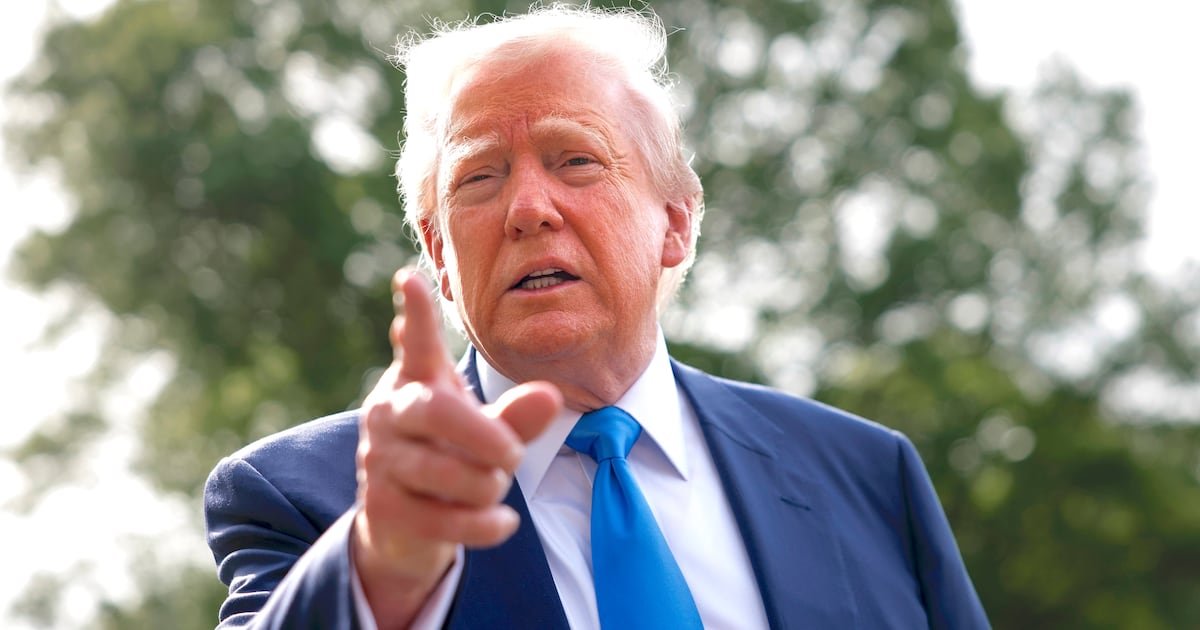
President Trump posted an expletive-filled threat on Truth Social warning Iran to reopen the Strait of Hormuz by an imposed deadline, prompting House Minority Leader Hakeem Jeffries to call for a "wellness check" and revive 25th Amendment concerns. The episode raises acute geopolitical risk and political- stability uncertainty that could pressure energy and defense-related assets and trigger risk-off flows; monitor developments around the Strait and any signs of military escalation or domestic political action.
The president’s erratic public messaging materially raises the near-term probability of tactical escalation in the Gulf theatre, which is the key transmission mechanism to markets: a temporary choke or perceived threat to the Strait of Hormuz can spike Brent/TB futures within days and sustain a risk premium in oil for 2–8 weeks. That shock would flow through shipping insurance, bunker fuel demand and refinery runs, creating outsized margin tailwinds for upstream producers but squeezes for refiners and transport logistics exposed to bunker cost volatility.
Second-order winners include defense primes (procurement acceleration, urgent spares, logistics services) and reinsurers/insurers writing war-risk policies for VLCCs and tankers; losers are airlines, cruise operators, and trade-dependent EM FX that route exports via sea lanes. Market structure matters: with physical crude tightness, price moves can be non-linear — a 5% disruption in flows has historically produced 15–35% Brent moves depending on inventory buffers and SPR response.
Key risk windows: immediate (days) for headlines and shipping disruptions, near-term (2–8 weeks) for oil and insurance repricing, and medium-term (3–12 months) for electoral and fiscal implications if domestic governance questions persist. Reversal catalysts are straightforward — clear de-escalation, transparent medical/administrative review of executive capacity, or an unmistakable diplomatic backstop (coalition naval patrols, brokered Iran assurances) — any of which can trigger sharp mean reversion in risk premia within 1–4 weeks.
Investor positioning should therefore be asymmetric: own convex protection for headline risk, selectively buy real and policy-sensitive exposures that rerate if conflict endures, and avoid getting long cyclicals with high operating leverage that suffer under policy uncertainty and higher fuel costs.
AI-powered research, real-time alerts, and portfolio analytics for institutional investors.
Request DemoOverall Sentiment
strongly negative
Sentiment Score
-0.60
