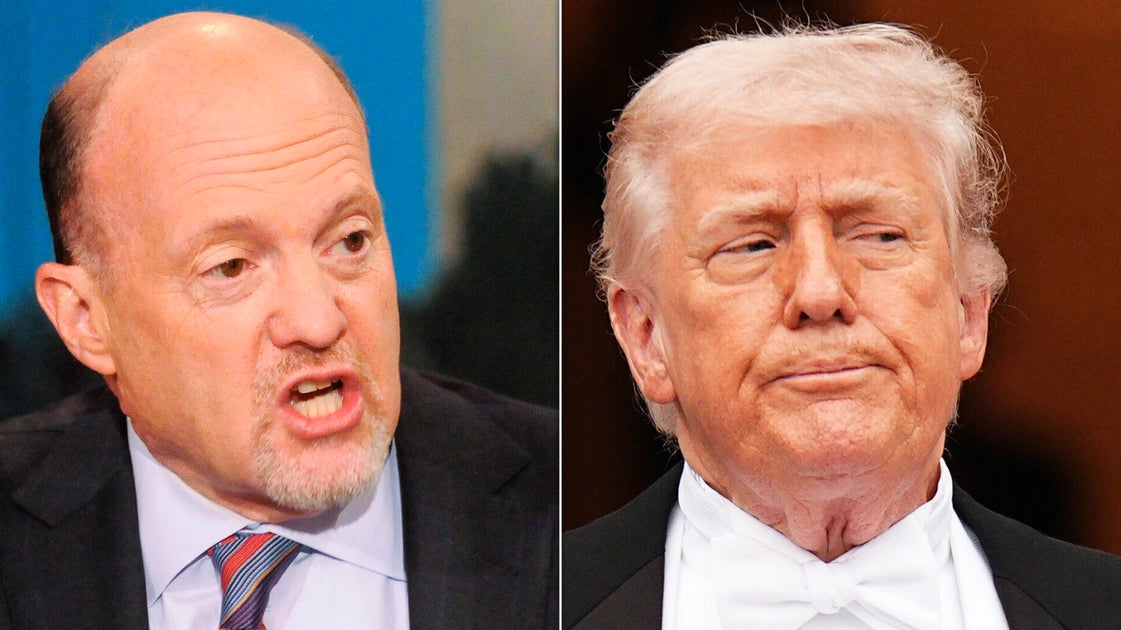
The article centers on revelations that President Donald Trump traded at least $220 million in securities-related transactions in recent months, including Intel, prompting speculation about potential insider-trading concerns. The piece is primarily a media reaction story involving CNBC host Jim Cramer and has limited direct market data. Any impact is likely minimal and confined to sentiment around governance and political scrutiny.
The market-moving issue here is not the optics of one political figure trading around policy; it is the renewed probability that Intel becomes a governance-driven volatility name rather than a fundamentals-only turnaround story. When a stock sits at the intersection of government ownership, policy favoritism, and public scrutiny, the discount rate rises because future capital allocation decisions become less predictable and every rally invites “process risk” headlines. That typically compresses multiple expansion even if near-term operating results stabilize.
Second-order, this is more meaningful for INTC’s ecosystem than for Intel itself. A perceived politicization of the shareholder base can make enterprise customers, suppliers, and employees more cautious about long-dated commitments, especially if they fear abrupt shifts in subsidy, export, or procurement posture after elections. Competitors with cleaner governance narratives — especially those selling into the same AI and datacenter budget pools — may see a relative valuation bid as investors rotate away from policy-sensitive names.
The catalyst window is short on the headline but longer on the positioning. In the next 1-4 weeks, media amplification can keep implied volatility elevated and cap upside on any fundamental good news; over 3-6 months, the real question is whether the government stake becomes a recurring political talking point that suppresses multiples into year-end. The tail risk is that additional disclosures or policy actions create a “headline overhang” that forces passive and benchmark-sensitive holders to de-risk.
The contrarian view is that the market may already be well aware of the governance overlay, so the direct price damage to INTC could be smaller than social-media sentiment suggests. The more interesting mispricing is likely in cross-asset relative performance: this kind of noise can create a temporary underwrite to INTC’s upside while giving competitors a cleaner relative story. If the underlying business execution improves, the stock can still work — but the path will likely be choppier than a simple turnaround setup implies.
AI-powered research, real-time alerts, and portfolio analytics for institutional investors.
Request DemoOverall Sentiment
mildly negative
Sentiment Score
-0.15
Ticker Sentiment
