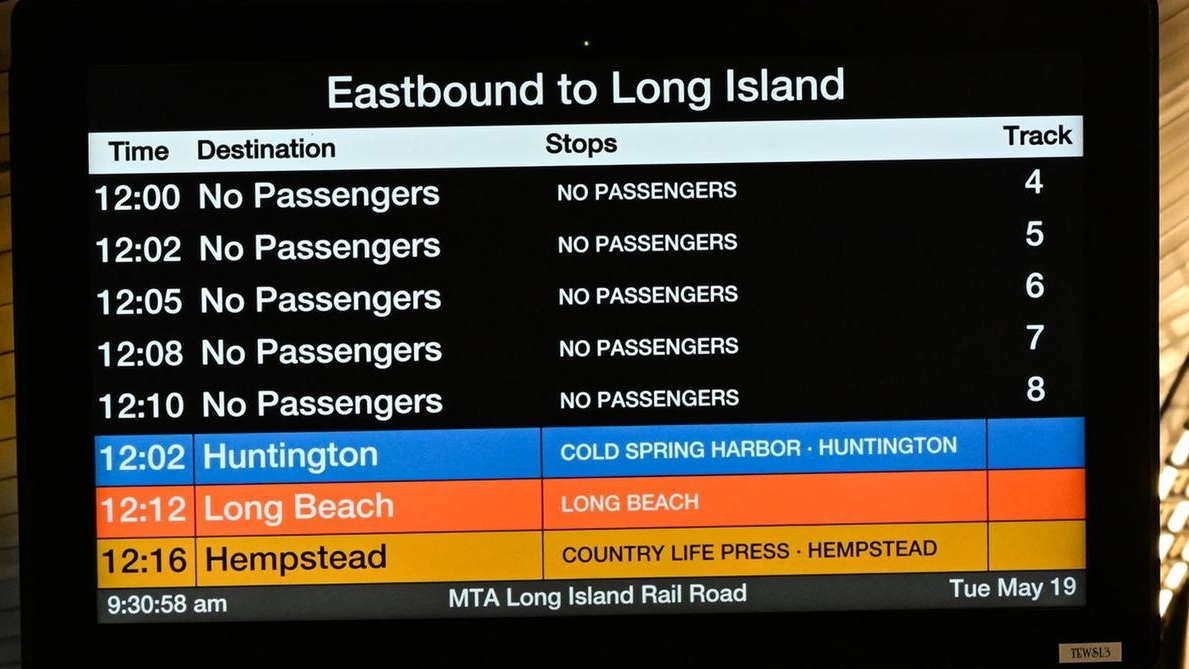
The LIRR strike is over, and commuters are back on trains after service disruption earlier in the week. The article is largely a factual update focused on passengers describing how they managed during the strike and their return to regular commuting. No financial figures or market-moving implications are provided.
The immediate market read-through is not about one transit labor dispute; it is about how brittle urban commuting systems are when capacity is constrained. For employers, even a short shutdown creates a measurable productivity tax and reinforces the case for hybrid work, which is structurally negative for peak-hour transit volumes and the adjacent local-service ecosystem over the next 6-18 months. The bigger second-order effect is political: once riders experience a credible disruption, future bargaining rounds tend to carry a higher probability of preemptive concessions, limiting management leverage and raising the expected cost of service reliability. From a competitive-dynamics standpoint, the strike acts like a temporary demand shock that redistributes spend to rideshare, parking, and private shuttle operators, but those gains are fleeting unless repeat disruptions become a pattern. If labor tension reappears, the beneficiaries are not the transit system itself but the substitute network around it: ride-hailing, toll-road traffic, suburban retail, and employers with stronger remote-work elasticity. The risk is that a one-off resolution creates complacency; the real downside scenario is not the strike itself but a follow-on round of wage/benefit escalation that compresses operating flexibility and eventually pushes fare increases or service cutbacks months later. The contrarian view is that markets often overestimate the permanence of these disruptions. Commuters revert quickly once service resumes, so any trade predicated on a lasting modal shift should be sized small unless a pattern of labor actions emerges. The better framing is to treat this as a catalyst check on the durability of in-office demand: if attendance metrics did not materially recover after resumption, the strike may simply have accelerated an existing secular decline rather than causing it.
AI-powered research, real-time alerts, and portfolio analytics for institutional investors.
Request DemoOverall Sentiment
neutral
Sentiment Score
0.05
