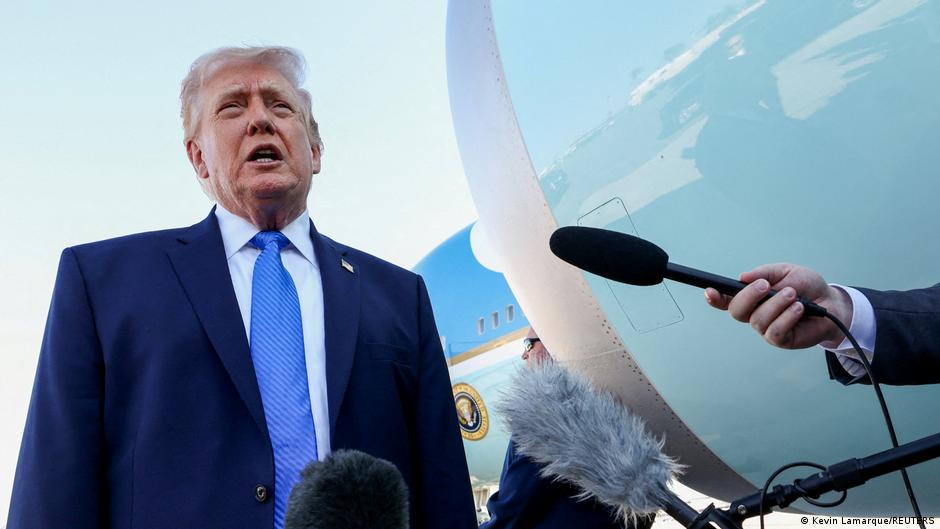
US President Trump claimed 'very good and productive conversations' with Iran and said phone talks would continue, while Iran denied negotiations. Backchannel mediation by Pakistan, Turkey and Egypt is reported, with Pakistan named as a potential venue and Iranian contacts possibly including FM Abbas Araghchi and parliament speaker Mohammad Bagher Qalibaf. The claims follow a two-day US ultimatum and three weeks of intensive strikes, creating meaningful near-term risk to regional stability and energy markets until contacts and agreements are independently confirmed.
Opaque, asymmetric negotiation channels increase near-term policy tail-risk: markets will price a meaningful chance (30–45% over 3 months) of either rapid de-escalation or renewed kinetic escalation rather than a slow, linear resolution. That bimodal distribution favors convex instruments (options, short-dated spreads) over directional cash exposure.
Energy markets are the obvious transmission mechanism but the second-order winners are those that capture volatility in physical logistics and insurance — tanker dayrates, marine war-risk premiums, and short-term storage economics. A localized supply-disruption shock of 2–4% of global crude flows would likely translate into a 8–18% move in Brent within 30–90 days and blow out tanker and insurance earnings more than upstream spot balances.
On the defense/infrastructure side, procurement lags mean public defense equities will re-rate on roll-on contract expectations if uncertainty persists; conversely, a credible, verifiable pause would produce a sharp multiple compression. That makes calibrated long-duration option exposure on defence suppliers and short-dated protection on energy the highest expected-value microstructure: long convexity on winners, hedge headline risk with liquid short-dated puts on the commodity that moves first.
AI-powered research, real-time alerts, and portfolio analytics for institutional investors.
Request DemoOverall Sentiment
mixed
Sentiment Score
0.00
