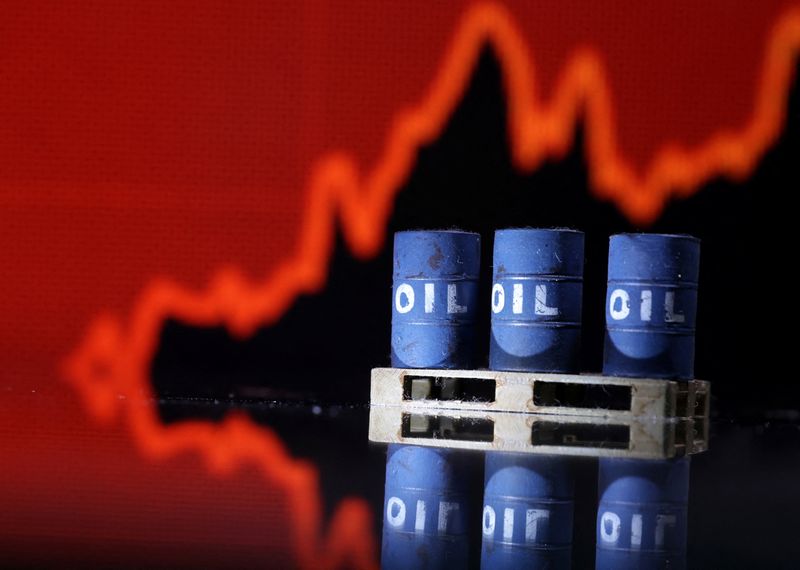
Oil above $115/bbl as Macquarie warns Brent could exceed $200/bbl (40% scenario) if the Strait of Hormuz stays largely closed; the firm estimates ~13% of global oil production shut by end-March and ~15% of supply at risk. IEA emergency stocks (~1.2bn barrels) provide limited, slowly releasable buffer while Asia already faces diesel/jet shortages. If prices reach $200, Macquarie projects global growth could slow ~1 percentage point versus 2025 and trigger stagflation, complicating central bank policy and likely prompting government energy subsidies.
The immediate market dynamic is not just a supply shock but a fragmentation of transport and insurance markets that amplifies delivered-costs unevenly across regions. Rerouting, higher war-risk insurance and longer voyage times materially raise landed fuel costs for import-dependent Asian and European hubs, creating localized diesel/jet tightness even if global barrels are nominally available; market structure will therefore show regional crack divergence and persistent backwardation in key corridors for months.
On the macro front, the policy trade-off is acute: central banks face a higher inflation floor at the same time growth risks rise, producing a policy-margin squeeze that widens real yield dispersion between core sovereigns and EM importers. Expect capital flight and FX stress in large oil-importing EM economies within 1–3 quarters, pushing sovereign spreads wider and triggering conditional fiscal support programs that will truncate demand responses unevenly.
From a liquidity and market-structure angle, the most important second-order effects are elevated volatility and financing pressure on leveraged commodity holders and refiners with weak balance sheets. Roll costs and margin calls will create buying opportunities for balance-sheet-rich producers and asset owners (tankers, storage), while amplifying downside for high fixed-cost, energy-intensive operators such as airlines and certain industrials in the 3–9 month window.
AI-powered research, real-time alerts, and portfolio analytics for institutional investors.
Overall Sentiment
strongly negative
Sentiment Score
-0.70
