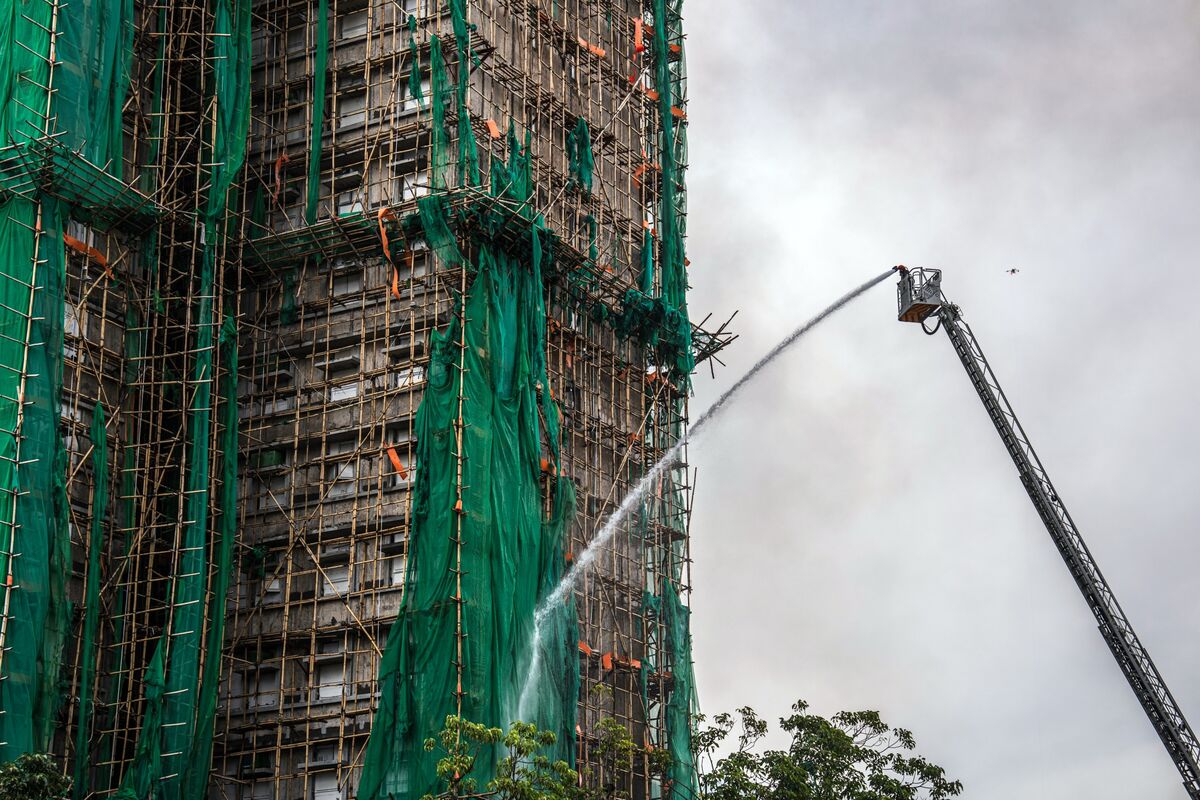
Authorities probing a deadly Wang Fuk Court blaze in Hong Kong say the fire was accelerated by cheaper, substandard exterior netting and by workers evading government testing, as the death toll rose to 151. Samples from hard-to-reach areas failed safety tests while lower-floor samples met legal standards; the ruling raises material regulatory scrutiny, potential legal and insurance liabilities for contractors and property owners, and downside risks for Hong Kong construction and real-estate exposures.
Market structure: Immediate winners are regulated testing/certification firms and branded safety-equipment suppliers; losers are small contractors, low-cost netting/importers, Hong Kong residential developers and retail landlords (Link REIT) facing remediation costs. Expect 5–15% incremental project cost inflation for affected developers and a 3–7% near-term hit to new-sale absorption in affected precincts; pricing power shifts to certified suppliers and large contractors who can underwrite warranty/inspection risk.
Risk assessment: Tail risks include large class-action litigation and insurer reserve shocks (>HK$5–10bn) or government-mandated mass remediation programs that force developers to take large one-off charges; probability moderate in 6–12 months. Short-term (days–weeks) volatility and repricing of credit (spreads +50–200bps) are likely; medium-term (3–12 months) regulatory tightening and retesting are the main drivers; long-term (1–3 years) effects include higher compliance capex and reduced supply growth.
Trade implications: Expect HK equities (HSI) to underperform by 3–8% if investigation widens; Hong Kong dollar to remain stable vs. USD but corporate credit spreads widen, offering relative-value in higher-quality IG names. Options: front-month implied vol in HK property/developer names should spike; buy puts or put spreads to hedge. Sovereign/local bond moves likely muted but developer dollar bonds will cheapen — consider buying protection or shorting bonds with spread >200bps widening.
Contrarian angles: Consensus focuses on developers only; investors underestimating upside for global testing/certification players (Intertek/Bureau Veritas) supplying APAC capacity and the potential for government subsidies for retrofits. History (Grenfell/UK cladding) shows multi-year remediation cycles that benefit certified providers and vendors — the market may over-penalize large developers near-term, creating selective entry points in 3–6 months after clarity on liabilities.
AI-powered research, real-time alerts, and portfolio analytics for institutional investors.
Request DemoOverall Sentiment
strongly negative
Sentiment Score
-0.60
