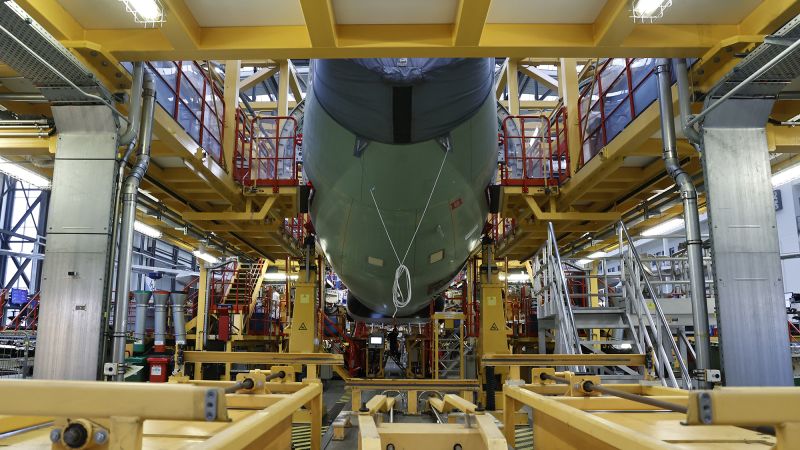
Airbus has identified a supplier-quality issue affecting a limited number of metal panels on A320-family aircraft and is inspecting potentially impacted planes; the company says newly produced panels meet requirements and only a small subset will need further action. The report weighed on sentiment—shares fell about 5.7%—and comes on top of a recent software fix after intense solar radiation was found to corrupt flight-control data, an issue that required modifications to roughly 6,000 single-aisle aircraft (with fewer than 100 still being completed). Airlines including JetBlue have completed emergency software updates and largely resumed operations, but the twin technical and supplier issues raise operational and regulatory scrutiny risks for Airbus and its airline customers.
Market structure: Airbus (AIR.PA/EADSY) is the direct loser short-term; European and low-cost carriers with high A320 concentration (e.g., JBLU, LUV, IAG) face increased maintenance costs and potential schedule disruption. Winners: MRO and aftermarket service providers (AAR - AIR, HEICO - HEI) and parts insurers who can price in premiums; used-aircraft dealers may see transient supply dislocation. Expect modest pricing power shift to MROs for 3–12 months as ~6,000 planes were corrected and <100 remain under review.
Risk assessment: Tail risks include an FAA/EASA airworthiness directive grounding >200 A320s (low probability, high impact) or a supplier-contamination recall that forces reduced deliveries into 2026, pressuring Airbus cash flow and orderbacklog. Immediate (days): volatility and booking delays; short-term (weeks/months): higher warranty/MRO costs and compressed OEM margins; long-term (quarters/years): reputational pricing pressure if systemic supply-quality issues persist. Hidden dependency: single-source supplier quality and certification lag can cascade into delivery/liability exposure and elevated insurance claims.
Trade implications: Tactical trades favor taking short-dated asymmetric downside protection on Airbus (3-month put spreads) and going long high-quality MROs (AAR, HEI) for 6–12 months; consider pair trades long AAR/short AIR.PA to capture service demand vs. OEM risk. Options: buy 3-month ATM-10% puts on AIR.PA sized 2–3% NAV or construct 3x leveraged put spreads if funding cheap volatility; buy 6–12 month calls on AAR sized 1–2% NAV. Rotate out of pure OEM equity into services/defense (RTX, BA) through Q2 2026.
Contrarian angles: The market may be over-reacting to a “very limited” panel issue — Airbus shares down ~6% already — creating a mispricing if regulators limit action to targeted inspections. Historical parallel: post-incident selloffs (non-structural) often snap back within 3–6 months once ADs are limited and fixes deployed. Trigger rules: if AIR.PA drop >15% or regulators ground >200 aircraft, escalate short exposure; if inspections confirm <100 affected and no grounding within 30 days, begin accumulating Airbus at 25–40% of the short position size.
AI-powered research, real-time alerts, and portfolio analytics for institutional investors.
Request DemoOverall Sentiment
moderately negative
Sentiment Score
-0.45
