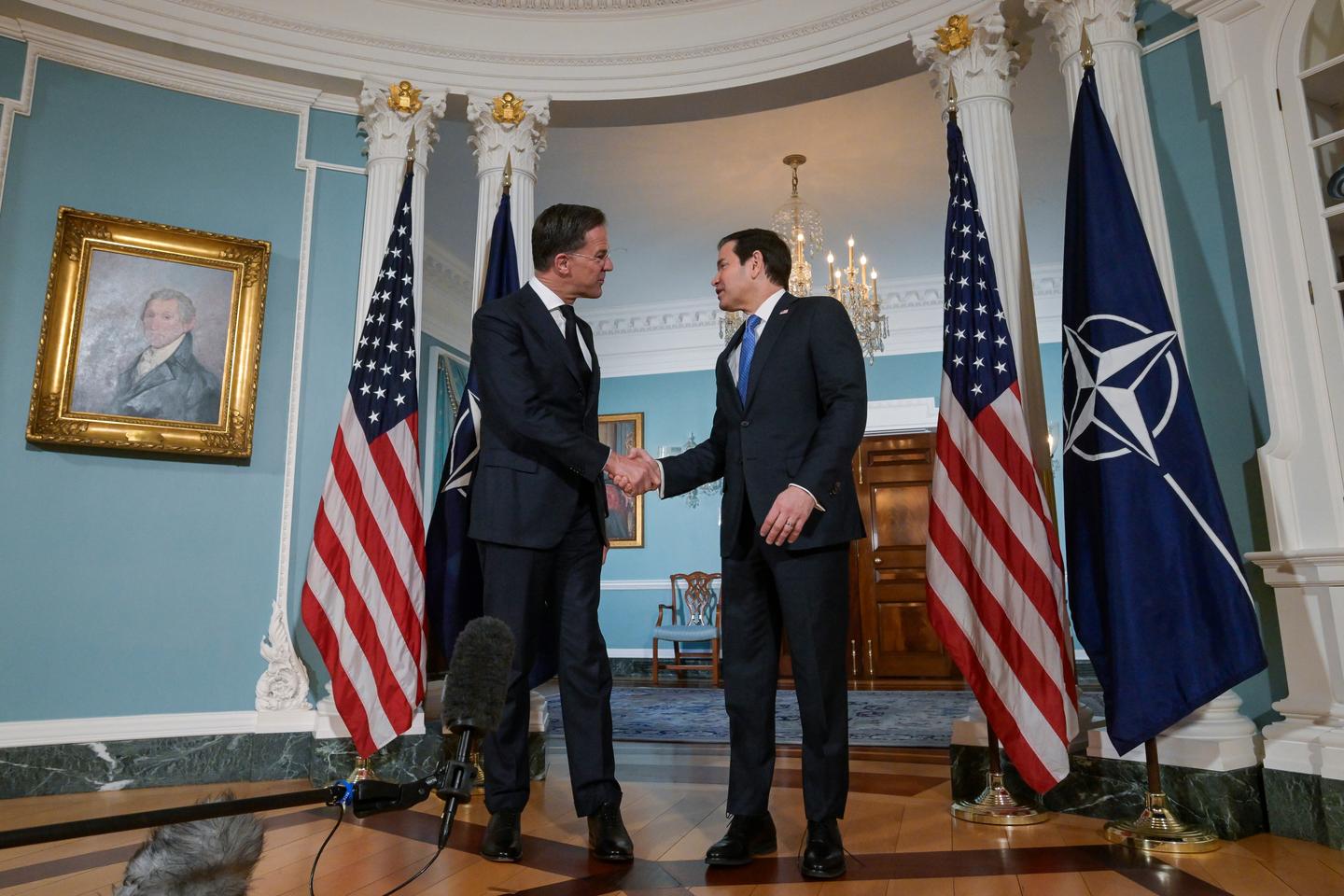
President Trump will discuss a possible NATO withdrawal with Secretary‑General Mark Rutte in Washington, one day after the US and Iran agreed a two-week ceasefire. His public threats and criticisms of allies over basing access and the Strait of Hormuz amplify transatlantic political risk, increasing uncertainty for defense and energy sectors and complicating NATO burden‑sharing and security coordination.
Political brinkmanship around alliance commitments creates asymmetric near-term market dynamics: headline-driven spikes in oil, insurance and freight are likely inside a 2–6 week window while defense procurement and budget rerouting play out over 6–24 months. Supply-chain winners will be prime contractors and long-lead suppliers (avionics, shipyards, specialty metals) where multi-year contracts materially lift backlog and margins; oligopolistic incumbents enjoy the highest optionality.
Tail risk is concentrated and binary — a short, sharp disruption in Gulf traffic or formal threats to alliance guarantees would push oil and insurance spreads up 10–25% within days and trigger a global risk-off for equities. More gradual outcomes (public posturing that results in incremental EU/US procurement cooperation) would instead reprice defense equities over 6–12 months without sustained energy shocks, capping immediate volatility.
Immediate tradeable asymmetry: liquidity in defense names is shallow relative to headline sensitivity, so event-driven flows can produce outsized moves; options are attractive to express convexity. Conversely, consensus political risk premia tends to overshoot on the downside for civilian sectors exposed to fuel costs and transatlantic logistics, creating short-term pair opportunities.
The sticky angle markets are underweight is structural lead-time: even if political noise fades, procurement cycles and NATO-standardization programs lock in spending increases for years. That favors long-duration contractors and suppliers over cyclic airline and shipping operators that face immediate cost pressure but no durable booking uplift.
AI-powered research, real-time alerts, and portfolio analytics for institutional investors.
Overall Sentiment
mildly negative
Sentiment Score
-0.30
