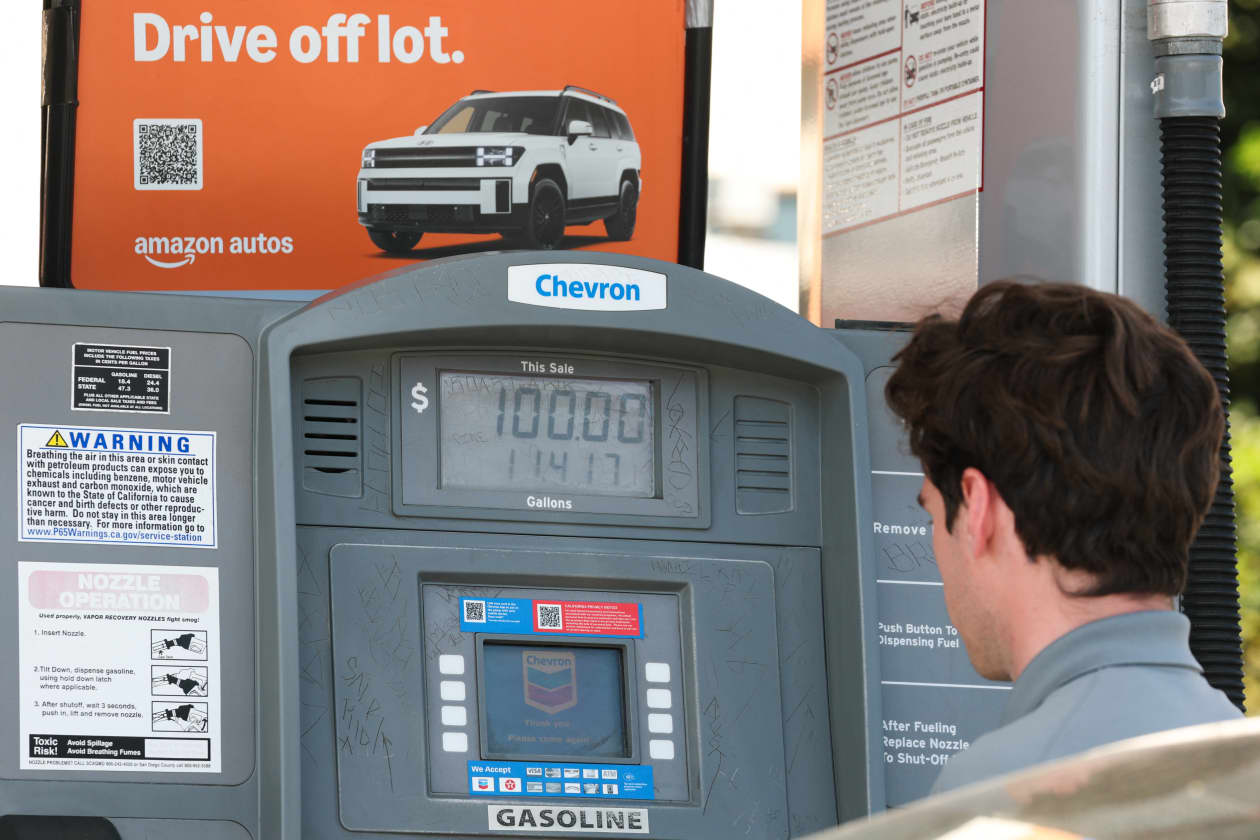
The national average gasoline price is $3.97/gal and could hit $4.00/gal as soon as Monday, according to GasBuddy (Patrick De Haan). Elevated pump prices, linked in part to Iran-related geopolitical risks, are intensifying consumer anxiety and may pressure discretionary spending and overall economic sentiment. Financial-wellness commentary suggests households are shifting from autopilot budgeting to more intentional strategies, implying a modest negative demand-side headwind rather than an immediate market shock.
Refiners and downstream retail margins are the most direct beneficiaries: when retail fuel friction rises, companies that control refining throughput and wholesale-to-retail capture (e.g., integrated refiners and merchant refiners) can convert a large fraction of that retail price movement into near-term free cash flow because cracks respond faster than exploration volumes. Expect the benefit to be concentrated in the next 1–3 months as seasonal gasoline demand and any short-supply episodes (weather, outages) amplify cracks, then moderate if crude backs up or runs into demand elasticity.
On the demand side, the pain is highly non-linear and concentrated: lower-income, short-trip consumers and marginal discretionary buckets (dine-out, quick errands, leisure travel) will re-optimize first, creating a visible revenue bleed for convenience stores and small-box retailers before larger durable-goods spending adjusts. This reallocation boosts staples and discount retailer resilience but raises the risk of sticky core services inflation (transportation services, commuting) that can keep the Fed more defensive for several quarters and compress consumer-discretionary multiples.
Key catalysts to watch are geopolitical escalation (which can spike crude and widen cracks within days), refinery utilization changes and any SPR or commercial crude releases (which can blunt the move in weeks). The market consensus overweights immediate consumption impacts; the contrarian point is that short-term gasoline-driven demand suppression is smaller than headlines imply, so energy-sector cashflow upside may be underpriced while some consumer names are over-penalized for a transient behavioral shock.
AI-powered research, real-time alerts, and portfolio analytics for institutional investors.
Overall Sentiment
mildly negative
Sentiment Score
-0.25
